
阻断 CTGF/CCN2 可减少过度使用损伤大鼠模型中已形成的骨骼肌纤维化。
Blocking CTGF/CCN2 reduces established skeletal muscle fibrosis in a rat model of overuse injury.
机构信息
Department of Anatomy and Cell Biology, Lewis Katz School of Medicine, Temple University, Philadelphia, PA, USA.
出版信息
FASEB J. 2020 May;34(5):6554-6569. doi: 10.1096/fj.202000240RR. Epub 2020 Mar 29.
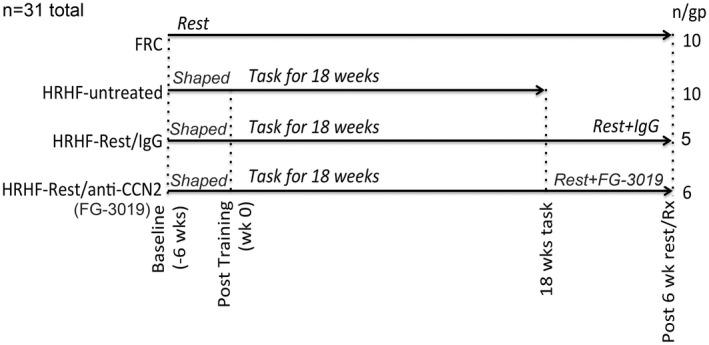
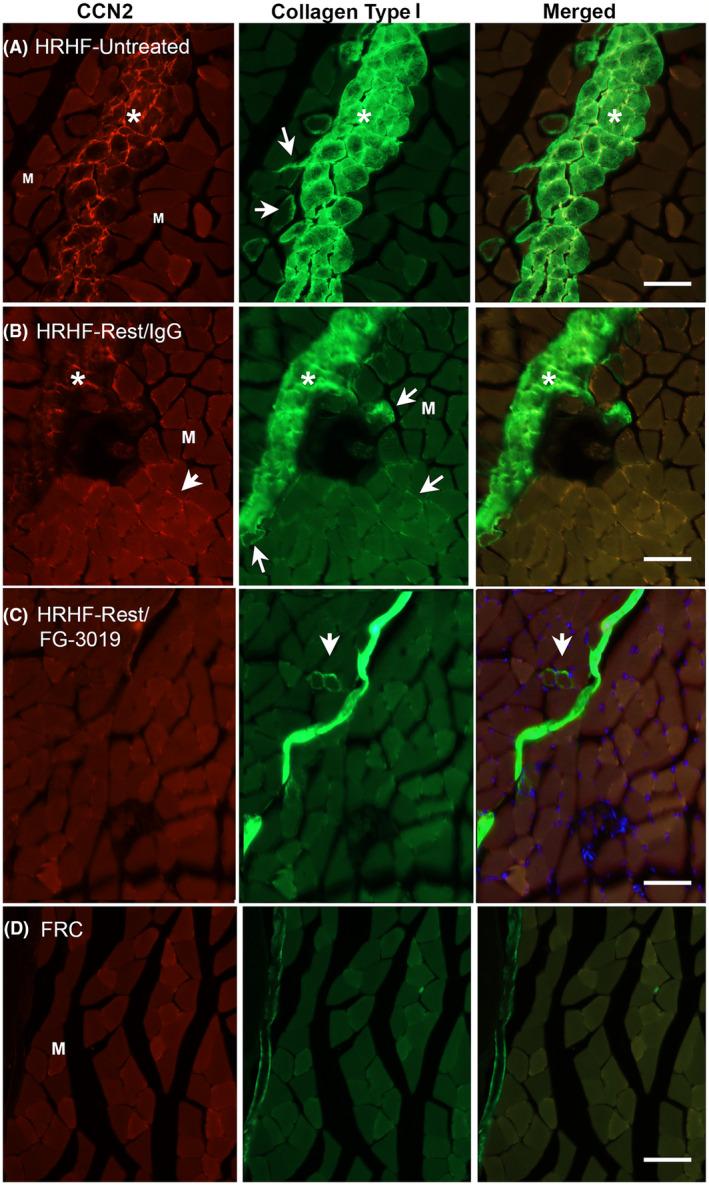
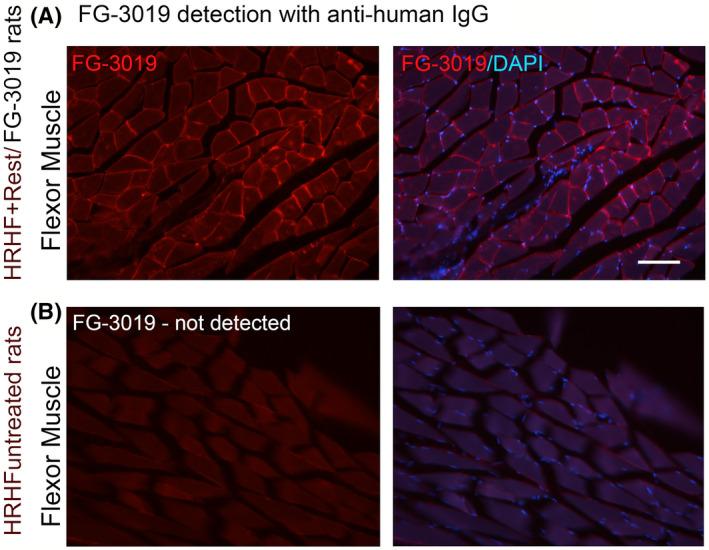
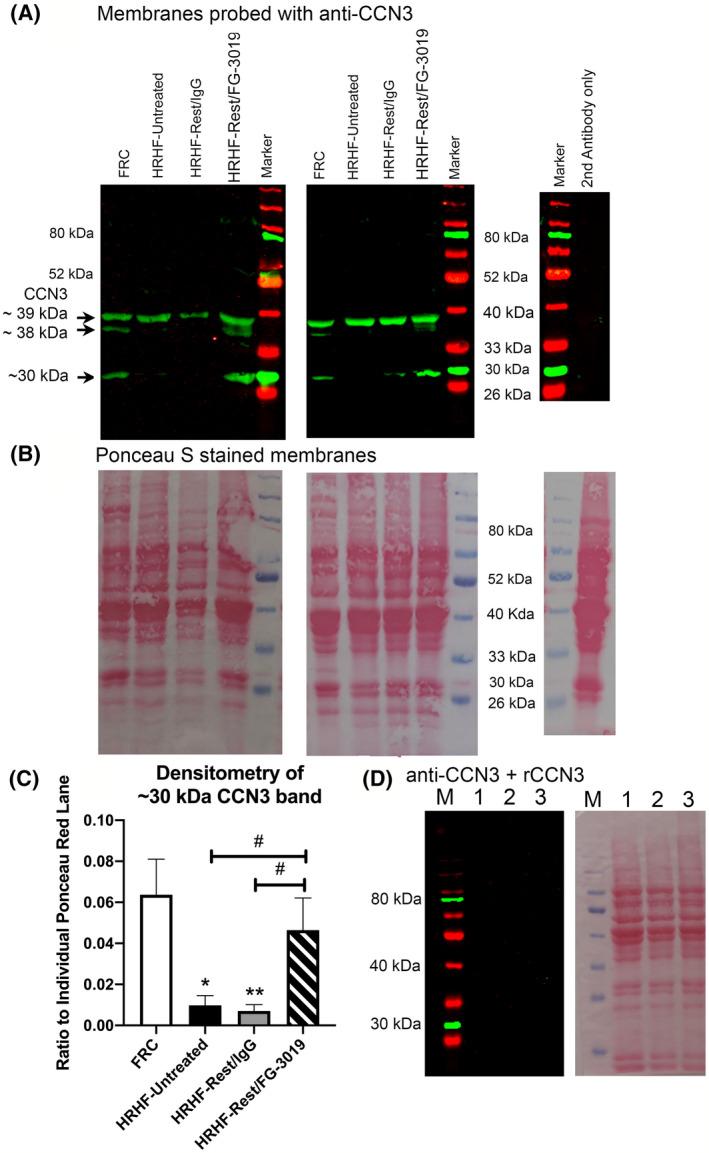
Tissue fibrosis is a hallmark of overuse musculoskeletal injuries and contributes to functional declines. We tested whether inhibition of CCN2 (cellular communication network factor 2, previously known as connective tissue growth factor, CTGF) using a specific antibody (termed FG-3019 or pamrevlumab) reduces established overuse-induced muscle fibrosis in a clinically relevant rodent model of upper extremity overuse injury. Young adult rats performed a high repetition high force (HRHF) reaching and lever-pulling task for 18 weeks, after first being shaped for 6 weeks to learn this operant task. Rats were then euthanized (HRHF-Untreated), or rested and treated for 6 weeks with FG-3019 (HRHF-Rest/FG-3019) or a human IgG as a vehicle control (HRHF-Rest/IgG). HRHF-Untreated and HRHF-Rest/IgG rats had higher muscle levels of several fibrosis-related proteins (TGFβ1, CCN2, collagen types I and III, and FGF2), and higher muscle numbers of alpha SMA and pERK immunopositive cells, compared to control rats. Each of these fibrogenic changes was restored to control levels by the blocking of CCN2 signaling in HRHF-Rest/FG-3019 rats, as were HRHF task-induced increases in serum CCN2 and pro-collagen I intact N-terminal protein. Levels of cleaved CCN3, an antifibrotic protein, were lowered in HRHF-Untreated and HRHF-Rest/IgG rats, compared to control rats, yet elevated back to control levels in HRHF-Rest/FG-3019 rats. Significant grip strength declines observed in HRHF-Untreated and HRHF-Rest/IgG rats, were restored to control levels in HRHF-Rest/FG-3019 rats. These results are highly encouraging for use of FG-3019 for therapeutic treatment of persistent skeletal muscle fibrosis, such as those induced with chronic overuse.
组织纤维化是过度使用肌肉骨骼损伤的标志,并导致功能下降。我们通过使用特定的抗体(称为 FG-3019 或 pamrevlumab)来测试抑制 CCN2(细胞通讯网络因子 2,以前称为结缔组织生长因子,CTGF)是否可以减少临床上相关的上肢过度使用损伤的啮齿动物模型中已建立的过度使用引起的肌肉纤维化。年轻成年大鼠进行了 18 周的高重复高力(HRHF)伸展和杠杆拉动任务,在此之前,先进行了 6 周的塑造以学习此操作性任务。然后,大鼠被安乐死(HRHF-未治疗),或休息并接受 FG-3019(HRHF-休息/FG-3019)或人 IgG 作为载体对照(HRHF-休息/IgG)治疗 6 周。与对照组相比,HRHF-未治疗和 HRHF-休息/IgG 大鼠的肌肉中几种纤维化相关蛋白(TGFβ1、CCN2、I 型和 III 型胶原和 FGF2)水平更高,α SMA 和 pERK 免疫阳性细胞数量更多。通过阻断 HRHF-休息/FG-3019 大鼠的 CCN2 信号,每种纤维化变化均恢复到对照水平,HRHF 任务诱导的血清 CCN2 和完整 N 端蛋白原胶原 I 增加也是如此。与对照组相比,HRHF-未治疗和 HRHF-休息/IgG 大鼠的 CCN3 水平降低,CCN3 是一种抗纤维化蛋白,但在 HRHF-休息/FG-3019 大鼠中升高至对照水平。在 HRHF-未治疗和 HRHF-休息/IgG 大鼠中观察到的握力显着下降,在 HRHF-休息/FG-3019 大鼠中恢复到对照水平。这些结果非常令人鼓舞,可将 FG-3019 用于治疗慢性过度使用引起的持续性骨骼肌纤维化等疾病。



 Zotero 插件