
下颌阻生第三磨牙手术拔除后邻牙第二磨牙的牙周状况
Periodontal Status of the Adjacent Second Molar after Impacted Mandibular Third Molar Surgical Extraction.
作者信息
Pham Thuy Anh Vu, Nguyen Nam Hoang
机构信息
Department of Periodontology, Faculty of Odonto-Stomatology, University of Medicine and Pharmacy, Ho Chi Minh City, Vietnam.
Department of Oral and Maxillofacial Surgery, Faculty of Odonto-Stomatology, Can Tho University of Medicine and Pharmacy, Can Tho, Vietnam.
出版信息
Contemp Clin Dent. 2019 Apr-Jun;10(2):311-318. doi: 10.4103/ccd.ccd_634_18.
OBJECTIVE
The purpose of this study was to evaluate the change in periodontal status of the adjacent second molar of the impacted mandibular third molar after surgical extraction and its association with the third molar condition in the presurgical stages, including position, eruption level, and local complications.
MATERIALS AND METHODS
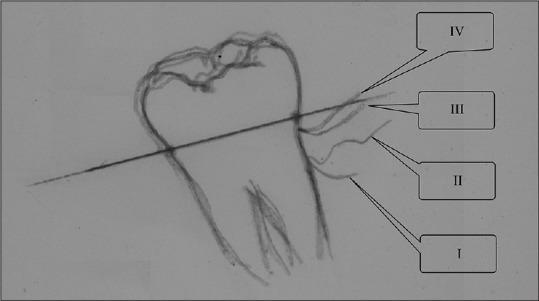
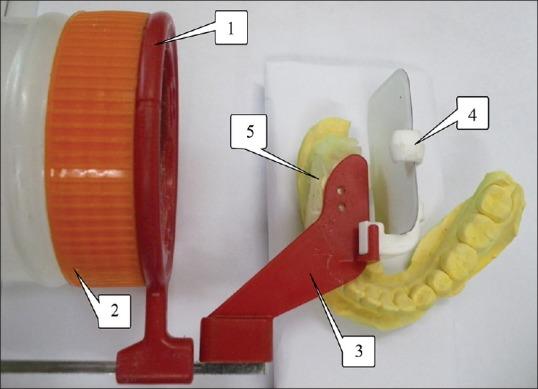
The study was based on a 6-month follow-up of 38 patients (19 males and 19 females; Mean age: 21.89 ± 2.74) recruited consecutively after surgical extraction of an impacted lower third molar. The third molar's presurgical position, eruption level, and local complications were examined. Periodontal status, including Plaque Index (PI), Gingival Index (GI), and gingival bleeding on probing (BOP), of the teeth in the adjacent sextant was clinically evaluated. The pocket depth (PD) and the distance between the epithelial attachment and the adjacent second molar's occlusal surface were clinically measured; and the distance between the alveolar bone crest and cementoenamel junction (AC-CEJ) of the adjacent second molar was evaluated by the periapical film. All measures were recorded at the time of surgery and 1, 3, and 6 months after surgery.
RESULTS
The values of PI, GI, BOP, PD, and EA-OS were significantly reduced after 1, 3, and 6 months compared to baseline data. The AC-CEJ was decreased after 1 month but significantly increased after 3 and 6 months. Presurgical local complications of the impacted third molar mostly were significantly associated with the periodontal status of the adjacent sextant.
CONCLUSION
There was a significant improvement of periodontal conditions of the second molar and adjacent sextant after impacted third molar surgery.
目的
本研究旨在评估拔除阻生下颌第三磨牙后,相邻第二磨牙牙周状况的变化,及其与术前第三磨牙状况(包括位置、萌出水平和局部并发症)之间的关联。
材料与方法
本研究基于对38例患者(19例男性和19例女性;平均年龄:21.89±2.74岁)进行6个月的随访,这些患者在接受阻生下颌第三磨牙拔除手术后连续入组。检查了第三磨牙的术前位置、萌出水平和局部并发症。临床评估了相邻牙段牙齿的牙周状况,包括菌斑指数(PI)、牙龈指数(GI)和探诊时牙龈出血(BOP)。临床测量了牙周袋深度(PD)以及上皮附着与相邻第二磨牙咬合面之间的距离;并通过根尖片评估相邻第二磨牙的牙槽嵴顶与牙骨质釉质界(AC-CEJ)之间的距离。所有测量值均在手术时以及术后1、3和6个月记录。
结果
与基线数据相比,术后1、3和6个月时,PI、GI、BOP、PD和EA-OS的值均显著降低。AC-CEJ在术后1个月降低,但在术后3个月和6个月显著增加。阻生第三磨牙的术前局部并发症大多与相邻牙段的牙周状况显著相关。
结论
阻生第三磨牙手术后,第二磨牙及相邻牙段的牙周状况有显著改善。

 Zotero 插件