
民族医学中的患者评估和慢性疼痛自我管理:以患者为中心的阿育吠陀护理中的季节性和生态系统体现。
Patient Assessment and Chronic Pain Self-Management in Ethnomedicine: Seasonal and Ecosystemic Embodiment in Ayurvedic Patient-Centered Care.
机构信息
Department of Communication, Fulton School of Liberal Arts, Salisbury University, Maryland, MA 21801, USA.
出版信息
Int J Environ Res Public Health. 2020 Apr 21;17(8):2842. doi: 10.3390/ijerph17082842.
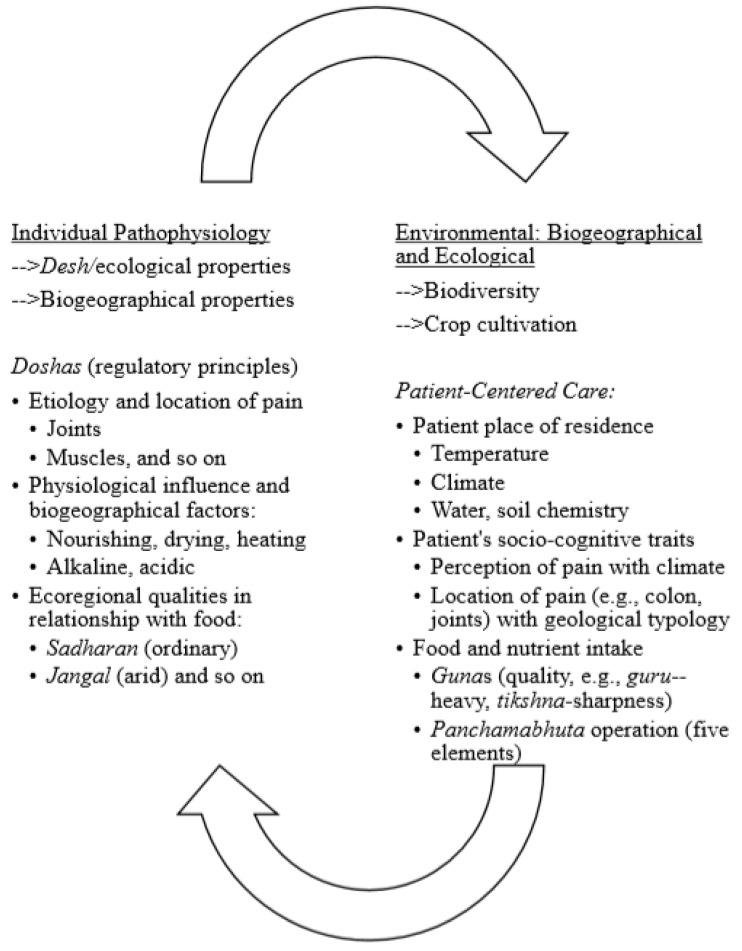
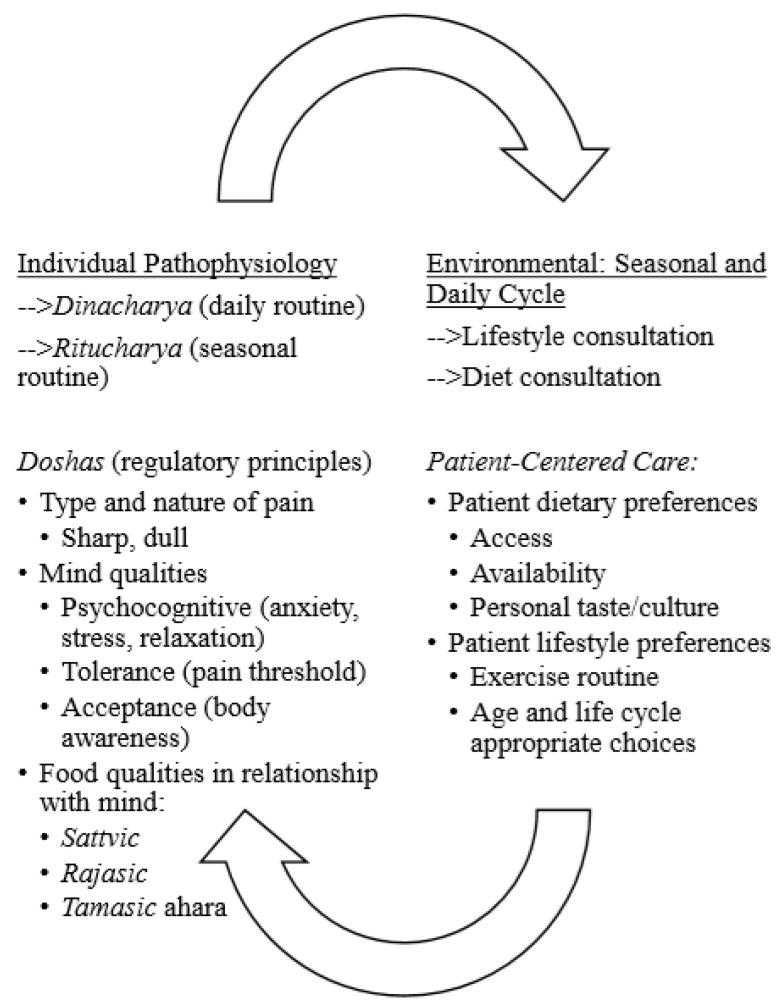
Ayurveda's preventive focus complements its strength with the interventionist approach of the biomedical in chronic pain self-management. Patient-centered care (PCC) using ethnomedicine promises greater patient self-management; however, few studies have examined environmental relationships and PCC in self-management of chronic pain through Ayurveda. To examine how Ayurveda's philosophical focus on whole system frameworks describes the integration of the individual and the ecological in tailoring an integrative patient-centered diagnostic and prognostic approach to chronic pain management. This qualitative case study conducted in-depth semi-structured interviews of Ayurvedic physicians from India ( = 10) and a qualitative inductive content analytic approach. The diagnostic and interpretational framework of the supports the integration of the individual and the ecological through (a) the circadian and seasonal cycles relating mind-body awareness with diet, lifestyle (e.g., yoga), and breath (e.g., ) and (b) biogeographical and ecosystemic regions relating the biogeographical and the ecological (e.g., ) with the regulatory principle of pain and its physiological and anatomical perception () in an approach that goes beyond treating pain etiology to a whole person PCC approach. The study highlights how circadian and seasonal cycles and evolutionary spatial-temporal factors of biogeographical and ecological regions are employed in patient assessment and self-management to support patient involvement. Recommendations for PCC in integrative chronic pain management include supporting patient ownership of their care through the framework that relates the individual and the ecological in the patient's own life-context and supports co-creation of a collaborative plan of care using an ethnomedical framework.
阿育吠陀的预防重点通过生物医学的干预方法来补充其在慢性疼痛自我管理方面的优势。采用民族医学的以患者为中心的护理(PCC)有望实现更大的患者自我管理;然而,很少有研究通过阿育吠陀来考察慢性疼痛自我管理中环境关系和 PCC。本研究旨在考察阿育吠陀的整体系统框架哲学重点如何描述个体和生态在定制综合以患者为中心的诊断和预后方法以管理慢性疼痛方面的整合。这项在印度进行的定性案例研究对来自印度的阿育吠陀医生(n=10)进行了深入的半结构化访谈,并采用了定性归纳内容分析方法。阿育吠陀的诊断和解释框架通过以下方式支持个体和生态的整合:(a)与饮食、生活方式(例如瑜伽)和呼吸(例如)相关的昼夜和季节性周期,以及(b)与生物地理和生态系统区域相关的生物地理和生态系统区域(例如)与疼痛及其生理和解剖感知的调节原则()之间的关系,这种方法超越了治疗疼痛病因,采用了一种整体的以患者为中心的护理方法。该研究强调了昼夜和季节性周期以及生物地理和生态区域的进化时空因素如何在患者评估和自我管理中被用于支持患者的参与。在综合慢性疼痛管理中采用 PCC 的建议包括通过将个体和生态在患者自己的生活环境中联系起来的框架来支持患者对自己护理的所有权,从而支持使用民族医学框架共同制定协作护理计划。
 Zotero 插件