
英国宠物主人体内寄生虫感染风险及驱虫建议影响的调查。
Survey of UK pet owners quantifying internal parasite infection risk and deworming recommendation implications.
机构信息
Elanco Animal Health, Lilly House, Priestley Road, Basingstoke, Hampshire, RG24 9NL, UK.
Elanco Animal Health, 2500 Innovation Way, Greenfield, IN, 46140, USA.
出版信息
Parasit Vectors. 2020 Apr 26;13(1):218. doi: 10.1186/s13071-020-04086-2.
BACKGROUND
Dogs and cats in the UK are exposed to many internal parasites which can pose risks to the health of both the pet and their owners. By understanding these endemic parasites and the risks they pose, we can assess the lifestyle of pets and recommend the correct deworming frequency. Studies identifying risk factors were discussed in the European Scientific Counsel Companion Animal Parasites (ESCCAP) guidelines. To this date, there has been very little information on how pet owners in the UK deworm their pets and if the protocols they follow align with ESCCAP recommendations. The objective of this study was to look at the current deworming protocols of UK cat and dog owners in conjunction with their lifestyle and risk.
METHODS
An online survey was conducted in the UK targeting pet owners who own at least one dog and/or cat and were responsible for product purchase, the pet's health care and veterinary visits. These survey results were analysed against the ESCCAP guidelines and each pet placed into a risk category. By comparing the current deworming frequency with that recommended for their risk category, the compliance of UK pet owners with ESCCAP recommendations was evaluated.
RESULTS
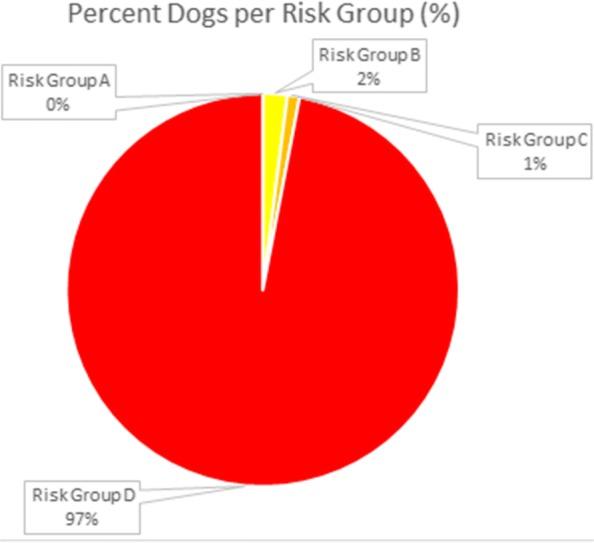
A total of 500 dog owners and 500 cat owners completed surveys. Overall, the study found none of the pets fell into risk group A, with all pets meeting the risk level for at least deworming four times a year (risk group B and above). The majority of animals fell into the highest risk category D with 97% of dogs and 68% of cats. The average deworming per year in the UK was 3.1 for dogs and 3.1 cats, below the minimum recommended by ESCCAP.
CONCLUSIONS
For both felines and canines, the dosing frequencies are lower than recommended to both reduce zoonotic risk for reducing Toxocara spp. egg-shedding and improve pet health. This research highlights the need for improved education around dog and cat patient risk assessments and greater adherence to recommended deworming aligned with the ESCCAP guidelines.
背景
在英国,狗和猫会接触到许多内寄生虫,这会对宠物和它们的主人的健康构成威胁。通过了解这些地方性寄生虫及其带来的风险,我们可以评估宠物的生活方式,并建议正确的驱虫频率。欧洲科学顾问伴侣动物寄生虫(ESCCAP)指南中讨论了确定风险因素的研究。迄今为止,关于英国宠物主人如何给宠物驱虫,以及他们遵循的方案是否符合 ESCCAP 建议,相关信息非常有限。本研究的目的是调查英国猫和狗主人目前的驱虫方案,以及这些方案与他们的生活方式和风险的关系。
方法
在英国进行了一项在线调查,对象是至少拥有一只狗和/或猫的宠物主人,这些主人负责购买产品、宠物的医疗保健和兽医就诊。将这些调查结果与 ESCCAP 指南进行分析,并根据指南将每只宠物归入一个风险类别。通过比较当前的驱虫频率与建议的风险类别驱虫频率,评估英国宠物主人对 ESCCAP 建议的遵守情况。
结果
共有 500 名狗主人和 500 名猫主人完成了调查。总体而言,研究发现没有宠物属于风险类别 A,所有宠物的驱虫频率都至少达到每年 4 次(风险类别 B 及以上)。大多数动物属于最高风险类别 D,97%的狗和 68%的猫属于该类别。英国每年的平均驱虫次数为狗 3.1 次,猫 3.1 次,低于 ESCCAP 的最低建议值。
结论
对于猫和狗,驱虫频率都低于建议值,这既可以降低减少食源性寄生虫感染的人畜共患病风险,也可以改善宠物的健康。这项研究强调了需要加强对狗和猫患者风险评估的教育,并更加严格地遵循与 ESCCAP 指南一致的建议驱虫方案。
 Zotero 插件