
来那度胺治疗后复发/难治性多发性骨髓瘤患者采用泊马度胺、地塞米松和达雷妥尤单抗治疗。
Pomalidomide, dexamethasone, and daratumumab in relapsed refractory multiple myeloma after lenalidomide treatment.
机构信息
John Theurer Cancer Center, Hackensack University Medical Center, Hackensack, NJ, USA.
David Geffen School of Medicine at University of California, Los Angeles, CA, USA.
出版信息
Leukemia. 2020 Dec;34(12):3286-3297. doi: 10.1038/s41375-020-0813-1. Epub 2020 May 6.
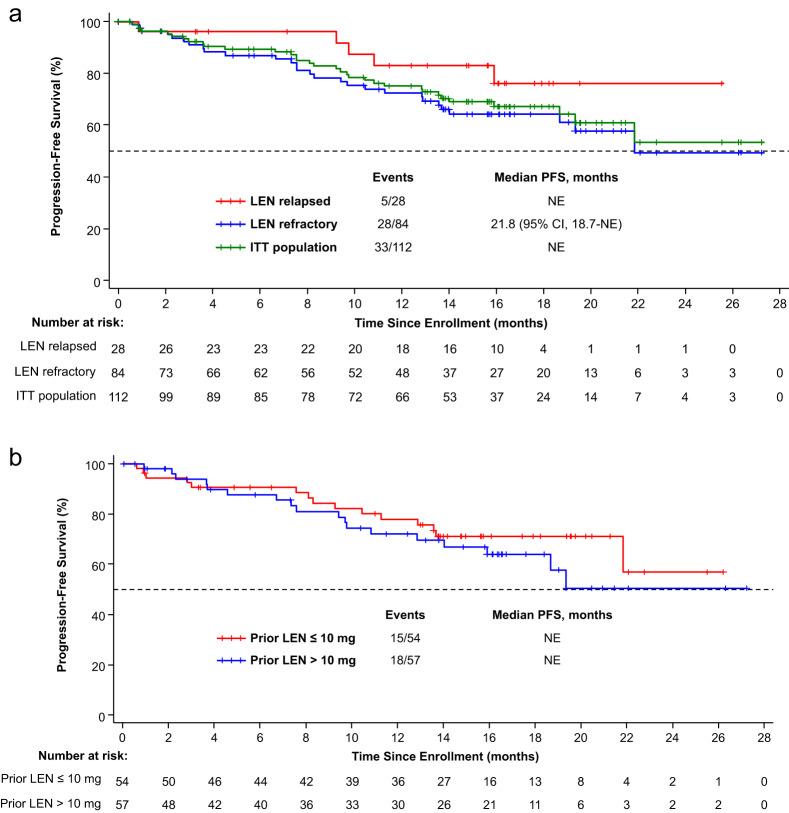
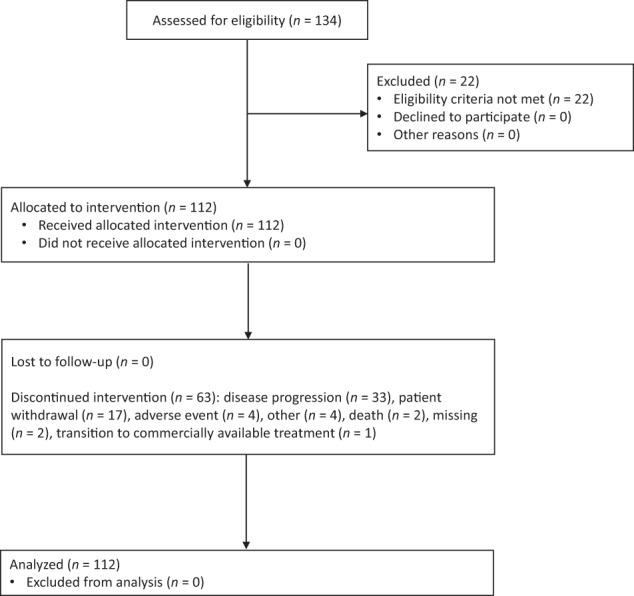
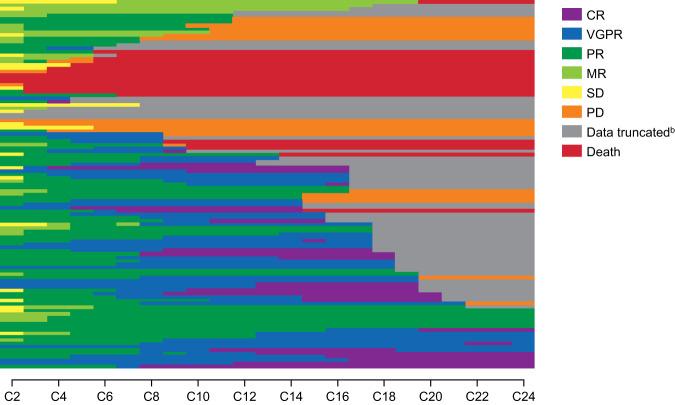
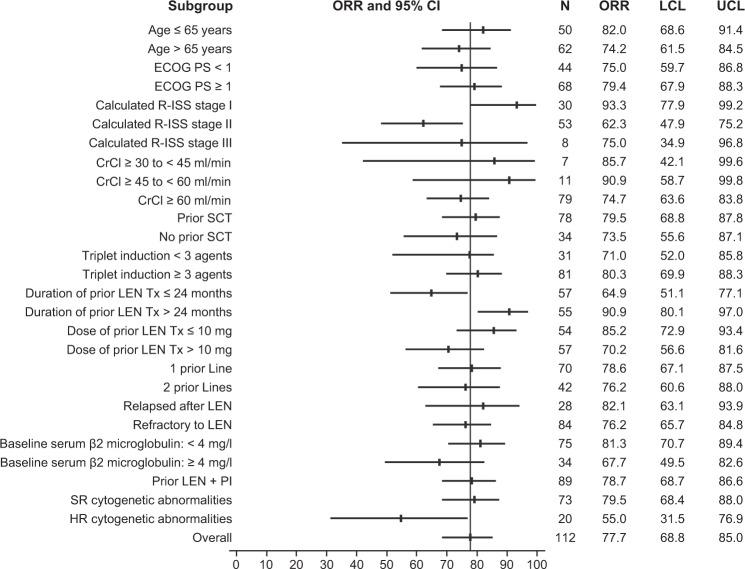
Patients with multiple myeloma who have relapsed after or become refractory to lenalidomide in early treatment lines represent a clinically important population in need of effective therapies. The safety and efficacy of pomalidomide, low-dose dexamethasone, and daratumumab was evaluated in lenalidomide-pretreated patients with relapsed or refractory multiple myeloma (RRMM) after one to two prior treatment lines in the phase 2 MM-014 study. Patients received pomalidomide 4 mg daily from days 1-21 and dexamethasone 40 mg weekly (28-day cycles). Daratumumab 16 mg/kg was administered per label. Primary endpoint was overall response rate (ORR); secondary endpoints included progression-free survival (PFS) and safety. Per protocol, all patients (N = 112) had received lenalidomide in their most recent prior regimen (75.0% lenalidomide refractory). ORR was 77.7% (76.2% in lenalidomide-refractory patients); median follow-up was 17.2 months. Median PFS was not reached (1-year PFS rate 75.1%). The most common hematologic grade 3/4 treatment-emergent adverse event was neutropenia (62.5%). Grade 3/4 infections were reported in 31.3% of patients, including 13.4% with grade 3/4 pneumonia. These results demonstrate the safety and efficacy of pomalidomide-based therapy as early as second line in patients with RRMM, even immediately after lenalidomide failure, indicating that switching from the immunomodulatory agent class is not necessary.
在早期治疗线中接受来那度胺治疗后复发或产生耐药的多发性骨髓瘤患者代表了一类具有重要临床意义的人群,他们需要有效的治疗方法。在 MM-014 期研究中,评估了来那度胺预处理后复发或难治性多发性骨髓瘤(RRMM)患者(在一至二线治疗后)使用泊马度胺、低剂量地塞米松和达雷妥尤单抗的安全性和疗效。患者接受来那度胺 4mg 每日一次,连续 21 天,地塞米松 40mg 每周一次(28 天周期)。根据标签规定给予达雷妥尤单抗 16mg/kg。主要终点是总缓解率(ORR);次要终点包括无进展生存期(PFS)和安全性。根据方案,所有患者(N=112)在最近一次治疗方案中均接受了来那度胺(75.0%对来那度胺耐药)。ORR 为 77.7%(对来那度胺耐药的患者为 76.2%);中位随访时间为 17.2 个月。中位 PFS 未达到(1 年 PFS 率为 75.1%)。最常见的血液学 3/4 级治疗相关不良事件为中性粒细胞减少症(62.5%)。31.3%的患者报告了 3/4 级感染,包括 13.4%的患者出现 3/4 级肺炎。这些结果表明,即使在来那度胺失败后立即,在 RRMM 患者中尽早使用基于泊马度胺的治疗方案也具有安全性和疗效,这表明不需要从免疫调节药物类别切换。
 Zotero 插件