
用于研究小鼠骨骼肌组织中肌核排列的肌核特异性活体标记
Exclusive vital labeling of myonuclei for studying myonuclear arrangement in mouse skeletal muscle tissue.
作者信息
Hastings Robert Louis, Massopust Ryan T, Haddix Seth G, Lee Young Il, Thompson Wesley J
机构信息
Texas A&M Institute for Neuroscience, College Station, TX, USA.
Department of Biology, Texas A&M University, College Station, TX, USA.
出版信息
Skelet Muscle. 2020 May 7;10(1):15. doi: 10.1186/s13395-020-00233-6.
BACKGROUND
The arrangement of myonuclei in skeletal muscle tissue has long been used as a biomarker for muscle health, but there is a dearth of in vivo exploration of potential effects of myonuclear organization on the function and regeneration of skeletal muscle because traditional nuclear stains are performed on postmortem tissue. Therefore, we sought a transgenic method to produce a selective and persistent myonuclear label in whole muscles of living mice.
METHODS
We bred together a mouse line with skeletal muscle fiber-selective expression of Cre recombinase and a second mouse line with a Cre-inducible fluorescently tagged histone protein to generate a mouse line that produces a myonuclear label suitable for vital imaging and histology of fixed tissue. We tested the effectiveness of this vital label in three conditions known to generate abnormal myonuclear positioning. First, we injured myofibers of young mice with cardiotoxin. Second, this nuclear label was bred into a murine model of Duchenne muscular dystrophy. Finally, we examined old mice from this line that have undergone the natural aging process. Welch's t test was used to compare wild type and transgenic mice.
RESULTS
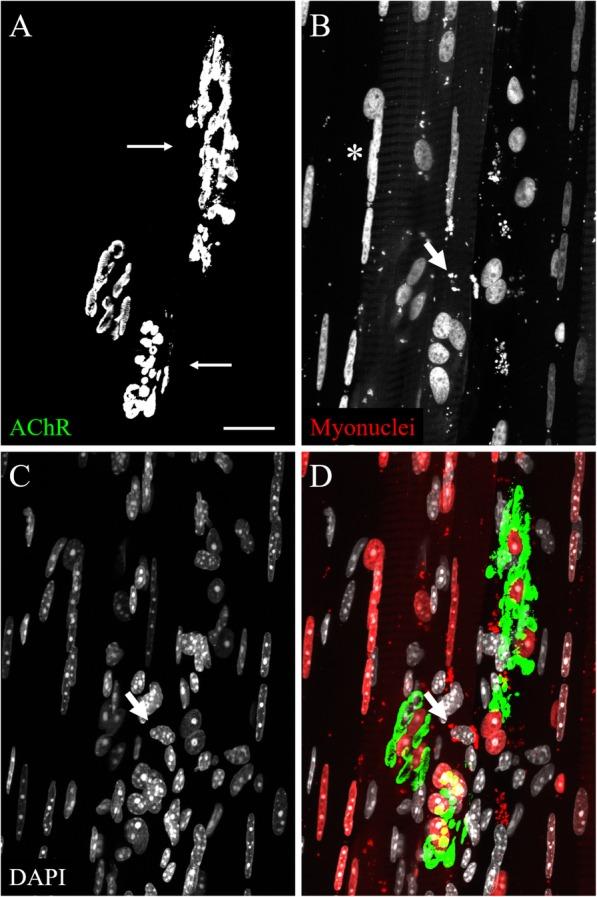
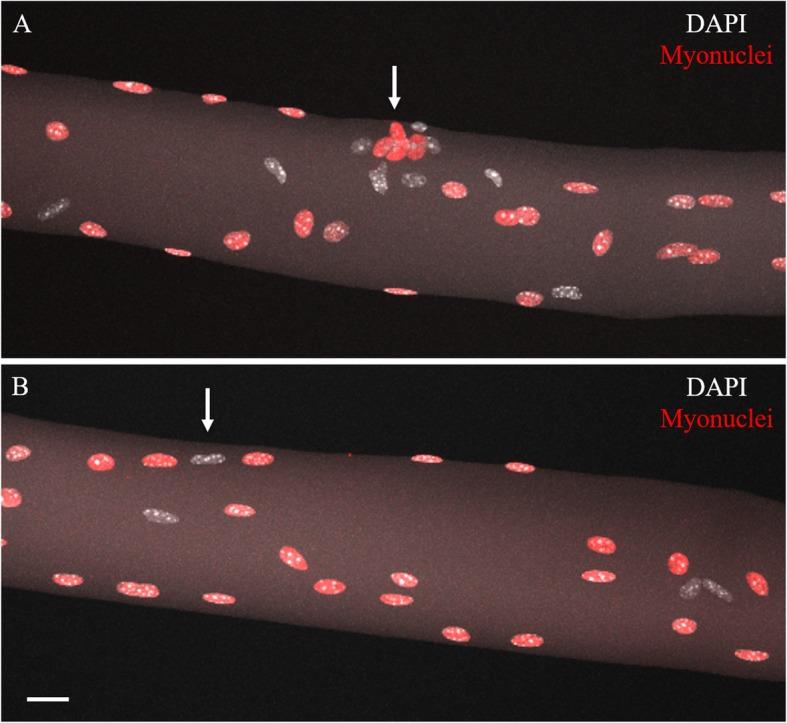
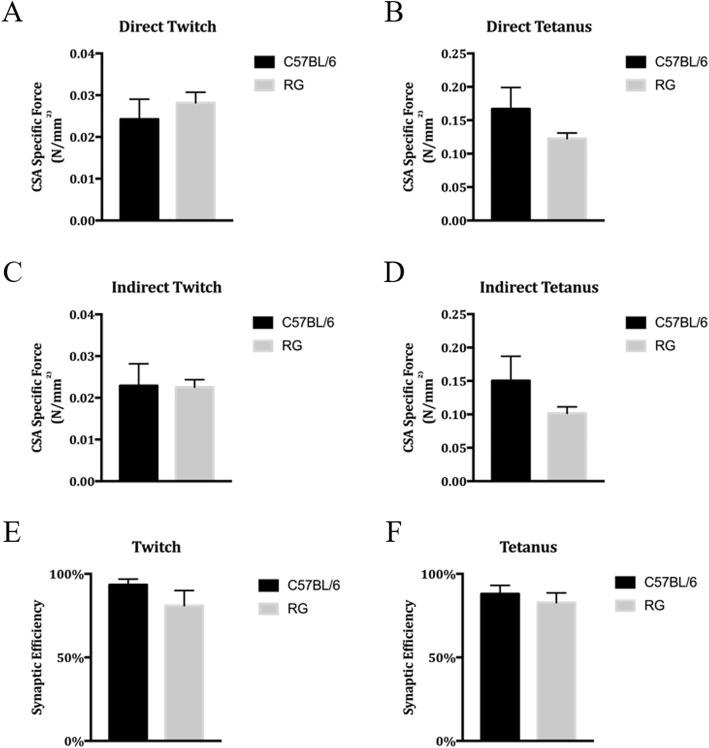
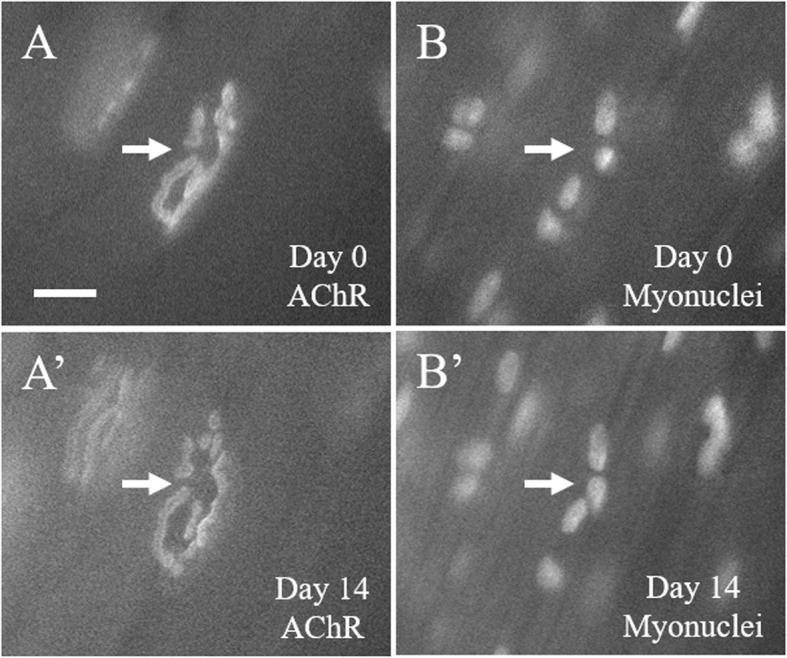
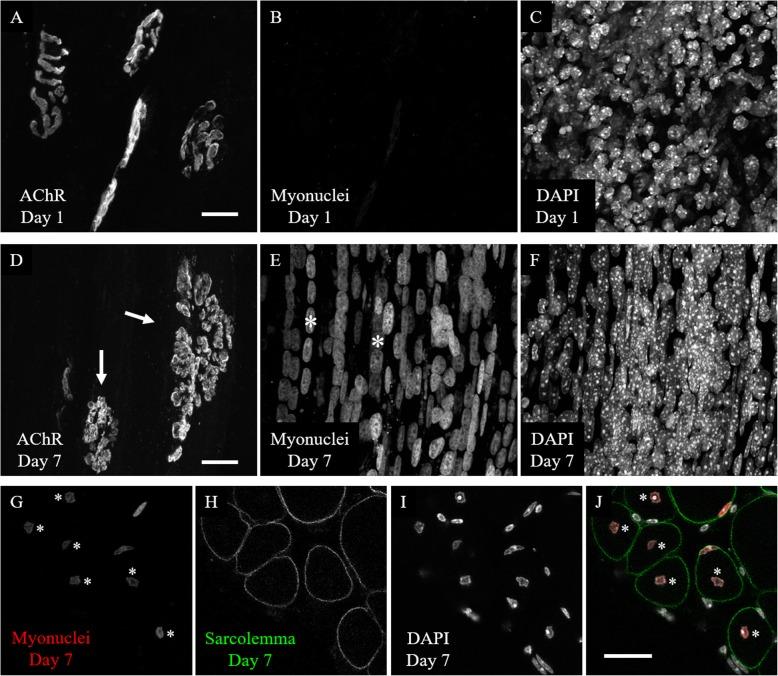
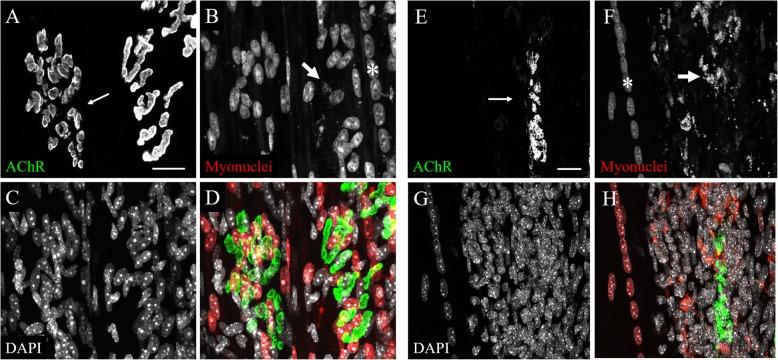
The resulting mouse line transgenically produces a vital red fluorescent label of myonuclei, which facilitates their in vivo imaging in skeletal muscle tissue. Transgenic fluorescent labeling of myonuclei has no significant effect on skeletal muscle function, as determined by twitch and tetanic force recordings. In each muscle examined, including those under damaged, dystrophic, and aged conditions, the labeled myonuclei exhibit morphology consistent with established literature, and reveal a specialized arrangement of subsynaptic myonuclei at the neuromuscular junction.
CONCLUSIONS
Taken together, our results demonstrate that this mouse line provides a versatile tool to selectively visualize myonuclei within both living and fixed preparations of healthy, injured, diseased, and aged muscles.
背景
骨骼肌组织中肌细胞核的排列长期以来一直被用作肌肉健康的生物标志物,但由于传统的细胞核染色是在死后组织上进行的,因此缺乏对肌核组织对骨骼肌功能和再生的潜在影响的体内研究。因此,我们寻求一种转基因方法,以在活小鼠的整个肌肉中产生选择性和持久性的肌核标记。
方法
我们将一个具有骨骼肌纤维选择性表达Cre重组酶的小鼠品系与另一个具有Cre诱导型荧光标记组蛋白的小鼠品系杂交,以产生一个小鼠品系,该品系产生适合于活组织成像和固定组织组织学的肌核标记。我们在已知会产生异常肌核定位的三种条件下测试了这种活体标记的有效性。首先,我们用心脏毒素损伤幼鼠的肌纤维。其次,将这种核标记培育到杜兴氏肌营养不良症的小鼠模型中。最后,我们检查了来自该品系的经历自然衰老过程的老年小鼠。使用Welch's t检验比较野生型和转基因小鼠。
结果
所得小鼠品系通过转基因产生肌核的活体红色荧光标记,这有助于在骨骼肌组织中对其进行体内成像。通过抽搐和强直力记录确定,肌核的转基因荧光标记对骨骼肌功能没有显著影响。在检查的每块肌肉中,包括那些处于受损、营养不良和衰老状态的肌肉,标记的肌核表现出与现有文献一致的形态,并揭示了神经肌肉接头处突触下肌核的特殊排列。
结论
综上所述,我们的结果表明,该小鼠品系提供了一种通用工具,可在健康、受伤、患病和衰老肌肉的活体和固定制剂中选择性地可视化肌核。


 Zotero 插件