
澳大利亚首批未经处理污水中 SARS-CoV-2 的检测确认:社区新冠病毒污水监测的概念验证。
First confirmed detection of SARS-CoV-2 in untreated wastewater in Australia: A proof of concept for the wastewater surveillance of COVID-19 in the community.
机构信息
CSIRO Land and Water, Ecosciences Precinct, 41 Boggo Road, QLD 4102, Australia.
Australian Centre for Ecogenomics, School of Chemistry and Molecular Biosciences, The University of Queensland, St Lucia, QLD 4072, Australia.
出版信息
Sci Total Environ. 2020 Aug 1;728:138764. doi: 10.1016/j.scitotenv.2020.138764. Epub 2020 Apr 18.
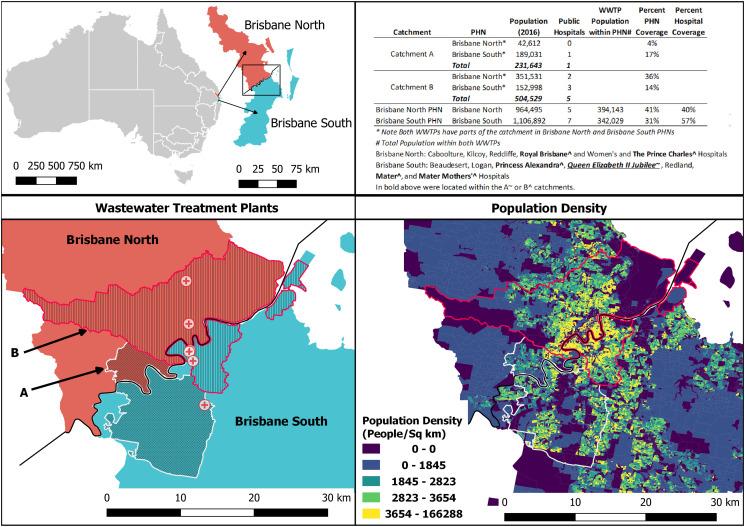
Infection with SARS-CoV-2, the etiologic agent of the ongoing COVID-19 pandemic, is accompanied by the shedding of the virus in stool. Therefore, the quantification of SARS-CoV-2 in wastewater affords the ability to monitor the prevalence of infections among the population via wastewater-based epidemiology (WBE). In the current work, SARS-CoV-2 RNA was concentrated from wastewater in a catchment in Australia and viral RNA copies were enumerated using reverse transcriptase quantitative polymerase chain reaction (RT-qPCR) resulting in two positive detections within a six day period from the same wastewater treatment plant (WWTP). The estimated viral RNA copy numbers observed in the wastewater were then used to estimate the number of infected individuals in the catchment via Monte Carlo simulation. Given the uncertainty and variation in the input parameters, the model estimated a median range of 171 to 1,090 infected persons in the catchment, which is in reasonable agreement with clinical observations. This work highlights the viability of WBE for monitoring infectious diseases, such as COVID-19, in communities. The work also draws attention to the need for further methodological and molecular assay validation for enveloped viruses in wastewater.
感染 SARS-CoV-2,即目前 COVID-19 大流行的病原体,伴随着病毒在粪便中的脱落。因此,通过基于污水的流行病学(WBE),对污水中 SARS-CoV-2 的定量分析可以监测人群中的感染流行情况。在当前的工作中,从澳大利亚集水区的污水中浓缩 SARS-CoV-2 RNA,并使用逆转录定量聚合酶链反应(RT-qPCR)对病毒 RNA 拷贝进行计数,结果在来自同一污水处理厂(WWTP)的六天内检测到两个阳性结果。然后,通过蒙特卡罗模拟,将在污水中观察到的估计病毒 RNA 拷贝数用于估算集水区中感染个体的数量。鉴于输入参数的不确定性和变化,该模型估计集水区中感染中位数范围为 171 至 1090 人,与临床观察结果基本一致。这项工作强调了 WBE 监测传染病(如 COVID-19)在社区中的可行性。该工作还提请注意需要进一步对污水中的包膜病毒进行方法和分子检测验证。


 Zotero 插件