
接种于脱细胞人羊膜支架上的成纤维细胞生长因子2诱导的人羊膜间充质干细胞加速兔关节外模型中肌腱-骨愈合
FGF-2-Induced Human Amniotic Mesenchymal Stem Cells Seeded on a Human Acellular Amniotic Membrane Scaffold Accelerated Tendon-to-Bone Healing in a Rabbit Extra-Articular Model.
作者信息
Zhang Jun, Liu Ziming, Li Yuwan, You Qi, Yang Jibin, Jin Ying, Zou Gang, Tang Jingfeng, Ge Zhen, Liu Yi
机构信息
Department of Orthopaedic Surgery, Affiliated Hospital of Zunyi Medical University, China.
Institute of Sports Medicine, Beijing Key Laboratory of Sports Injuries, Peking University Third Hospital, China.
出版信息
Stem Cells Int. 2020 Jan 6;2020:4701476. doi: 10.1155/2020/4701476. eCollection 2020.
BACKGROUND
FGF-2 (basic fibroblast growth factor) has a positive effect on the proliferation and differentiation of many kinds of MSCs. Therefore, it represents an ideal molecule to facilitate tendon-to-bone healing. Nonetheless, no studies have investigated the application of FGF-2-induced human amniotic mesenchymal stem cells (hAMSCs) to accelerate tendon-to-bone healing in vivo.
OBJECTIVE
The purpose of this study was to explore the effect of FGF-2 on chondrogenic differentiation of hAMSCs in vitro and the effect of FGF-2-induced hAMSCs combined with a human acellular amniotic membrane (HAAM) scaffold on tendon-to-bone healing in vivo.
METHODS
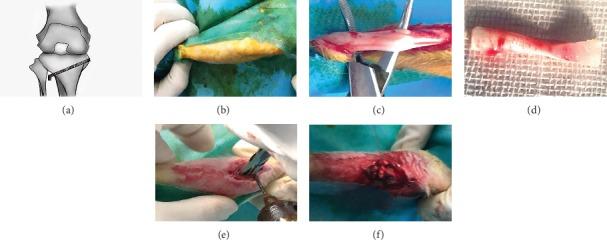
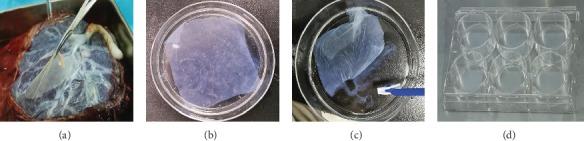
In vitro, hAMSCs were transfected with a lentivirus carrying the gene, and the potential for chondrogenic differentiation of hAMSCs induced by the gene was assessed using immunofluorescence and toluidine blue (TB) staining. HAAM scaffold was prepared, and hematoxylin and eosin (HE) staining and scanning electron microscopy (SEM) were used to observe the microstructure of the HAAM scaffold. hAMSCs transfected with and without were seeded on the HAAM scaffold at a density of 3 × 10 cells/well. Immunofluorescence staining of vimentin and phalloidin staining were used to confirm cell adherence and growth on the HAAM scaffold. In vivo, the rabbit extra-articular tendon-to-bone healing model was created using the right hind limb of 40 New Zealand White rabbits. Grafts mimicking tendon-to-bone interface (TBI) injury were created and subjected to treatment with the HAAM scaffold loaded with FGF-2-induced hAMSCs, HAAM scaffold loaded with hAMSCs only, HAAM scaffold, and no special treatment. Macroscopic observation, imageological analysis, histological assessment, and biomechanical analysis were conducted to evaluate tendon-to-bone healing after 3 months.
RESULTS
In vitro, cartilage-specific marker staining was positive for the overexpression group. The HAAM scaffold displayed a netted structure and mass extracellular matrix structure. hAMSCs or hAMSCs transfected with survived on the HAAM scaffold and grew well. In vivo, the group treated with HAAM scaffold loaded with -induced hAMSCs had the narrowest bone tunnel after three months as compared with other groups. In addition, macroscopic and histological scores were higher for this group than for the other groups, along with the best mechanical strength.
CONCLUSION
hAMSCs transfected with combined with the HAAM scaffold could accelerate tendon-to-bone healing in a rabbit extra-articular model.
背景
成纤维细胞生长因子-2(FGF-2,碱性成纤维细胞生长因子)对多种间充质干细胞的增殖和分化具有积极作用。因此,它是促进腱骨愈合的理想分子。尽管如此,尚无研究探讨FGF-2诱导的人羊膜间充质干细胞(hAMSCs)在体内加速腱骨愈合的应用。
目的
本研究旨在探讨FGF-2对hAMSCs体外软骨分化的影响,以及FGF-2诱导的hAMSCs与人脱细胞羊膜(HAAM)支架联合应用对体内腱骨愈合的影响。
方法
体外,用携带该基因的慢病毒转染hAMSCs,采用免疫荧光和甲苯胺蓝(TB)染色评估该基因诱导的hAMSCs的软骨分化潜能。制备HAAM支架,采用苏木精-伊红(HE)染色和扫描电子显微镜(SEM)观察HAAM支架的微观结构。将转染和未转染该基因的hAMSCs以3×10个细胞/孔的密度接种在HAAM支架上。采用波形蛋白免疫荧光染色和鬼笔环肽染色确认细胞在HAAM支架上的黏附与生长情况。体内,采用40只新西兰白兔的右后肢建立兔关节外腱骨愈合模型。制作模拟腱骨界面(TBI)损伤的移植物,并用负载FGF-2诱导的hAMSCs的HAAM支架、仅负载hAMSCs的HAAM支架、HAAM支架进行处理,且不进行特殊处理。3个月后进行大体观察、影像学分析、组织学评估和生物力学分析,以评价腱骨愈合情况。
结果
体外,过表达组软骨特异性标志物染色呈阳性。HAAM支架呈网状结构和大量细胞外基质结构。hAMSCs或转染该基因的hAMSCs在HAAM支架上存活且生长良好。体内,与其他组相比,负载该基因诱导的hAMSCs的HAAM支架处理组在3个月后骨隧道最窄。此外,该组的大体和组织学评分高于其他组,力学强度也最佳。
结论
转染该基因的hAMSCs与HAAM支架联合应用可加速兔关节外模型中的腱骨愈合。
 Zotero 插件