
多结构域 DNA 结合蛋白的非对称与丰度之间的平衡可能调节其与 DNA 结合的动力学。
Balance between asymmetry and abundance in multi-domain DNA-binding proteins may regulate the kinetics of their binding to DNA.
机构信息
Department of Structural Biology, Weizmann Institute of Science Rehovot, Israel.
出版信息
PLoS Comput Biol. 2020 May 26;16(5):e1007867. doi: 10.1371/journal.pcbi.1007867. eCollection 2020 May.
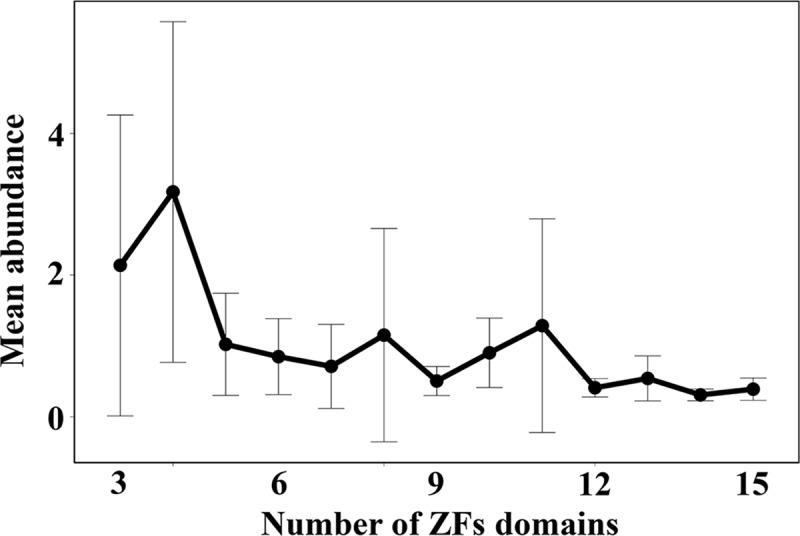
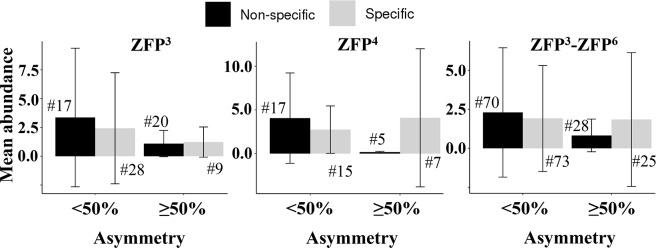
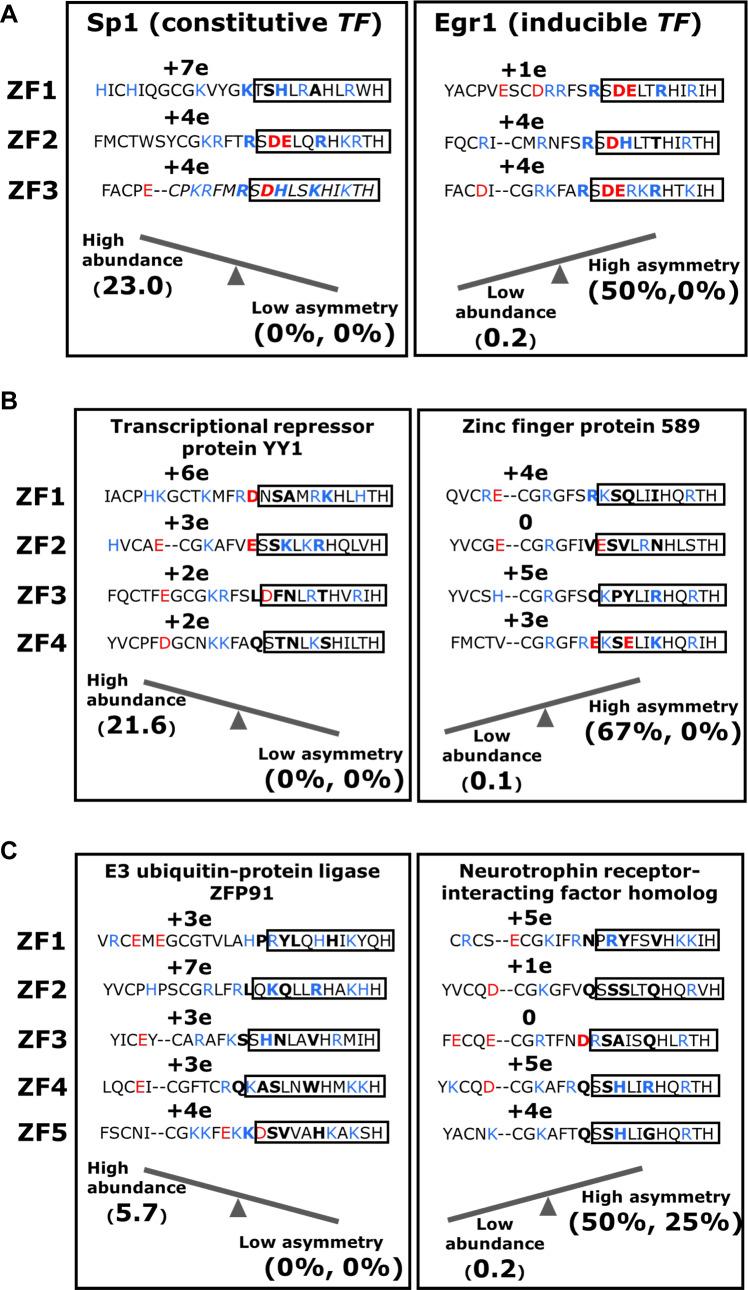
DNA sequences are often recognized by multi-domain proteins that may have higher affinity and specificity than single-domain proteins. However, the higher affinity to DNA might be coupled with slower recognition kinetics. In this study, we address this balance between stability and kinetics for multi-domain Cys2His2- (C2H2-) type zinc-finger (ZF) proteins. These proteins are the most prevalent DNA-binding domain in eukaryotes and C2H2 type zinc-finger proteins (C2H2-ZFPs) constitute nearly one-half of all known and predicted transcription factors in human. Extensive contact with DNA via tandem ZF domains confers high stability on the sequence-specific complexes. However, this can limit target search efficiency, especially for low abundance ZFPs. Earlier, we found that asymmetrical distribution of electrostatic charge among the three ZF domains of the low abundance transcription factor Egr-1 facilitates its DNA search process. Here, on a diverse set of 273 human C2H2-ZFP comprised of 3-15 tandem ZF domains, we find that, in many cases, electrostatic charge and binding specificity are asymmetrically distributed among the ZF domains so that neighbouring domains have different DNA-binding properties. For proteins containing 3-6 ZF domains, we show that the low abundance proteins possess a higher degree of non-specific asymmetry and vice versa. Our findings suggest that where the electrostatics of tandem ZF domains are similar (i.e., symmetrical), the ZFPs are more abundant to optimize their DNA search efficiency. This study reveals new insights into the fundamental determinants of recognition by C2H2-ZFPs of their DNA binding sites in the cellular landscape. The importance of electrostatic asymmetry with respect to binding site recognition by C2H2-ZFPs suggests the possibility that it may also be important in other ZFP systems and reveals a new design feature for zinc finger engineering.
DNA 序列通常被具有更高亲和力和特异性的多结构域蛋白识别,而不是单结构域蛋白。然而,与 DNA 的高亲和力可能伴随着识别动力学的减慢。在这项研究中,我们解决了多结构域 Cys2His2-(C2H2-)型锌指(ZF)蛋白在稳定性和动力学之间的这种平衡。这些蛋白质是真核生物中最常见的 DNA 结合结构域,C2H2 型锌指蛋白(C2H2-ZFPs)构成了人类中已知和预测的几乎一半的转录因子。通过串联 ZF 结构域与 DNA 的广泛接触赋予了序列特异性复合物的高稳定性。然而,这可能会限制靶标搜索效率,特别是对于低丰度的 ZFPs。早些时候,我们发现低丰度转录因子 Egr-1 的三个 ZF 结构域之间的静电电荷的不对称分布有利于其 DNA 搜索过程。在这里,在一组由 273 个人类 C2H2-ZFP 组成的多样性集合中,这些 C2H2-ZFP 包含 3-15 个串联 ZF 结构域,我们发现,在许多情况下,静电电荷和结合特异性在 ZF 结构域之间呈不对称分布,使得相邻结构域具有不同的 DNA 结合特性。对于含有 3-6 个 ZF 结构域的蛋白质,我们表明低丰度蛋白质具有更高程度的非特异性不对称性,反之亦然。我们的研究结果表明,在串联 ZF 结构域的静电特性相似(即对称)的情况下,ZFPs 更为丰富,以优化其 DNA 搜索效率。这项研究揭示了 C2H2-ZFPs 识别其在细胞景观中的 DNA 结合位点的基本决定因素的新见解。静电不对称性对 C2H2-ZFPs 结合位点识别的重要性表明,它在其他 ZFP 系统中也可能很重要,并揭示了锌指工程的一个新设计特征。



 Zotero 插件