
细胞外囊泡在衰老相关分泌表型中的光明与黑暗面。
The bright and dark side of extracellular vesicles in the senescence-associated secretory phenotype.
机构信息
Centre for Cell Biology and Cutaneous Research, Blizard Institute, Barts and The London School of Medicine and Dentistry, Queen Mary University of London, 4 Newark Street, London E1 2AT, UK.
Centre for Cell Biology and Cutaneous Research, Blizard Institute, Barts and The London School of Medicine and Dentistry, Queen Mary University of London, 4 Newark Street, London E1 2AT, UK.
出版信息
Mech Ageing Dev. 2020 Jul;189:111263. doi: 10.1016/j.mad.2020.111263. Epub 2020 May 24.
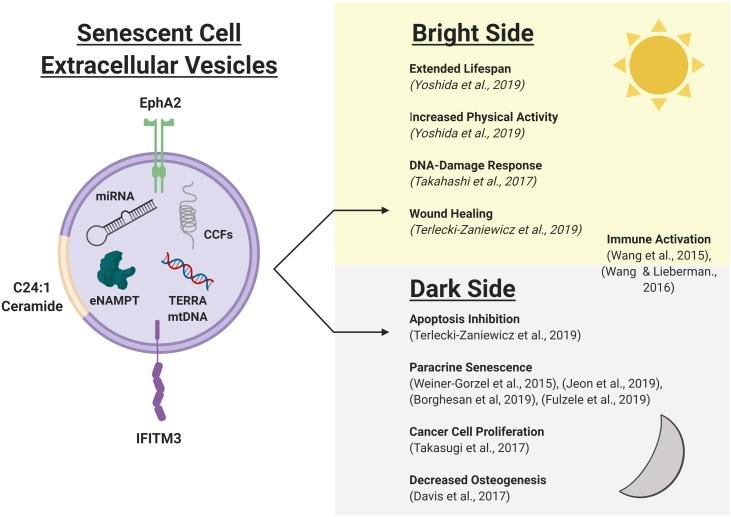
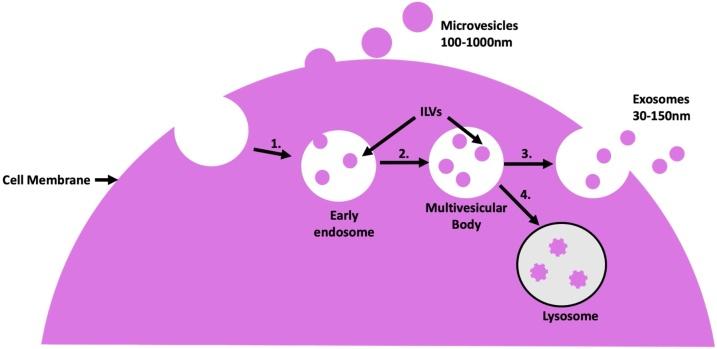
Senescence is a state of proliferative arrest which has been described as a protective mechanism against the malignant transformation of cells. However, senescent cells have also been demonstrated to accumulate with age and to contribute to a variety of age-related pathologies. These pathological effects have been attributed to the acquisition of an enhanced secretory profile geared towards inflammatory molecules and tissue remodelling agents - known as the senescence-associated secretory phenotype (SASP). Whilst the SASP has long been considered to be comprised predominantly of soluble mediators, growing evidence has recently emerged for the role of extracellular vesicles (EVs) as key players within the secretome of senescent cells. This review is intended to consolidate recent evidence for the roles of senescent cell-derived EVs to both the beneficial (Bright) and detrimental (Dark) effects of the SASP.
衰老是一种增殖停滞的状态,它被描述为一种防止细胞恶性转化的保护机制。然而,衰老细胞也随着年龄的增长而积累,并导致多种与年龄相关的病理。这些病理效应归因于获得了一种增强的分泌模式,以炎症分子和组织重塑剂为目标——这被称为衰老相关的分泌表型(SASP)。虽然 SASP 长期以来一直被认为主要由可溶性介质组成,但最近有越来越多的证据表明细胞外囊泡(EVs)作为衰老细胞分泌组中的关键角色。这篇综述旨在整合最近关于衰老细胞衍生的 EVs 的作用的证据,包括 SASP 的有益(Bright)和有害(Dark)效应。
 Zotero 插件