
与健康突发事件灾害风险管理相关的健康风险感知、态度和行为实践的社会人口学预测因素:以中国香港特别行政区 COVID-19 大流行为例。
Sociodemographic Predictors of Health Risk Perception, Attitude and Behavior Practices Associated with Health-Emergency Disaster Risk Management for Biological Hazards: The Case of COVID-19 Pandemic in Hong Kong, SAR China.
机构信息
Collaborating Centre for Oxford University and CUHK for Disaster and Medical Humanitarian Response (CCOUC), The Chinese University of Hong Kong, Hong Kong, China.
Nuffield Department of Medicine, University of Oxford, Oxford OX37BN, UK.
出版信息
Int J Environ Res Public Health. 2020 May 29;17(11):3869. doi: 10.3390/ijerph17113869.
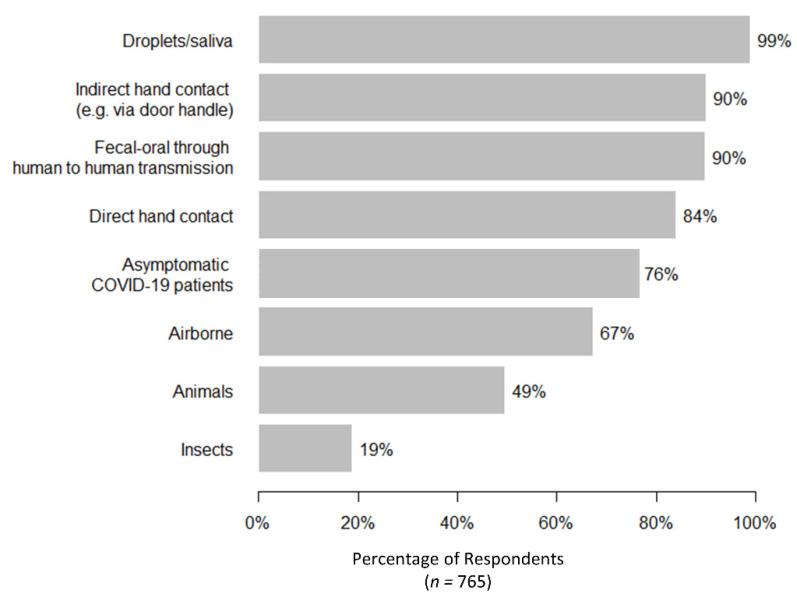
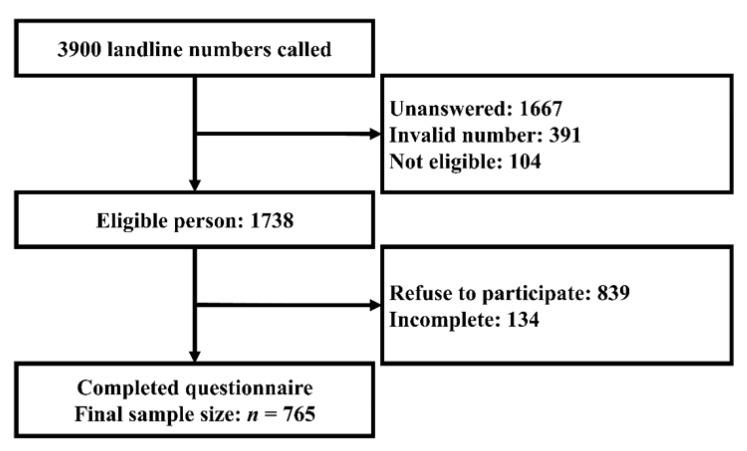
In addition to top-down Health-Emergency and Disaster Risk Management (Health-EDRM) efforts, bottom-up individual and household measures are crucial for prevention and emergency response of the COVID-19 pandemic, a Public Health Emergency of International Concern (PHEIC). There is limited scientific evidence of the knowledge, perception, attitude and behavior patterns of the urban population. A computerized randomized digital dialing, cross-sectional, population landline-based telephone survey was conducted from 22 March to 1 April 2020 in Hong Kong Special Administrative Region, China. Data were collected for socio-demographic characteristics, knowledge, attitude and risk perception, and various self-reported Health-EDRM behavior patterns associated with COVID-19. The final study sample was 765. Although the respondents thought that individuals (68.6%) had similar responsibilities as government (67.5%) in infection control, less than 50% had sufficient health risk management knowledge to safeguard health and well-being. Among the examined Health-EDRM measures, significant differences were found between attitude and practice in regards to washing hands with soap, ordering takeaways, wearing masks, avoidance of visiting public places or using public transport, and travel avoidance to COVID-19-confirmed regions. Logistic regression indicated that the elderly were less likely to worry about infection with COVID-19. Compared to personal and household hygiene practices, lower compliance was found for public social distancing.
除了自上而下的卫生应急和灾害风险管理(Health-EDRM)措施外,自下而上的个人和家庭措施对于预防和应对国际关注的突发公共卫生事件(PHEIC)——COVID-19 大流行至关重要。城市人口的知识、认知、态度和行为模式的科学证据有限。2020 年 3 月 22 日至 4 月 1 日,在中国香港特别行政区进行了一项基于计算机的随机数字拨号、横断面、人口固定电话调查。收集了社会人口统计学特征、知识、态度和风险认知以及与 COVID-19 相关的各种自我报告的卫生应急和灾害管理行为模式的数据。最终研究样本为 765 人。尽管受访者认为个人(68.6%)在感染控制方面与政府(67.5%)有类似的责任,但只有不到 50%的人有足够的健康风险管理知识来保障健康和福祉。在所检查的卫生应急和灾害管理措施中,洗手、点外卖、戴口罩、避免前往公共场所或使用公共交通工具以及避免前往 COVID-19 确诊地区等方面的态度和实践之间存在显著差异。逻辑回归表明,老年人不太担心感染 COVID-19。与个人和家庭卫生习惯相比,公众对社会距离的遵守程度较低。


 Zotero 插件