
人类嗅觉系统在两种蛋白病中的变化:阿尔茨海默病和帕金森病。
The human olfactory system in two proteinopathies: Alzheimer's and Parkinson's diseases.
机构信息
Neuroplasticity and Neurodegeneration Laboratory, Ciudad Real Medical School, CRIB, University of Castilla-La Mancha, 13005, Ciudad Real, Spain.
Neurology Service, Ciudad Real General University Hospital, 13005, Ciudad Real, Spain.
出版信息
Transl Neurodegener. 2020 Jun 3;9(1):22. doi: 10.1186/s40035-020-00200-7.
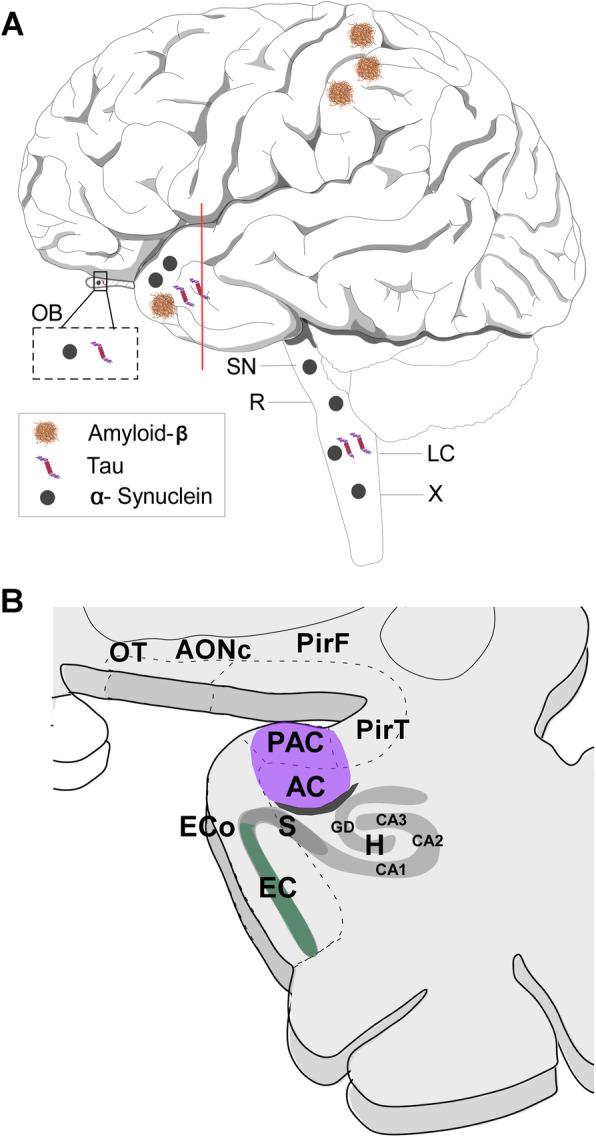
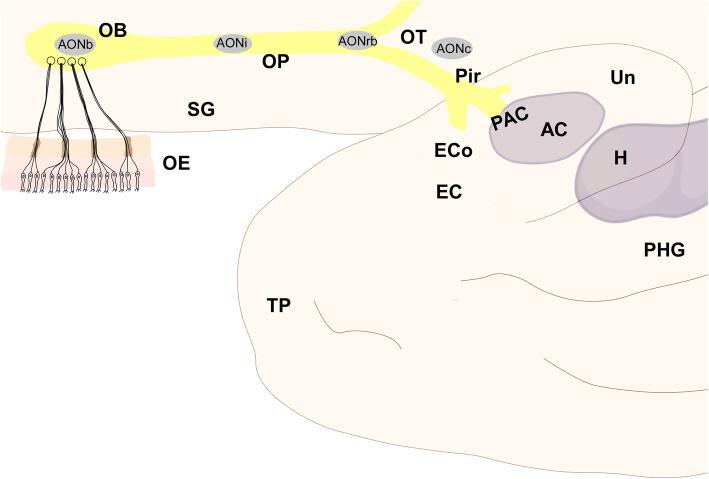
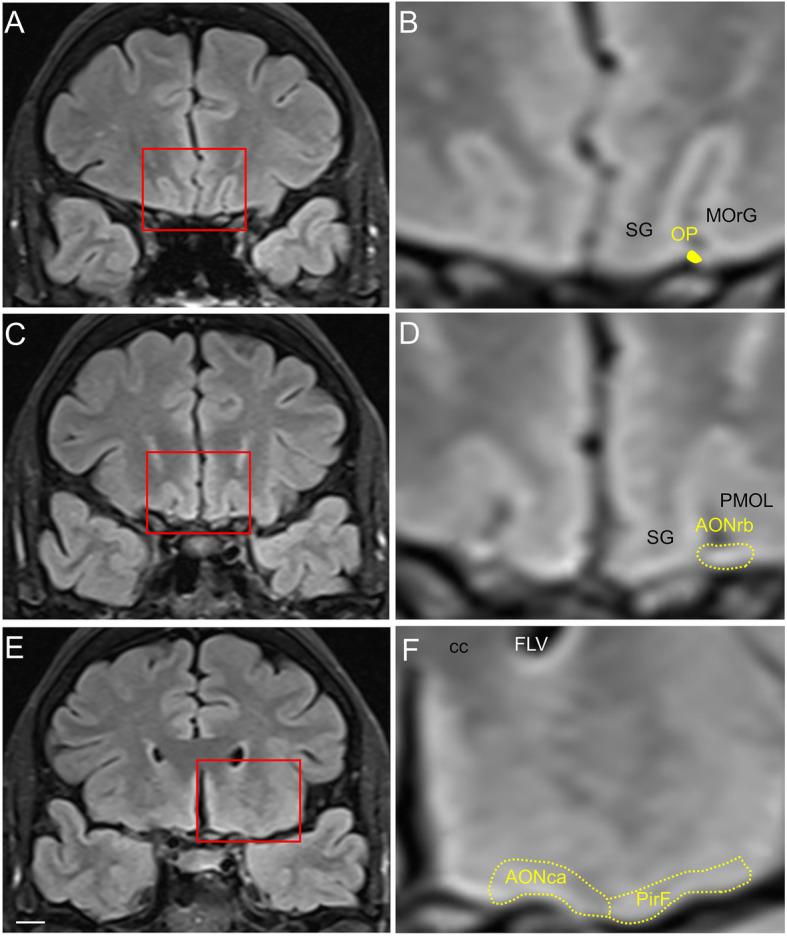
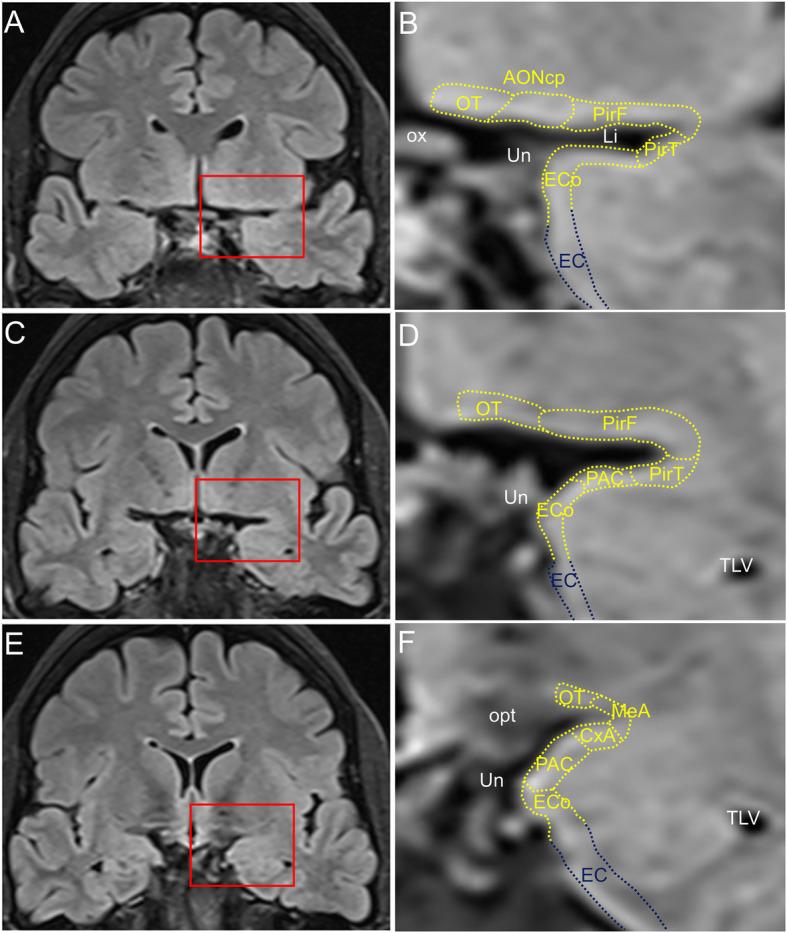
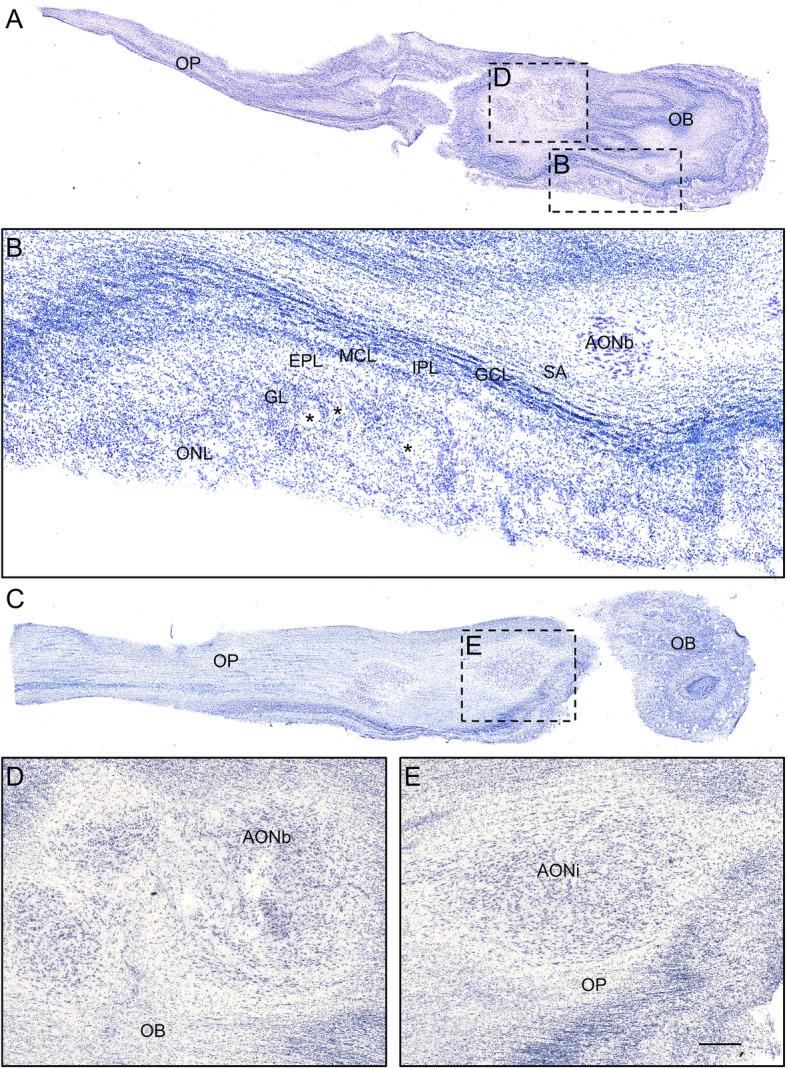
Alzheimer's and Parkinson's diseases are the most prevalent neurodegenerative disorders. Their etiologies are idiopathic, and treatments are symptomatic and orientated towards cognitive or motor deficits. Neuropathologically, both are proteinopathies with pathological aggregates (plaques of amyloid-β peptide and neurofibrillary tangles of tau protein in Alzheimer's disease, and Lewy bodies mostly composed of α-synuclein in Parkinson's disease). These deposits appear in the nervous system in a predictable and accumulative sequence with six neuropathological stages. Both disorders present a long prodromal period, characterized by preclinical signs including hyposmia. Interestingly, the olfactory system, particularly the anterior olfactory nucleus, is initially and preferentially affected by the pathology. Cerebral atrophy revealed by magnetic resonance imaging must be complemented by histological analyses to ascertain whether neuronal and/or glial loss or neuropil remodeling are responsible for volumetric changes. It has been proposed that these proteinopathies could act in a prion-like manner in which a misfolded protein would be able to force native proteins into pathogenic folding (seeding), which then propagates through neurons and glia (spreading). Existing data have been examined to establish why some neuronal populations are vulnerable while others are resistant to pathology and to what extent glia prevent and/or facilitate proteinopathy spreading. Connectomic approaches reveal a number of hubs in the olfactory system (anterior olfactory nucleus, olfactory entorhinal cortex and cortical amygdala) that are key interconnectors with the main hubs (the entorhinal-hippocampal-cortical and amygdala-dorsal motor vagal nucleus) of network dysfunction in Alzheimer's and Parkinson's diseases.
阿尔茨海默病和帕金森病是最常见的神经退行性疾病。它们的病因是特发性的,治疗方法是针对认知或运动缺陷的对症治疗。神经病理学上,两者都是蛋白质病变,有病理聚集物(阿尔茨海默病中淀粉样β肽的斑块和tau 蛋白的神经原纤维缠结,帕金森病中主要由α-突触核蛋白组成的路易体)。这些沉积物以可预测和累积的顺序出现在神经系统中,有六个神经病理学阶段。这两种疾病都有一个很长的前驱期,其特征是临床前迹象,包括嗅觉减退。有趣的是,嗅觉系统,特别是前嗅核,首先受到病理的影响。磁共振成像显示的脑萎缩必须通过组织学分析来补充,以确定神经元和/或神经胶质丢失或神经原纤维重塑是否是体积变化的原因。有人提出,这些蛋白质病变可能以类朊病毒的方式起作用,即错误折叠的蛋白质能够迫使天然蛋白质发生致病性折叠(接种),然后通过神经元和神经胶质传播(扩散)。已经检查了现有数据,以确定为什么一些神经元群体容易受到病理的影响,而另一些则具有抗性,以及神经胶质在多大程度上防止和/或促进蛋白质病变的传播。连接组学方法揭示了嗅觉系统中的一些枢纽(前嗅核、嗅内嗅皮质和皮质杏仁核),它们是与阿尔茨海默病和帕金森病网络功能障碍的主要枢纽(内嗅皮质-海马皮质和杏仁核-背侧迷走神经核)的关键连接器。


 Zotero 插件