
丹参酮IIA抑制类风湿关节炎患者滑膜成纤维细胞由肿瘤坏死因子-α诱导的增殖及炎性细胞因子产生,并减轻佐剂性关节炎小鼠的炎症反应。
Tanshinone IIA Suppresses Proliferation and Inflammatory Cytokine Production of Synovial Fibroblasts from Rheumatoid Arthritis Patients Induced by TNF-α and Attenuates the Inflammatory Response in AIA Mice.
作者信息
Du Hongyan, Wang Yuechun, Zeng Yongchang, Huang Xiaoming, Liu Dingfei, Ye Lvlan, Li Yang, Chen Xiaochen, Liu Tiancai, Li Hongwei, Wu Jing, Yu Qinghong, Wu Yingsong, Jie Ligang
机构信息
School of Laboratory Medicine and Biotechnology, Southern Medical University, Guangzhou, China.
Department of Rheumatology and Clinical Immunology, Zhujiang Hospital, Southern Medical University, Guangzhou, China.
出版信息
Front Pharmacol. 2020 May 15;11:568. doi: 10.3389/fphar.2020.00568. eCollection 2020.
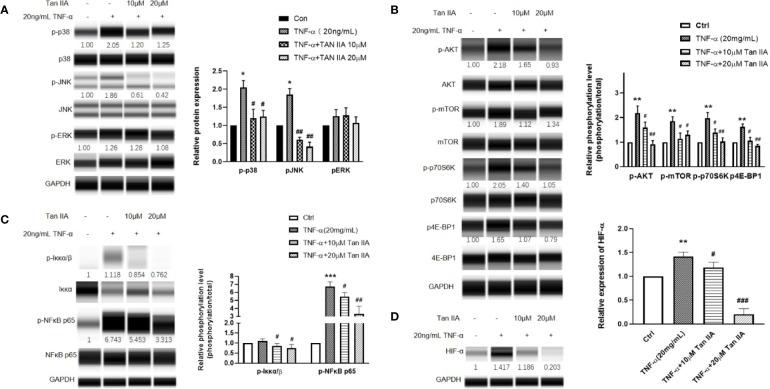
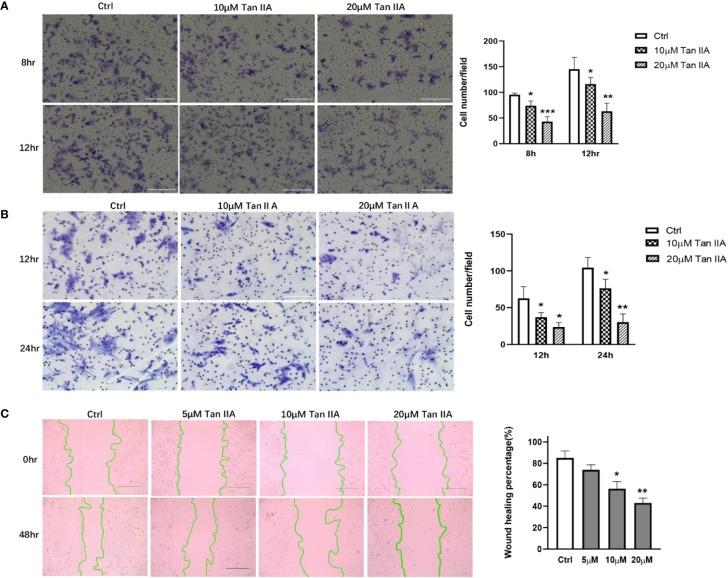
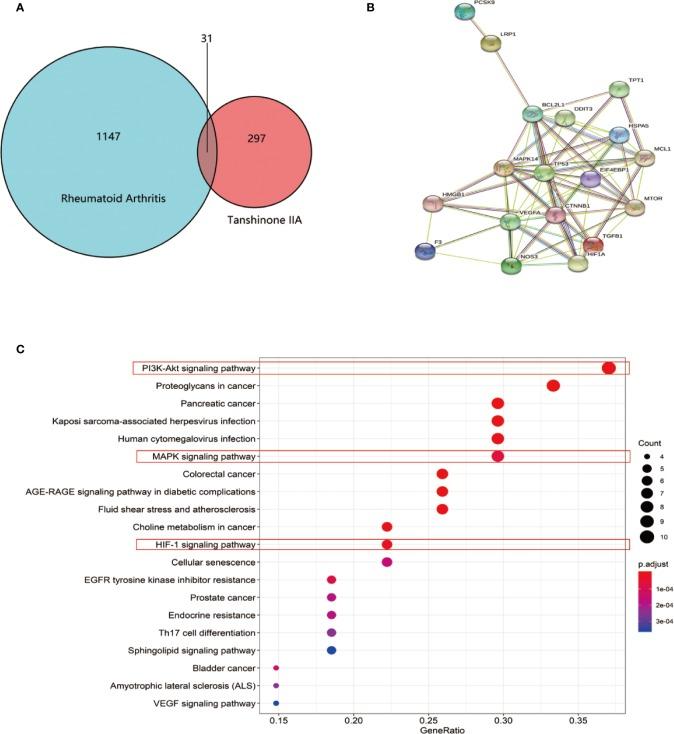
Rheumatoid arthritis (RA) is a chronic and progressive autoimmune disease in which activated RA fibroblast-1ike synoviocytes (RA-FLSs) are one of the main factors responsible for inducing morbidity. Previous reports have shown that RA-FLSs have proliferative features similar to cancer cells, in addition to causing cartilage erosion that eventually causes joint damage. Thus, new therapeutic strategies and drugs that can effectively contain the abnormal hyperplasia of RA-FLSs and restrain RA development are necessary for the treatment of RA. Tanshinone IIA (Tan IIA), one of the main phytochemicals isolated from Bunge, is capable of promoting RA-FLS apoptosis and inhibiting arthritis in an AIA mouse model. In addition, RA patients treated at our clinic with Tan IIA showed significant improvements in their clinical symptoms. However, the details of the molecular mechanism by which Tan IIA effects RA are unknown. To clarify this mechanism, we evaluated the antiproliferative and inhibitory effects of proinflammatory factor production caused by Tan IIA to RA-FLSs. We demonstrated that Tan IIA can restrict the proliferation, migration, and invasion of RA-FLSs in a time- and dose-dependent manner. Moreover, Tan IIA effectively suppressed the increase in mRNA expression of some matrix metalloproteinases and proinflammatory factors induced by TNF-α in RA-FLSs, resulting in inflammatory reactivity inhibition and blocking the destruction of the knee joint. Through the integration of network pharmacology analyses with the experimental data obtained, it is revealed that the effects of Tan IIA on RA can be attributed to its influence on different signaling pathways, including MAPK, AKT/mTOR, HIF-1, and NF-kB. Taken together, these data suggest that the compound Tan IIA has great therapeutic potential for RA treatment.
类风湿关节炎(RA)是一种慢性进行性自身免疫性疾病,其中活化的类风湿关节炎成纤维细胞样滑膜细胞(RA-FLSs)是导致发病的主要因素之一。先前的报道表明,RA-FLSs除了会导致软骨侵蚀最终引起关节损伤外,还具有与癌细胞相似的增殖特征。因此,对于RA的治疗,需要能够有效抑制RA-FLSs异常增生并抑制RA发展的新治疗策略和药物。丹参酮IIA(Tan IIA)是从丹参中分离出的主要植物化学成分之一,在佐剂性关节炎(AIA)小鼠模型中能够促进RA-FLSs凋亡并抑制关节炎。此外,在我们诊所接受Tan IIA治疗的RA患者临床症状有显著改善。然而,Tan IIA作用于RA的分子机制细节尚不清楚。为了阐明这一机制,我们评估了Tan IIA对RA-FLSs的抗增殖作用以及对促炎因子产生的抑制作用。我们证明Tan IIA能以时间和剂量依赖性方式限制RA-FLSs的增殖、迁移和侵袭。此外,Tan IIA有效抑制了TNF-α诱导的RA-FLSs中一些基质金属蛋白酶和促炎因子mRNA表达的增加,从而抑制炎症反应并阻止膝关节破坏。通过将网络药理学分析与所获得的实验数据相结合,发现Tan IIA对RA的作用可归因于其对包括MAPK、AKT/mTOR、HIF-1和NF-κB在内的不同信号通路的影响。综上所述,这些数据表明化合物Tan IIA在RA治疗方面具有巨大的治疗潜力。



 Zotero 插件