
索拉非尼耐药在肝细胞癌中的机制:理论基础和治疗方面。
The mechanisms of sorafenib resistance in hepatocellular carcinoma: theoretical basis and therapeutic aspects.
机构信息
Department of General Surgery, Nanjing First Hospital, Nanjing Medical University, Nanjing, China.
Hepatobiliary/Liver Transplantation Center, The First Affiliated Hospital of Nanjing Medical University, Key Laboratory of Living Donor Transplantation, Chinese Academy of Medical Sciences, Nanjing, China.
出版信息
Signal Transduct Target Ther. 2020 Jun 10;5(1):87. doi: 10.1038/s41392-020-0187-x.
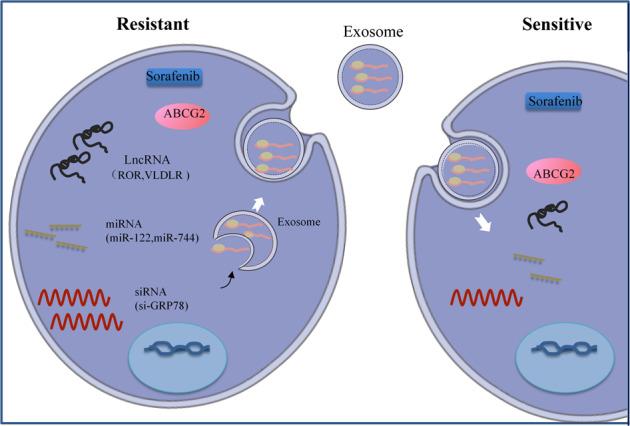
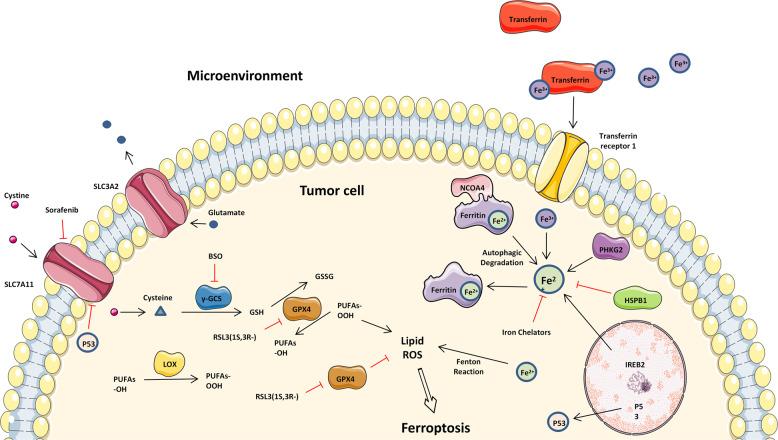
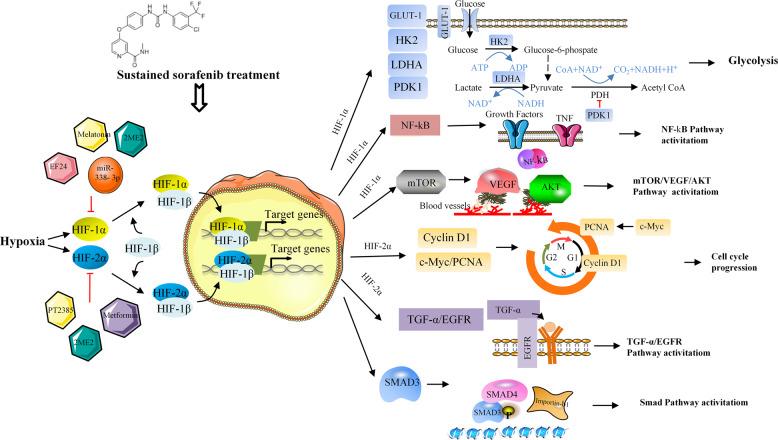
Sorafenib is a multikinase inhibitor capable of facilitating apoptosis, mitigating angiogenesis and suppressing tumor cell proliferation. In late-stage hepatocellular carcinoma (HCC), sorafenib is currently an effective first-line therapy. Unfortunately, the development of drug resistance to sorafenib is becoming increasingly common. This study aims to identify factors contributing to resistance and ways to mitigate resistance. Recent studies have shown that epigenetics, transport processes, regulated cell death, and the tumor microenvironment are involved in the development of sorafenib resistance in HCC and subsequent HCC progression. This study summarizes discoveries achieved recently in terms of the principles of sorafenib resistance and outlines approaches suitable for improving therapeutic outcomes for HCC patients.
索拉非尼是一种多激酶抑制剂,能够促进细胞凋亡、减轻血管生成并抑制肿瘤细胞增殖。在晚期肝细胞癌(HCC)中,索拉非尼目前是一种有效的一线治疗药物。不幸的是,索拉非尼耐药的发展变得越来越普遍。本研究旨在确定导致耐药的因素和减轻耐药的方法。最近的研究表明,表观遗传学、转运过程、调节性细胞死亡和肿瘤微环境参与了 HCC 中索拉非尼耐药的发展以及随后的 HCC 进展。本研究总结了最近在索拉非尼耐药机制方面的发现,并概述了适合改善 HCC 患者治疗效果的方法。



 Zotero 插件