
硫酸黏菌素干粉与肺部给药溶液的比较。
Comparison between Colistin Sulfate Dry Powder and Solution for Pulmonary Delivery.
作者信息
Tewes Frédéric, Brillault Julien, Gregoire Nicolas, Olivier Jean-Christophe, Lamarche Isabelle, Adier Christophe, Healy Anne-Marie, Marchand Sandrine
机构信息
INSERM U1070 "Pharmacology of anti-infective agents", 1 rue Georges Bonnet, Pôle Biologie Santé, 86022 Poitiers Cedex, France.
UFR Médecine-Pharmacie Université de Poitiers, 6 rue de la milétrie, TSA 51115, 86073 Poitiers Cedex 9, France.
出版信息
Pharmaceutics. 2020 Jun 17;12(6):557. doi: 10.3390/pharmaceutics12060557.
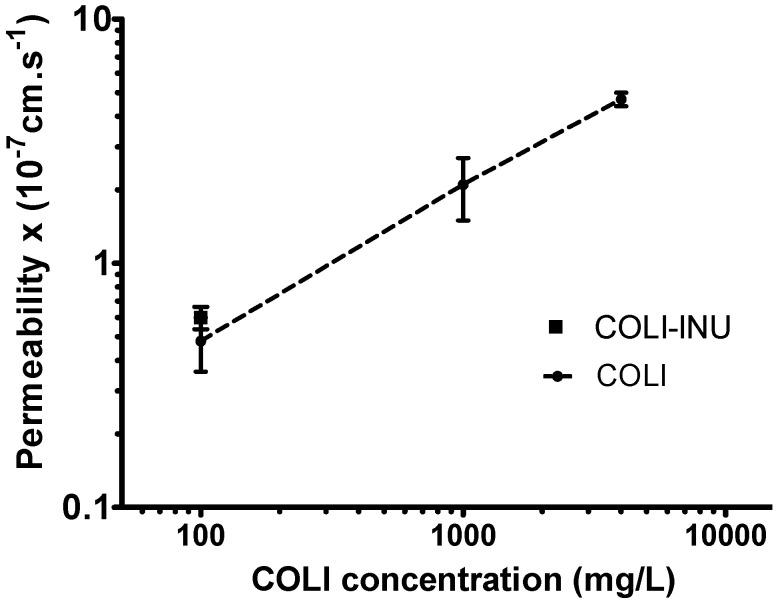
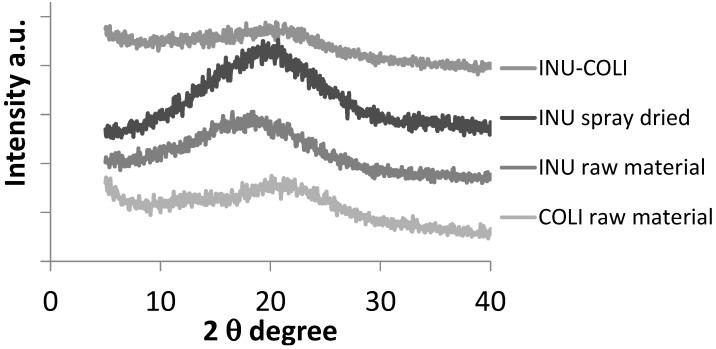
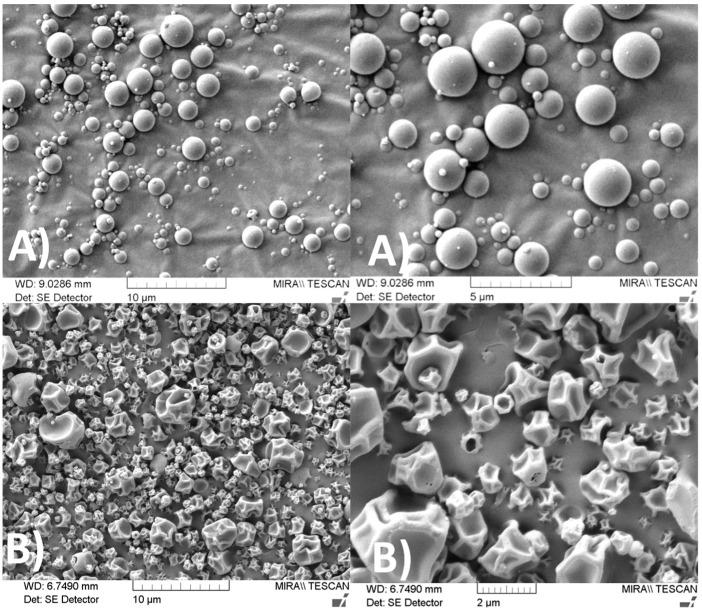
To assess the difference in the fate of the antibiotic colistin (COLI) after its pulmonary delivery as a powder or a solution, we developed a COLI powder and evaluated the COLI pharmacokinetic properties in rats after pulmonary administration of the powder or the solution. The amorphous COLI powder prepared by spray drying was characterized by a mass median aerodynamic diameter and fine particle fraction of 2.68 ± 0.07 µm and 59.5 ± 5.4%, respectively, when emitted from a Handihaler. After intratracheal administration, the average pulmonary epithelial lining fluid (ELF): plasma area under the concentration versus time curves (AUC) ratios were 570 and 95 for the COLI solution and powder, respectively. However, the same COLI plasma concentration profiles were obtained with the two formulations. According to our pharmacokinetic model, this difference in ELF COLI concentration could be due to faster systemic absorption of COLI after the powder inhalation than for the solution. In addition, the COLI apparent permeability (P) across a Calu-3 epithelium model increased 10-fold when its concentration changed from 100 to 4000 mg/L. Based on this last result, we propose that the difference observed in vivo between the COLI solution and powder could be due to a high local ELF COLI concentration being obtained at the site where the dry particles impact the lung. This high local COLI concentration can lead to a local increase in COLI P, which is associated with a high concentration gradient and could produce a high local transfer of COLI across the epithelium and a consequent increase in the overall absorption rate of COLI.
为了评估抗生素黏菌素(COLI)以粉末或溶液形式经肺部给药后的转归差异,我们研发了一种COLI粉末,并评估了大鼠经肺部给予该粉末或溶液后的COLI药代动力学特性。通过喷雾干燥制备的无定形COLI粉末,当从Handihaler吸入时,其质量中值空气动力学直径和细颗粒分数分别为2.68±0.07µm和59.5±5.4%。气管内给药后,COLI溶液和粉末的肺上皮衬液(ELF):血浆浓度-时间曲线下面积(AUC)平均比值分别为570和95。然而,两种制剂的COLI血浆浓度曲线相同。根据我们的药代动力学模型,ELF中COLI浓度的这种差异可能是由于粉末吸入后COLI的全身吸收比溶液更快。此外,当Calu-3上皮模型中COLI的浓度从100mg/L变为4000mg/L时,其表观渗透率(P)增加了10倍。基于这一结果,我们认为在体内观察到的COLI溶液和粉末之间的差异可能是由于干燥颗粒撞击肺部的部位获得了较高的局部ELF中COLI浓度。这种较高的局部COLI浓度可导致COLI的P局部增加,并与高浓度梯度相关,这可能使COLI跨上皮的局部转运增加,从而导致COLI的总体吸收率增加。


 Zotero 插件