
人工甜味剂通过激活甜味受体 T1R3 破坏肠道上皮细胞的紧密连接和屏障功能。
Artificial Sweeteners Disrupt Tight Junctions and Barrier Function in the Intestinal Epithelium through Activation of the Sweet Taste Receptor, T1R3.
机构信息
Biomedical Research Group, School of Life Sciences, Anglia Ruskin University, Cambridge CB1 1PT, UK.
London Epithelial Group, Department of Neuroscience, Physiology and Pharmacology, University College London, London NW3 2PF, UK.
出版信息
Nutrients. 2020 Jun 22;12(6):1862. doi: 10.3390/nu12061862.
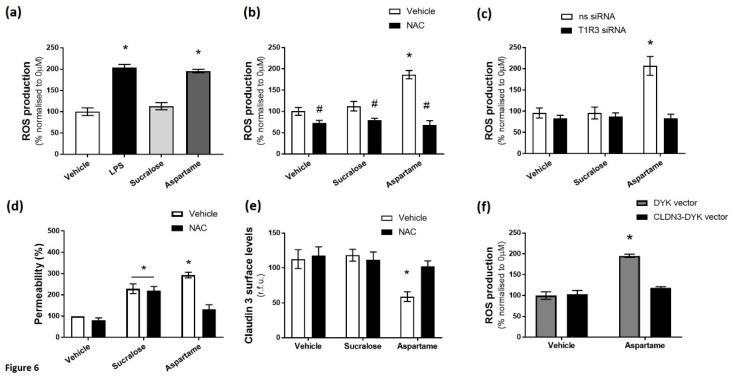
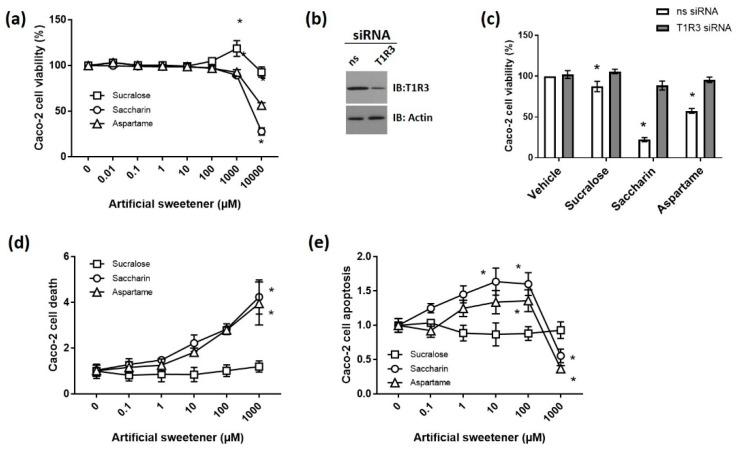
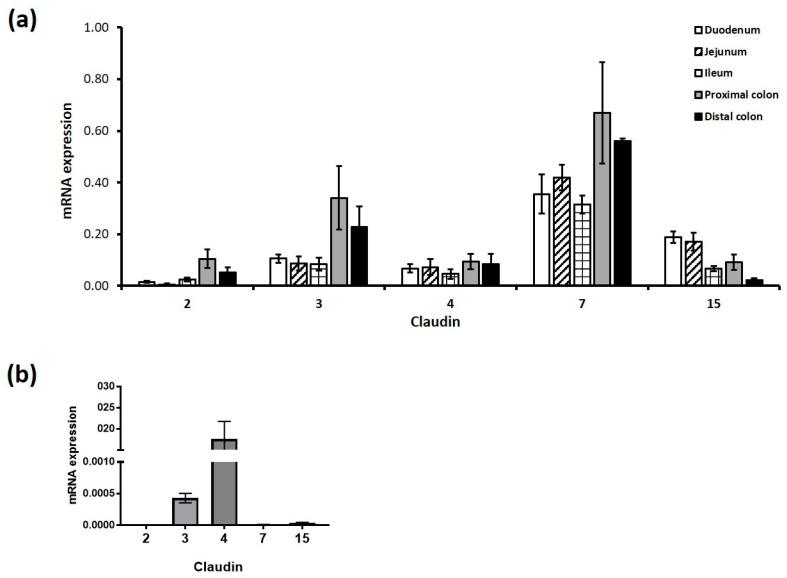
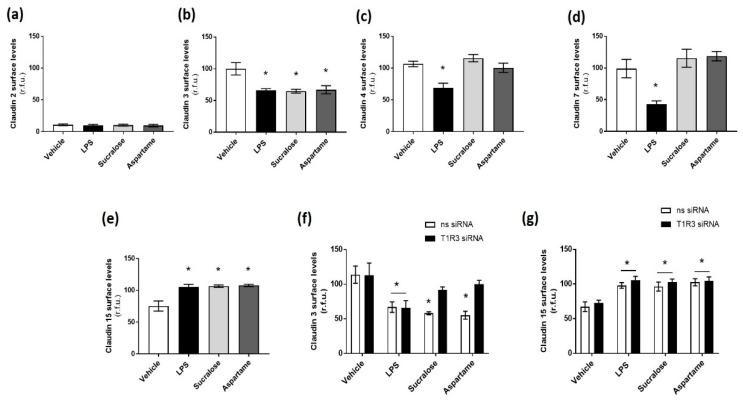
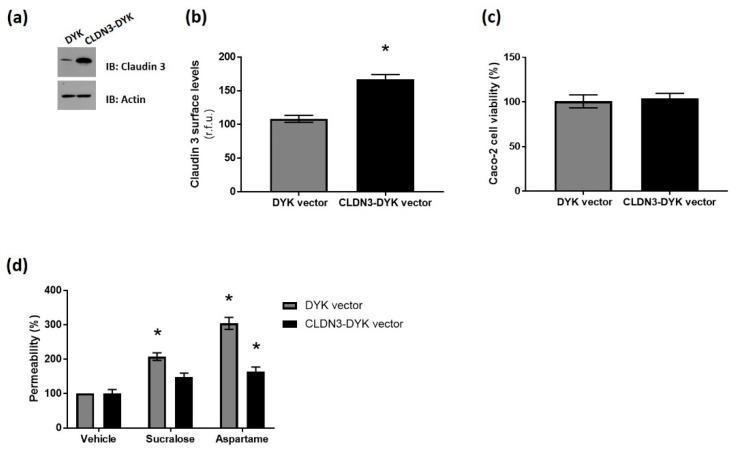
The breakdown of the intestinal epithelial barrier and subsequent increase in intestinal permeability can lead to systemic inflammatory diseases and multiple-organ failure. Nutrition impacts the intestinal barrier, with dietary components such as gluten increasing permeability. Artificial sweeteners are increasingly consumed by the general public in a range of foods and drinks. The sweet taste receptor (T1R3) is activated by artificial sweeteners and has been identified in the intestine to play a role in incretin release and glucose transport; however, T1R3 has not been previously linked to intestinal permeability. Here, the intestinal epithelial cell line, Caco-2, was used to study the effect of commonly-consumed artificial sweeteners, sucralose, aspartame and saccharin, on permeability. At high concentrations, aspartame and saccharin were found to induce apoptosis and cell death in intestinal epithelial cells, while at low concentrations, sucralose and aspartame increased epithelial barrier permeability and down-regulated claudin 3 at the cell surface. T1R3 knockdown was found to attenuate these effects of artificial sweeteners. Aspartame induced reactive oxygen species (ROS) production to cause permeability and claudin 3 internalization, while sweetener-induced permeability and oxidative stress was rescued by the overexpression of claudin 3. Taken together, our findings demonstrate that the artificial sweeteners sucralose, aspartame, and saccharin exert a range of negative effects on the intestinal epithelium through the sweet taste receptor T1R3.
肠道上皮屏障的破坏和随后的肠道通透性增加可导致全身性炎症性疾病和多器官衰竭。营养会影响肠道屏障,而诸如 gluten 等膳食成分会增加通透性。人工甜味剂在各种食品和饮料中被越来越多的公众所消费。人工甜味剂的甜味受体(T1R3)被激活,并在肠道中被鉴定出在肠促胰岛素释放和葡萄糖转运中发挥作用;然而,T1R3 以前与肠道通透性无关。在这里,使用肠上皮细胞系 Caco-2 来研究常用的人工甜味剂,如三氯蔗糖、阿斯巴甜和糖精,对通透性的影响。研究发现,高浓度的阿斯巴甜和糖精会诱导肠道上皮细胞凋亡和死亡,而低浓度的三氯蔗糖和阿斯巴甜则会增加上皮屏障通透性,并使细胞表面的 Claudin 3 下调。T1R3 敲低被发现可减弱人工甜味剂的这些作用。阿斯巴甜诱导活性氧(ROS)的产生导致通透性和 Claudin 3 内化,而甜味剂诱导的通透性和氧化应激可通过 Claudin 3 的过表达得到挽救。总之,我们的研究结果表明,人工甜味剂三氯蔗糖、阿斯巴甜和糖精通过甜味受体 T1R3 对肠道上皮产生一系列负面影响。

 Zotero 插件