
科威特移民工人的 COVID-19 压力源:累积风险的考虑。
COVID-19 stressors on migrant workers in Kuwait: cumulative risk considerations.
机构信息
Environmental Health Department, Harvard T.H. Chan School of Public Health, Harvard University, Boston, Massachusetts, United States
Department of Environmental and Occupational Health, , Faculty of Public Health, Kuwait University, Hawalli, Kuwait.
出版信息
BMJ Glob Health. 2020 Jul;5(7). doi: 10.1136/bmjgh-2020-002995.
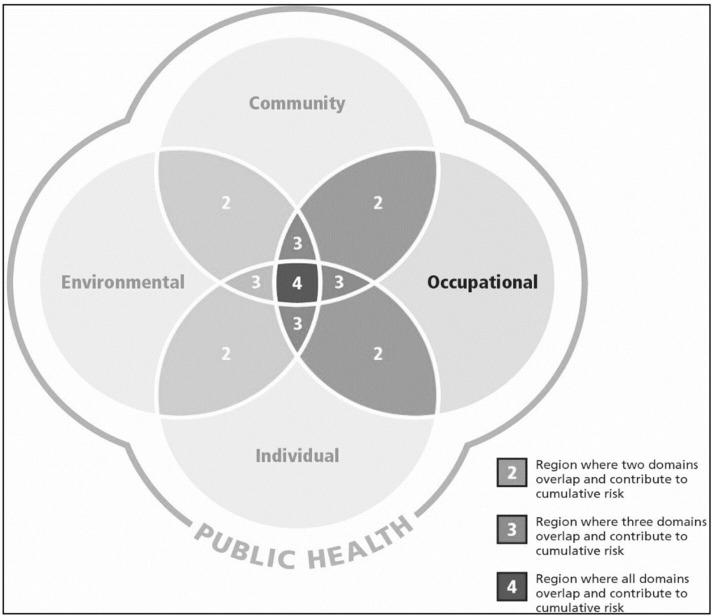
As a marginalised subpopulation, migrant workers often fall short from protection by public policies, they take precarious jobs with unsafe working and living conditions and they grapple with cultural and linguistic barriers. In light of the current COVID-19 pandemic, migrant workers are now exposed to additional stressors of the virus and related responses. We applied a comprehensive qualitative cumulative risk assessment framework for migrant workers living in Kuwait. This pandemic could be one of the few examples where the stressors overlap all domains of migrant workers' lives. No single intervention can solve all the problems; there must be a set of interventions to address all domains. Local authorities and employers must act quickly to stop the spread, ensure easy access to testing and treatment, provide adequate housing and clear communication, encourage wide social support, safeguard financial protection and mental well-being and continuously re-evaluate the situation as more data are collected.
作为一个边缘化的群体,农民工往往无法受到公共政策的保护,他们从事危险的工作,工作和生活条件不安全,并且面临文化和语言障碍。鉴于当前的 COVID-19 大流行,农民工现在面临着病毒和相关应对措施带来的额外压力。我们对居住在科威特的农民工应用了一个全面的定性累积风险评估框架。这场大流行可能是为数不多的压力源覆盖农民工生活所有领域的例子之一。单一的干预措施无法解决所有问题;必须有一系列干预措施来解决所有领域的问题。地方当局和雇主必须迅速采取行动,阻止病毒传播,确保检测和治疗的便捷,提供充足的住房和清晰的沟通,鼓励广泛的社会支持,保障财务保护和心理健康,并随着更多数据的收集,不断重新评估局势。
 Zotero 插件