
鉴定人类胎儿大脑中的组蛋白丙二酰化及其在糖尿病诱导的神经管缺陷中的意义。
Identification of histone malonylation in the human fetal brain and implications for diabetes-induced neural tube defects.
机构信息
Beijing Municipal Key Laboratory of Child Development and Nutriomics, Capital Institute of Pediatrics, Beijing, China.
Laboratory of Protein and Peptide Pharmaceuticals & Laboratory of Proteomics, Institute of Biophysics, Chinese Academy of Sciences, Beijing, China.
出版信息
Mol Genet Genomic Med. 2020 Sep;8(9):e1403. doi: 10.1002/mgg3.1403. Epub 2020 Jul 15.
BACKGROUND
Neural tube defects (NTDs) are severe congenital malformations. Diabetes during pregnancy is a risk factor for NTDs, but its mechanism remains elusive. Emerging evidence suggests that protein malonylation is involved in diabetes. Here, we report the correlation between histone lysine malonylation in diabetes-induced NTDs.
METHODS
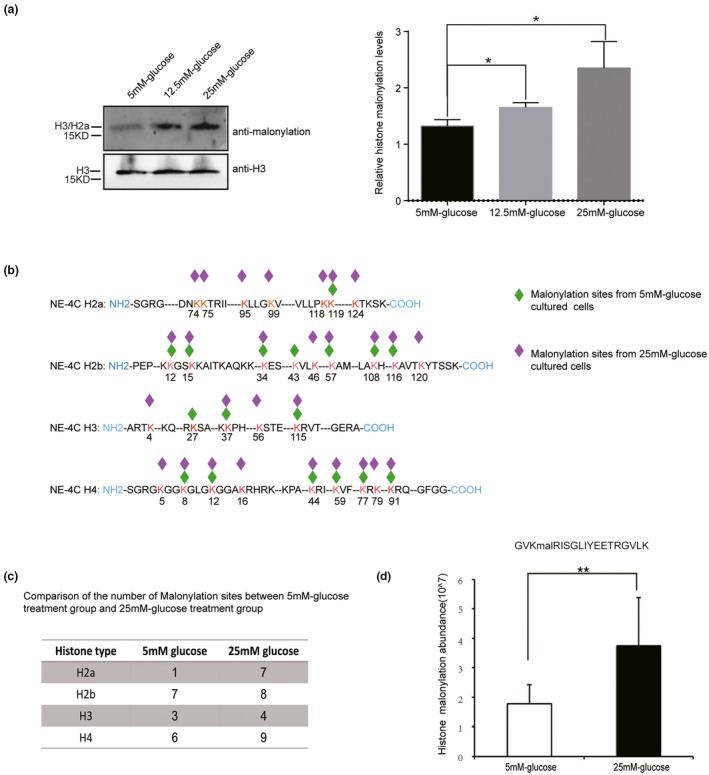
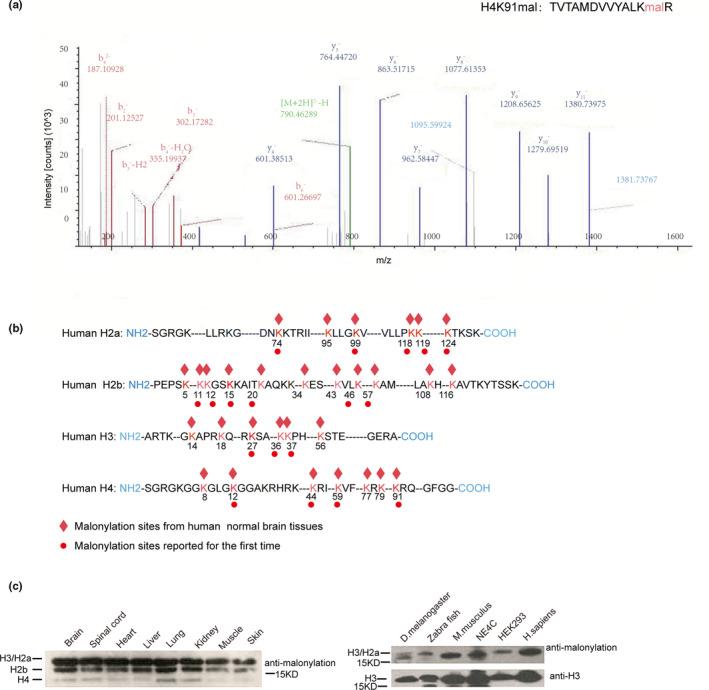
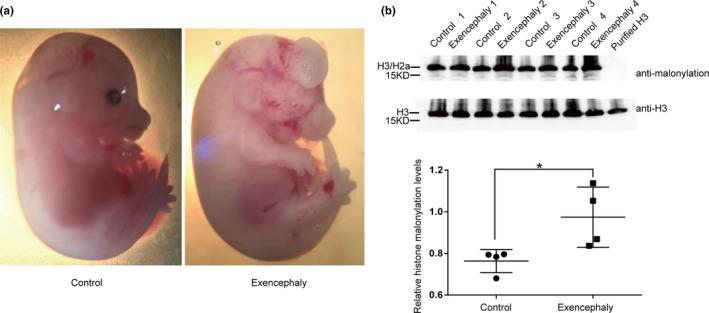
Nano-HPLC/MS/MS was used to screen the histone malonylation profile in human embryonic brain tissue. Then, the histone malonylation level was compared between the brains of normal control mice and mice with diabetes-induced NTDs. Finally, the histone malonylation level was compared under high glucose exposure in an E9 neuroepithelial cell line (NE4C).
RESULTS
A total of 30 histone malonylation sites were identified in human embryonic brain tissue, including 18 novel sites. Furthermore, we found an increased histone malonylation level in brain tissues from mice with diabetes-induced NTDs. Finally, both the histone malonylation modified sites and the modified levels were proved to be increased in the NE4C treated with high glucose.
CONCLUSION
Our results present a comprehensive map of histone malonylation in the human fetal brain. Furthermore, we provide experimental evidence supporting a relationship between histone malonylation and NTDs caused by high glucose-induced diabetes. These findings offer new insights into the pathological role of histone modifications in human NTDs.
背景
神经管缺陷(NTDs)是严重的先天性畸形。妊娠期间的糖尿病是 NTDs 的一个风险因素,但它的机制仍不清楚。新出现的证据表明,蛋白质丙二酰化与糖尿病有关。在这里,我们报告了糖尿病诱导的 NTDs 中组蛋白赖氨酸丙二酰化之间的相关性。
方法
使用纳诺高效液相色谱/串联质谱法(nano-HPLC/MS/MS)筛选人胚胎脑组织中的组蛋白丙二酰化谱。然后,比较正常对照小鼠和糖尿病诱导的 NTDs 小鼠脑组织中的组蛋白丙二酰化水平。最后,在 E9 神经上皮细胞系(NE4C)中高葡萄糖暴露下比较组蛋白丙二酰化水平。
结果
在人胚胎脑组织中鉴定出 30 个组蛋白丙二酰化位点,包括 18 个新位点。此外,我们发现糖尿病诱导的 NTDs 小鼠脑组织中的组蛋白丙二酰化水平升高。最后,在高葡萄糖处理的 NE4C 中,组蛋白丙二酰化修饰的位点和修饰水平都被证明增加了。
结论
我们的结果提供了人类胎儿大脑中组蛋白丙二酰化的全面图谱。此外,我们提供了实验证据支持高糖诱导的糖尿病与 NTDs 之间的组蛋白丙二酰化之间的关系。这些发现为组蛋白修饰在人类 NTDs 中的病理作用提供了新的见解。
 Zotero 插件