
哺乳动物水通道蛋白1至10作为多种癌症生物标志物和预后指标的系统评价与转录组学联合分析
Combined Systematic Review and Transcriptomic Analyses of Mammalian Aquaporin Classes 1 to 10 as Biomarkers and Prognostic Indicators in Diverse Cancers.
作者信息
Chow Pak Hin, Bowen Joanne, Yool Andrea J
机构信息
Adelaide Medical School, University of Adelaide, Adelaide SA 5005, Australia.
出版信息
Cancers (Basel). 2020 Jul 15;12(7):1911. doi: 10.3390/cancers12071911.
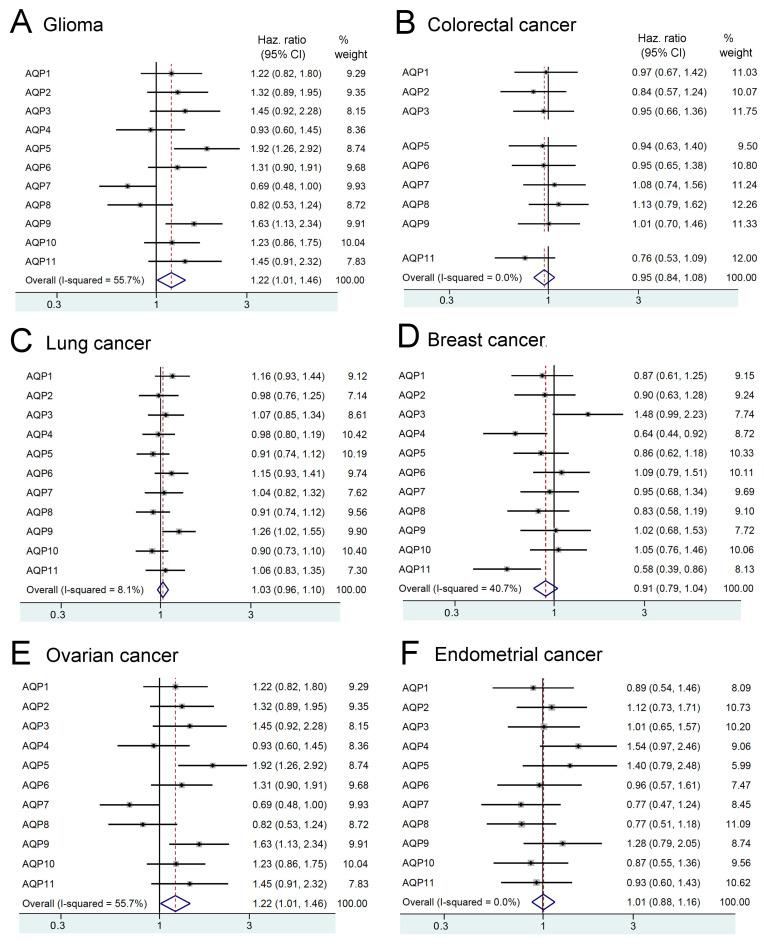
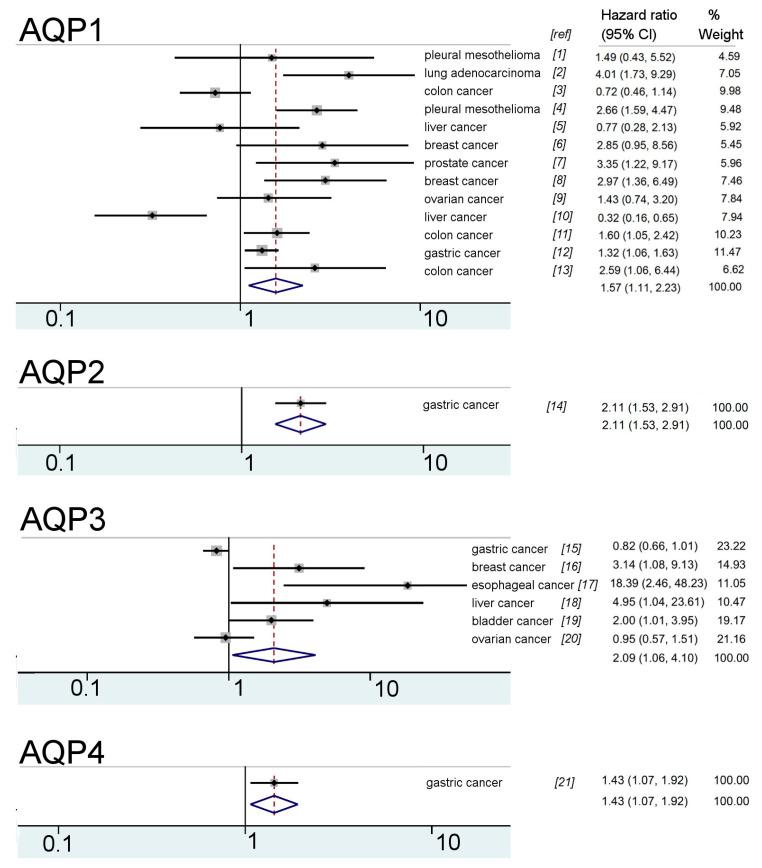
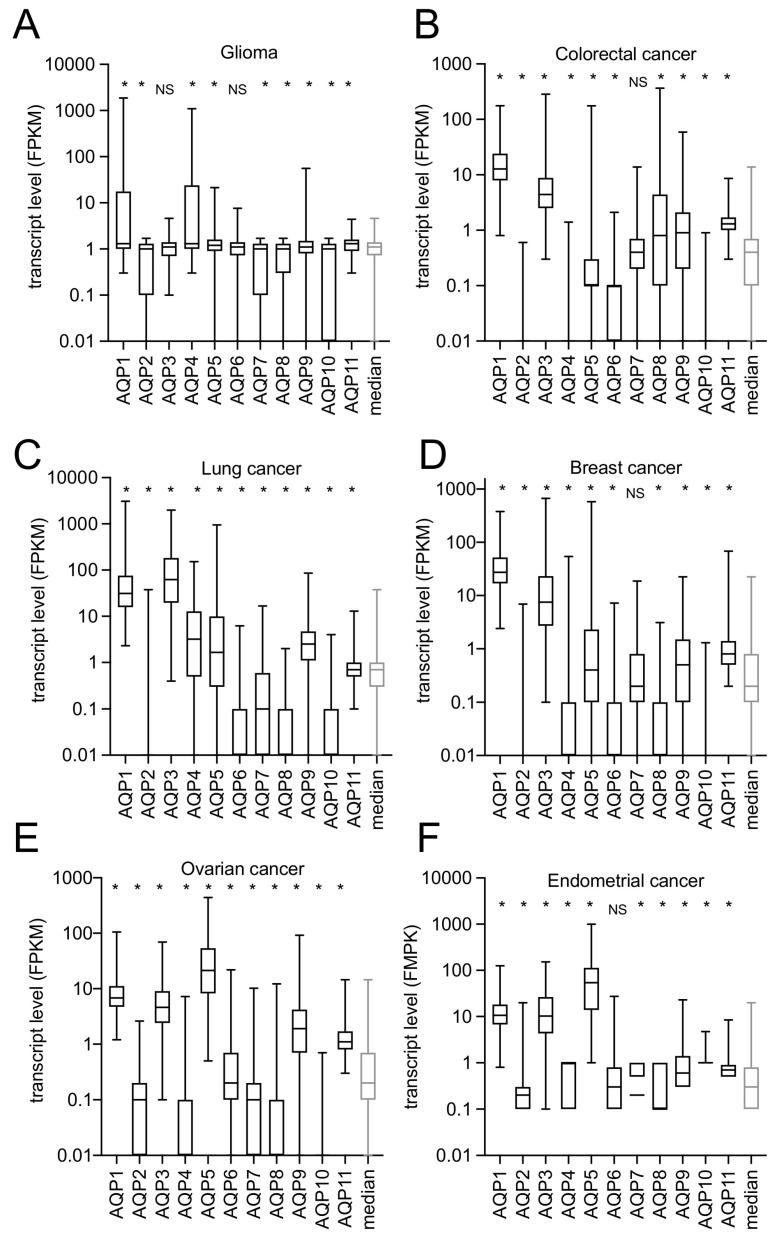
Aquaporin (AQP) channels enable regulated transport of water and solutes essential for fluid homeostasis, but they are gaining attention as targets for anticancer therapies. Patterns of AQP expression and survival rates for patients were evaluated by systematic review (PubMed and Embase) and transcriptomic analyses of RNAseq data (Human Protein Atlas database). Meta-analyses confirmed predominantly negative associations between AQP protein and RNA expression levels and patient survival times, most notably for AQP1 in lung, breast and prostate cancers; AQP3 in esophageal, liver and breast cancers; and AQP9 in liver cancer. Patterns of AQP expression were clustered for groups of cancers and associated with risk of death. A quantitative transcriptomic analysis of AQP1-10 in human cancer biopsies similarly showed that increased transcript levels of AQPs 1, 3, 5 and 9 were most frequently associated with poor survival. Unexpectedly, increased AQP7 and AQP8 levels were associated with better survival times in glioma, ovarian and endometrial cancers, and increased AQP11 with better survival in colorectal and breast cancers. Although molecular mechanisms of aquaporins in pathology or protection remain to be fully defined, results here support the hypothesis that overexpression of selected classes of AQPs differentially augments cancer progression. Beyond fluid homeostasis, potential roles for AQPs in cancers (suggested from an expanding appreciation of their functions in normal tissues) include cell motility, membrane process extension, transport of signaling molecules, control of proliferation and apoptosis, increased mechanical compliance, and gas exchange. AQP expression also has been linked to differences in sensitivity to chemotherapy treatments, suggesting possible roles as biomarkers for personalized treatments. Development of AQP pharmacological modulators, administered in cancer-specific combinations, might inspire new interventions for controlling malignant carcinomas.
水通道蛋白(AQP)通道可实现对维持液体平衡至关重要的水和溶质的调节性转运,但它们作为抗癌治疗靶点正受到越来越多的关注。通过系统评价(PubMed和Embase)以及对RNAseq数据(人类蛋白质图谱数据库)的转录组分析,评估了患者的水通道蛋白表达模式和生存率。荟萃分析证实,水通道蛋白的蛋白质和RNA表达水平与患者生存时间之间主要呈负相关,在肺癌、乳腺癌和前列腺癌中的水通道蛋白1;食管癌、肝癌和乳腺癌中的水通道蛋白3;以及肝癌中的水通道蛋白9最为明显。水通道蛋白的表达模式在癌症组中聚类,并与死亡风险相关。对人类癌症活检组织中AQP1 - 10的定量转录组分析同样表明,AQP1、3、5和9转录水平的升高最常与不良生存相关。出乎意料的是,在胶质瘤、卵巢癌和子宫内膜癌中,AQP7和AQP8水平的升高与更好的生存时间相关,在结直肠癌和乳腺癌中,AQP11水平的升高与更好的生存相关。尽管水通道蛋白在病理或保护中的分子机制仍有待充分明确,但此处的结果支持这样的假设,即特定类别的水通道蛋白的过表达会不同程度地促进癌症进展。除了液体平衡外,水通道蛋白在癌症中的潜在作用(从对其在正常组织中的功能的不断认识中推断)包括细胞运动、膜过程延伸、信号分子转运、增殖和凋亡控制、机械顺应性增加以及气体交换。水通道蛋白的表达也与化疗治疗敏感性的差异有关,表明其可能作为个性化治疗的生物标志物。开发以癌症特异性组合给药的水通道蛋白药理学调节剂,可能会激发控制恶性肿瘤的新干预措施。

 Zotero 插件