
如何修复 DNA-蛋白质交联。
How to fix DNA-protein crosslinks.
机构信息
The Novo Nordisk Foundation Center for Protein Research, Faculty of Health and Medical Sciences, University of Copenhagen, DK-2200 Copenhagen, Denmark.
The Novo Nordisk Foundation Center for Protein Research, Faculty of Health and Medical Sciences, University of Copenhagen, DK-2200 Copenhagen, Denmark.
出版信息
DNA Repair (Amst). 2020 Oct;94:102924. doi: 10.1016/j.dnarep.2020.102924. Epub 2020 Jul 9.
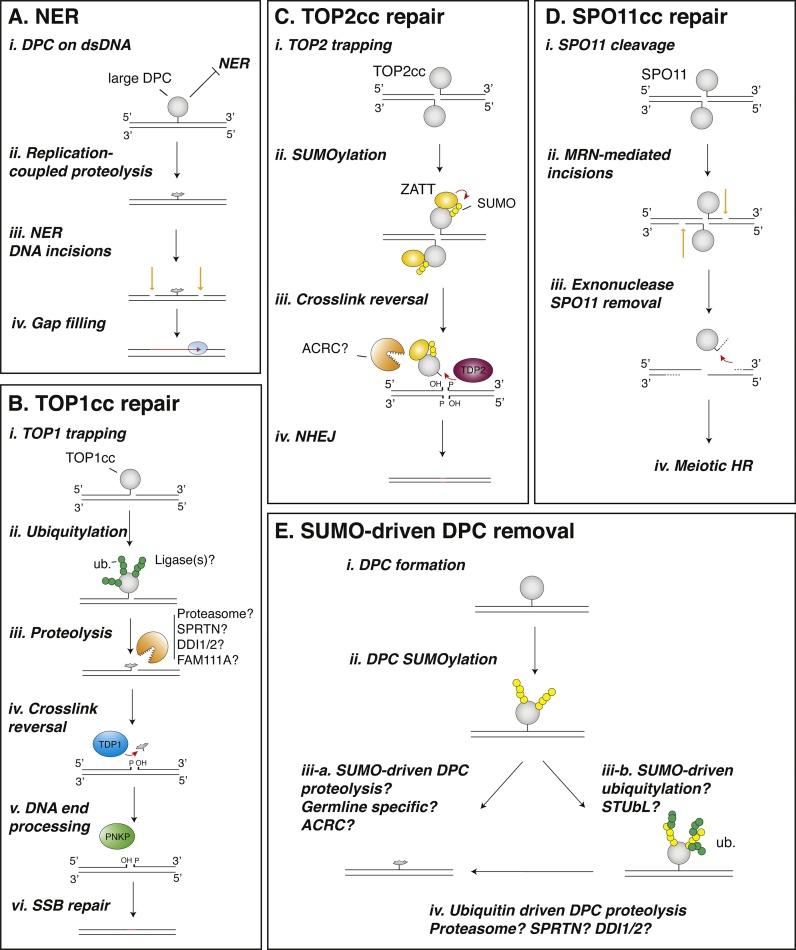
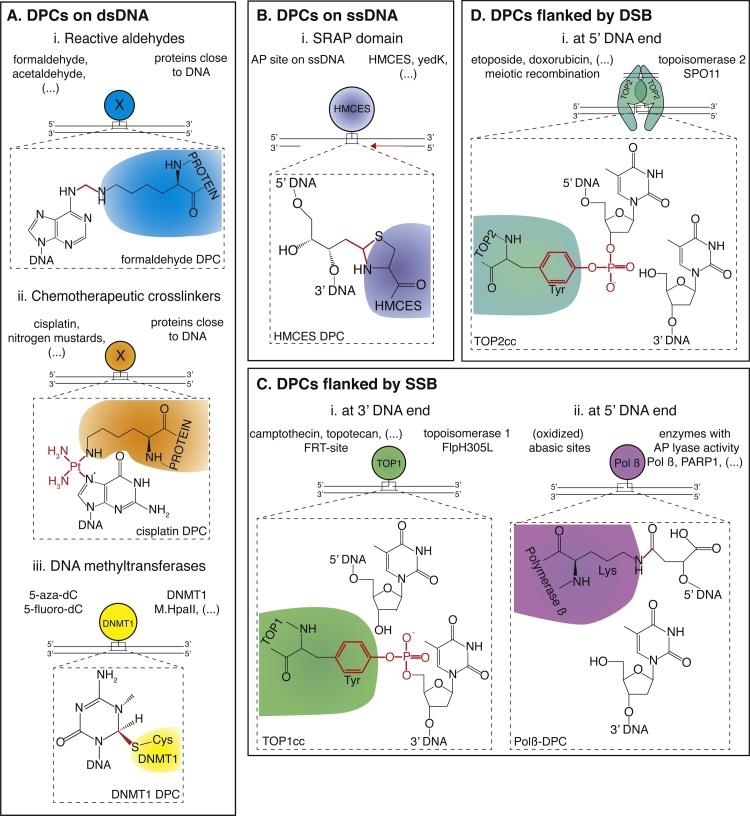
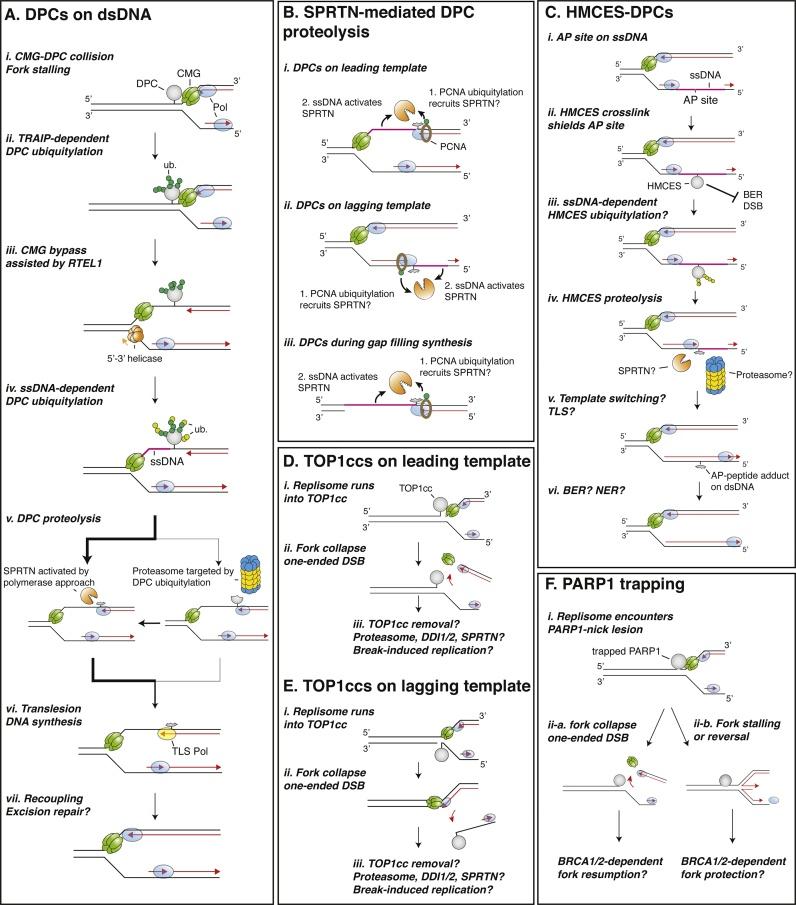
Proteins that act on DNA, or are in close proximity to it, can become inadvertently crosslinked to DNA and form highly toxic lesions, known as DNA-protein crosslinks (DPCs). DPCs are generated by different chemotherapeutics, environmental or endogenous sources of crosslinking agents, or by lesions on DNA that stall the catalytic cycle of certain DNA processing enzymes. These bulky adducts impair processes on DNA such as DNA replication or transcription, and therefore pose a serious threat to genome integrity. The large diversity of DPCs suggests that there is more than one canonical mechanism to repair them. Indeed, many different enzymes have been shown to act on DPCs by either processing the protein, the DNA or the crosslink itself. In addition, the cell cycle stage or cell type are likely to dictate pathway choice. In recent years, a detailed understanding of DPC repair during S phase has started to emerge. Here, we review the current knowledge on the mechanisms of replication-coupled DPC repair, and describe and also speculate on possible pathways that remove DPCs outside of S phase. Moreover, we highlight a recent paradigm shifting finding that indicates that DPCs are not always detrimental, but can also play a protective role, preserving the genome from more deleterious forms of DNA damage.
作用于 DNA 或与之密切相关的蛋白质可能会意外地与 DNA 交联,并形成高度有毒的损伤,称为 DNA-蛋白质交联(DPC)。DPC 是由不同的化疗药物、环境或内源性交联剂来源、或某些 DNA 加工酶的催化循环受阻的 DNA 损伤产生的。这些大体积加合物会损害 DNA 上的过程,如 DNA 复制或转录,因此对基因组完整性构成严重威胁。DPC 的多样性表明,修复它们的机制不止一种。事实上,已经有许多不同的酶被证明可以通过处理蛋白质、DNA 或交联本身来作用于 DPC。此外,细胞周期阶段或细胞类型可能决定途径选择。近年来,人们对 S 期 DPC 修复的机制有了更详细的了解。在这里,我们回顾了复制偶联 DPC 修复机制的最新知识,并描述和推测了 S 期以外去除 DPC 的可能途径。此外,我们强调了一个最近的范式转变发现,表明 DPC 并不总是有害的,它也可以发挥保护作用,防止基因组受到更具破坏性的 DNA 损伤形式的影响。
 Zotero 插件