
PARP抑制剂耐药机制及其对进展后联合治疗的意义。
PARP Inhibitor Resistance Mechanisms and Implications for Post-Progression Combination Therapies.
作者信息
Lee Elizabeth K, Matulonis Ursula A
机构信息
Department of Medical Oncology, Dana-Farber Cancer Institute, Boston, MA 02215-5450, USA.
Division of Gynecologic Oncology, Dana-Farber Cancer Institute, Boston, MA 02215-5450, USA.
出版信息
Cancers (Basel). 2020 Jul 25;12(8):2054. doi: 10.3390/cancers12082054.
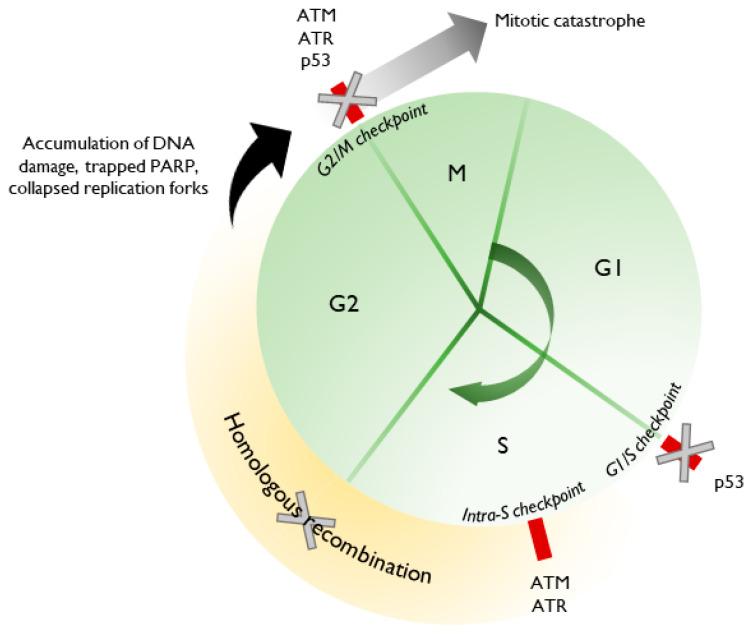
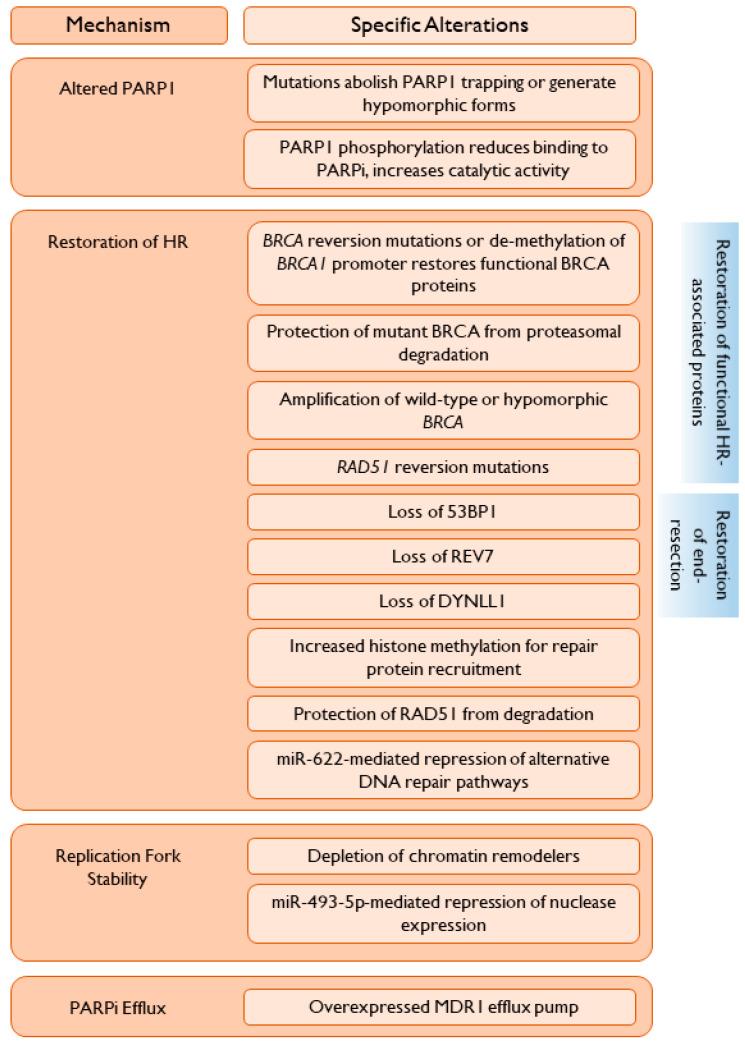
The use of PARP inhibitors (PARPi) is growing widely as FDA approvals have shifted its use from the recurrence setting to the frontline setting. In parallel, the population developing PARPi resistance is increasing. Here we review the role of PARP, DNA damage repair, and synthetic lethality. We discuss mechanisms of resistance to PARP inhibition and how this informs on novel combinations to re-sensitize cancer cells to PARPi.
随着美国食品药品监督管理局(FDA)批准将聚(二磷酸腺苷-核糖)聚合酶抑制剂(PARPi)的使用从复发治疗领域转移至一线治疗领域,其应用正在广泛增加。与此同时,产生PARPi耐药性的人群也在增加。在此,我们综述聚(二磷酸腺苷-核糖)聚合酶(PARP)的作用、DNA损伤修复及合成致死性。我们讨论了对PARP抑制的耐药机制,以及这如何为使癌细胞对PARPi重新敏感的新型联合治疗提供依据。
 Zotero 插件