
口服给予外泌体通过将 miRNA-150 递送至外泌体表面抗肽抗体轻链靶向的抗原致敏巨噬细胞 APC 来抑制小鼠迟发型超敏反应。
Orally Administered Exosomes Suppress Mouse Delayed-Type Hypersensitivity by Delivering miRNA-150 to Antigen-Primed Macrophage APC Targeted by Exosome-Surface Anti-Peptide Antibody Light Chains.
机构信息
Department of Immunology, Faculty of Medicine, Medical College, Jagiellonian University, 31-121 Krakow, Poland.
Section of Rheumatology, Allergy and Immunology, Department of Internal Medicine, School of Medicine, Yale University, New Haven, CT 06520-8013, USA.
出版信息
Int J Mol Sci. 2020 Aug 2;21(15):5540. doi: 10.3390/ijms21155540.
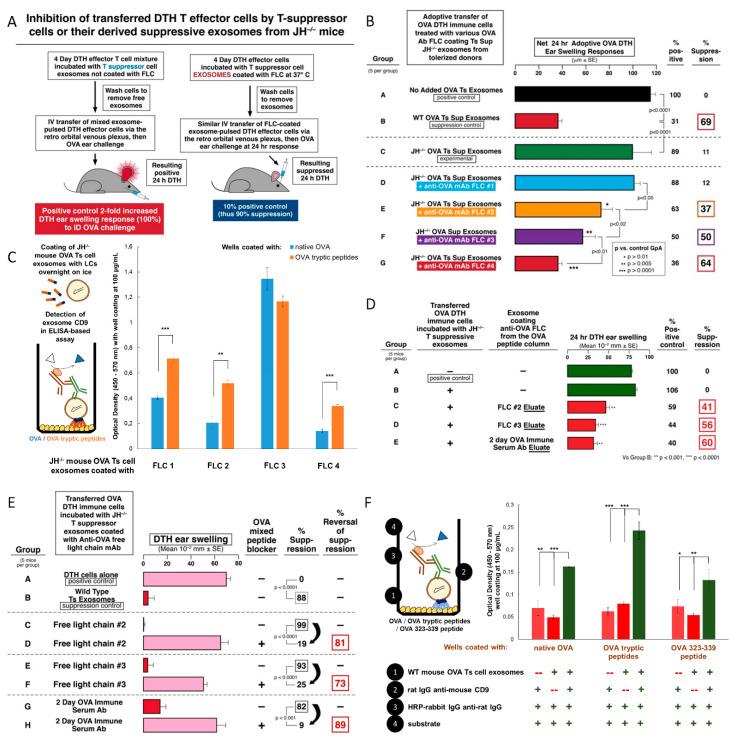
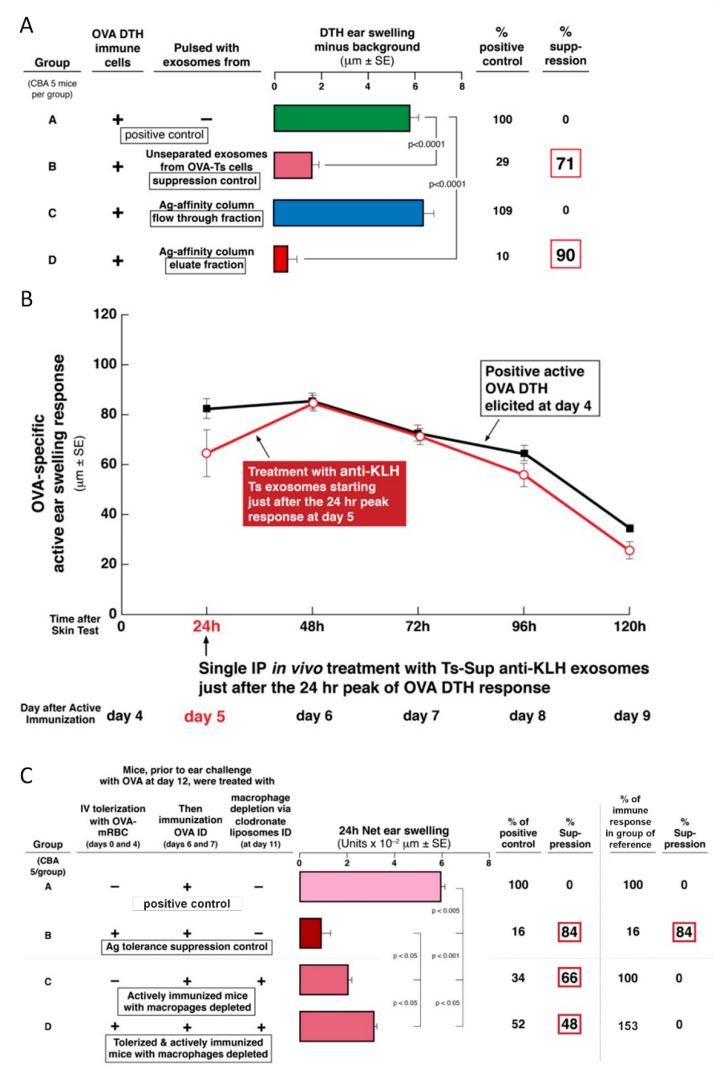
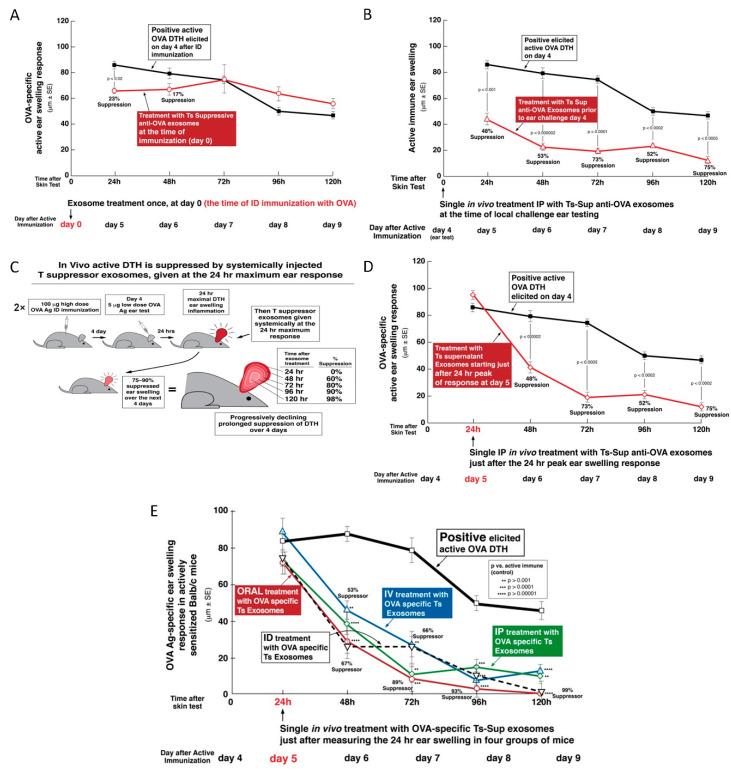
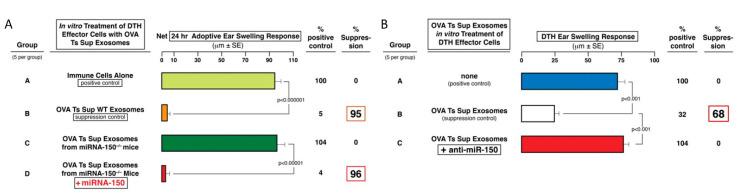
We previously discovered suppressor T cell-derived, antigen (Ag)-specific exosomes inhibiting mouse hapten-induced contact sensitivity effector T cells by targeting antigen-presenting cells (APCs). These suppressive exosomes acted Ag-specifically due to a coating of antibody free light chains (FLC) from Ag-activated B1a cells. Current studies are aimed at determining if similar immune tolerance could be induced in cutaneous delayed-type hypersensitivity (DTH) to the protein Ag (ovalbumin, OVA). Intravenous administration of a high dose of OVA-coupled, syngeneic erythrocytes similarly induced CD3CD8 suppressor T cells producing suppressive, miRNA-150-carrying exosomes, also coated with B1a cell-derived, OVA-specific FLC. Simultaneously, OVA-immunized B1a cells produced an exosome subpopulation, originally coated with Ag-specific FLC, that could be rendered suppressive by in vitro association with miRNA-150. Importantly, miRNA-150-carrying exosomes from both suppressor T cells and B1a cells efficiently induced prolonged DTH suppression after single systemic administration into actively immunized mice, with the strongest effect observed after oral treatment. Current studies also showed that OVA-specific FLC on suppressive exosomes bind OVA peptides suggesting that exosome-coating FLC target APCs by binding to peptide-Ag-major histocompatibility complexes. This renders APCs capable of inhibiting DTH effector T cells. Thus, our studies describe a novel immune tolerance mechanism mediated by FLC-coated, Ag-specific, miRNA-150-carrying exosomes that act on the APC and are particularly effective after oral administration.
我们之前发现,抑制性 T 细胞衍生的、抗原(Ag)特异性的外泌体通过靶向抗原呈递细胞(APCs)来抑制小鼠半抗原诱导的接触敏感性效应 T 细胞。这些抑制性外泌体由于 Ag 激活的 B1a 细胞的无抗体轻链(FLC)涂层而具有 Ag 特异性。目前的研究旨在确定是否可以在皮肤迟发型超敏反应(DTH)对蛋白质 Ag(卵清蛋白,OVA)中诱导类似的免疫耐受。静脉内给予高剂量 OVA 偶联同种红细胞同样诱导产生具有抑制作用的、携带 miRNA-150 的外泌体的 CD3CD8 抑制性 T 细胞,这些外泌体也被 B1a 细胞衍生的、OVA 特异性的 FLC 包被。同时,OVA 免疫的 B1a 细胞产生了一种外泌体亚群,最初被 Ag 特异性 FLC 包被,通过与 miRNA-150 体外结合可以使其具有抑制作用。重要的是,来自抑制性 T 细胞和 B1a 细胞的携带 miRNA-150 的外泌体在单次系统给予主动免疫小鼠后可有效诱导长期 DTH 抑制,口服治疗后观察到最强的效果。目前的研究还表明,抑制性外泌体上的 OVA 特异性 FLC 结合 OVA 肽,提示外泌体涂层 FLC 通过与肽-Ag 主要组织相容性复合物结合来靶向 APC。这使得 APC 能够抑制 DTH 效应 T 细胞。因此,我们的研究描述了一种新的免疫耐受机制,该机制由 FLC 包被的、Ag 特异性的、携带 miRNA-150 的外泌体介导,作用于 APC,特别是在口服给药后非常有效。



 Zotero 插件