
IL-4、IL-13、IL-17A、IL-22、AHR 和 NRF2 对丝聚合蛋白、兜甲蛋白和 Involucrin 的调节:特应性皮炎的发病机制。
Regulation of Filaggrin, Loricrin, and Involucrin by IL-4, IL-13, IL-17A, IL-22, AHR, and NRF2: Pathogenic Implications in Atopic Dermatitis.
机构信息
Department of Dermatology, Graduate School of Medical Sciences, Kyushu University, Maidashi 3-1-1, Higashiku, Fukuoka 812-8582, Japan.
Research and Clinical Center for Yusho and Dioxin, Kyushu University, Maidashi 3-1-1, Higashiku, Fukuoka 812-8582, Japan.
出版信息
Int J Mol Sci. 2020 Jul 29;21(15):5382. doi: 10.3390/ijms21155382.
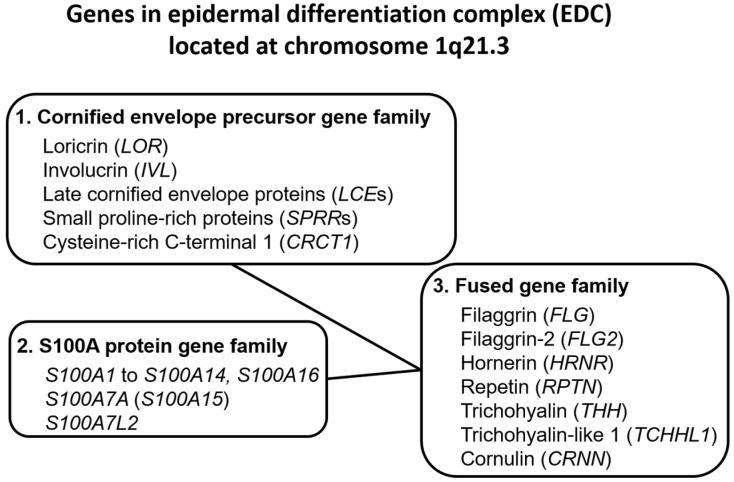
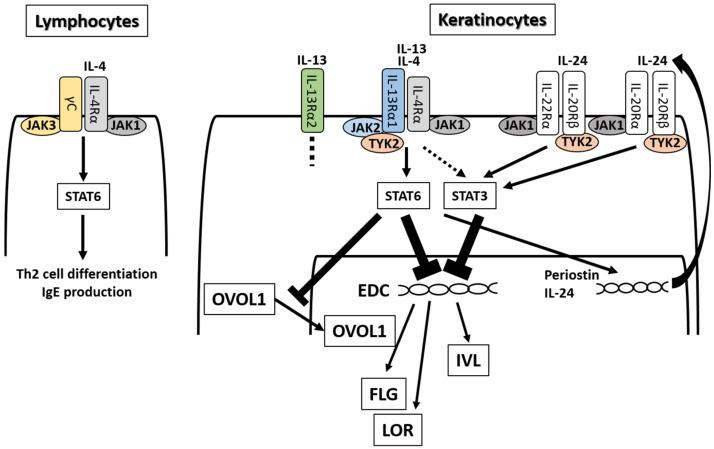
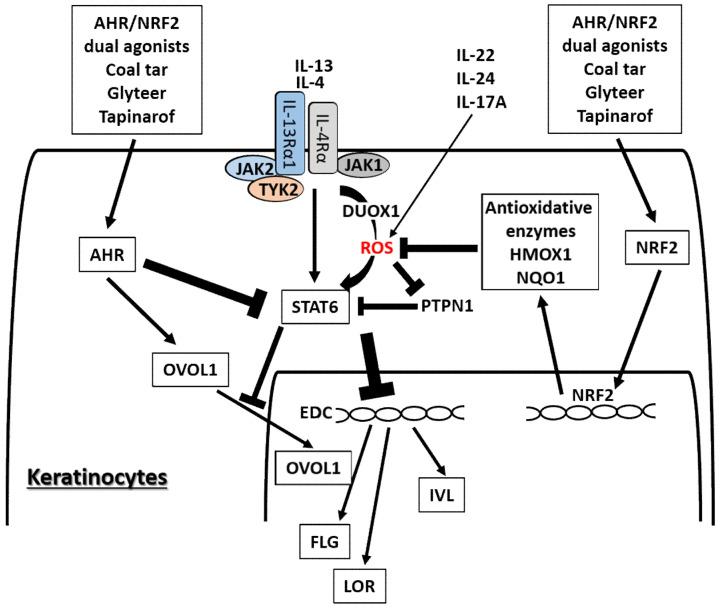
Atopic dermatitis (AD) is an eczematous, pruritic skin disorder with extensive barrier dysfunction and elevated interleukin (IL)-4 and IL-13 signatures. The barrier dysfunction correlates with the downregulation of barrier-related molecules such as filaggrin (FLG), loricrin (LOR), and involucrin (IVL). IL-4 and IL-13 potently inhibit the expression of these molecules by activating signal transducer and activator of transcription (STAT)6 and STAT3. In addition to IL-4 and IL-13, IL-22 and IL-17A are probably involved in the barrier dysfunction by inhibiting the expression of these barrier-related molecules. In contrast, natural or medicinal ligands for aryl hydrocarbon receptor (AHR) are potent upregulators of FLG, LOR, and IVL expression. As IL-4, IL-13, IL-22, and IL-17A are all capable of inducing oxidative stress, antioxidative AHR agonists such as coal tar, glyteer, and tapinarof exert particular therapeutic efficacy for AD. These antioxidative AHR ligands are known to activate an antioxidative transcription factor, nuclear factor E2-related factor 2 (NRF2). This article focuses on the mechanisms by which FLG, LOR, and IVL expression is regulated by IL-4, IL-13, IL-22, and IL-17A. The author also summarizes how AHR and NRF2 dual activators exert their beneficial effects in the treatment of AD.
特应性皮炎(AD)是一种湿疹性、瘙痒性皮肤疾病,具有广泛的屏障功能障碍和升高的白细胞介素(IL)-4 和 IL-13 特征。屏障功能障碍与屏障相关分子如丝聚合蛋白(FLG)、兜甲蛋白(LOR)和内披蛋白(IVL)的下调相关。IL-4 和 IL-13 通过激活信号转导和转录激活因子(STAT)6 和 STAT3,强力抑制这些分子的表达。除了 IL-4 和 IL-13,IL-22 和 IL-17A 可能通过抑制这些屏障相关分子的表达参与屏障功能障碍。相反,芳烃受体(AHR)的天然或药用配体是 FLG、LOR 和 IVL 表达的强力上调剂。由于 IL-4、IL-13、IL-22 和 IL-17A 都能够诱导氧化应激,因此抗氧化 AHR 激动剂如煤焦油、甘油和他泊罗在 AD 中具有特殊的治疗效果。这些抗氧化 AHR 配体已知能够激活抗氧化转录因子核因子 E2 相关因子 2(NRF2)。本文重点介绍了 IL-4、IL-13、IL-22 和 IL-17A 调节 FLG、LOR 和 IVL 表达的机制。作者还总结了 AHR 和 NRF2 双重激活剂如何在 AD 治疗中发挥有益作用。



 Zotero 插件