
NADPH 氧化酶与线粒体之间的串扰:在 ROS 信号转导和血管生成中的作用。
Cross-Talk between NADPH Oxidase and Mitochondria: Role in ROS Signaling and Angiogenesis.
机构信息
Vascular Biology Center, Departments of Pharmacology and Toxicology, Medical College of Georgia at Augusta University, Augusta, GA 30912, USA.
Charlie Norwood Veterans Affairs Medical Center, Augusta GA 30901, USA.
出版信息
Cells. 2020 Aug 6;9(8):1849. doi: 10.3390/cells9081849.
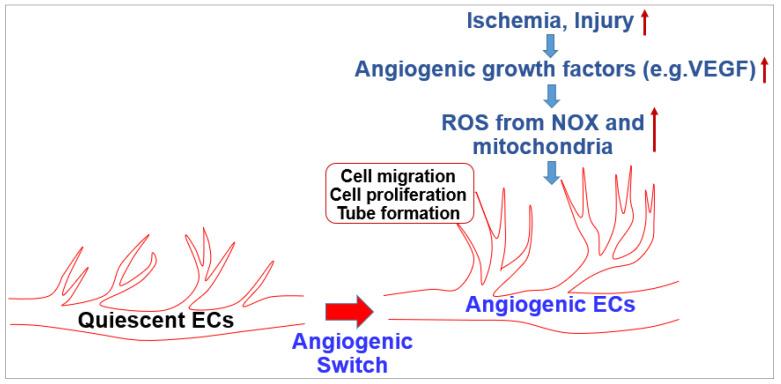
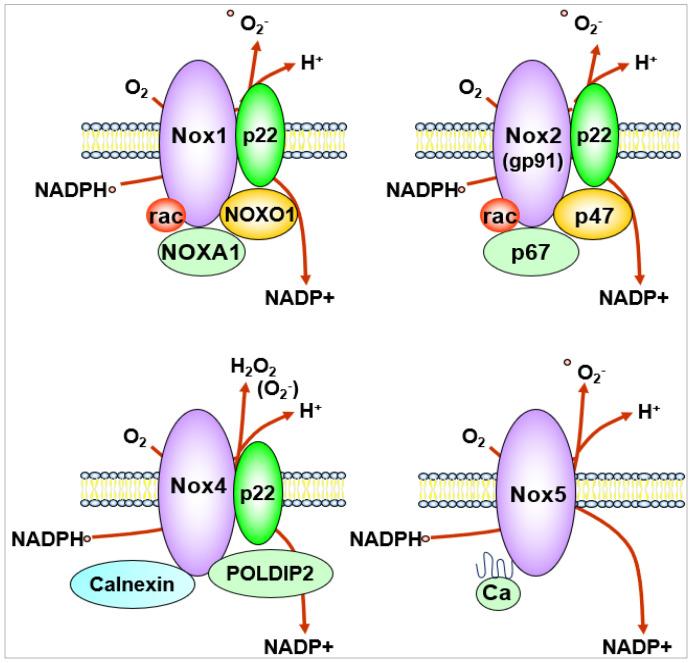
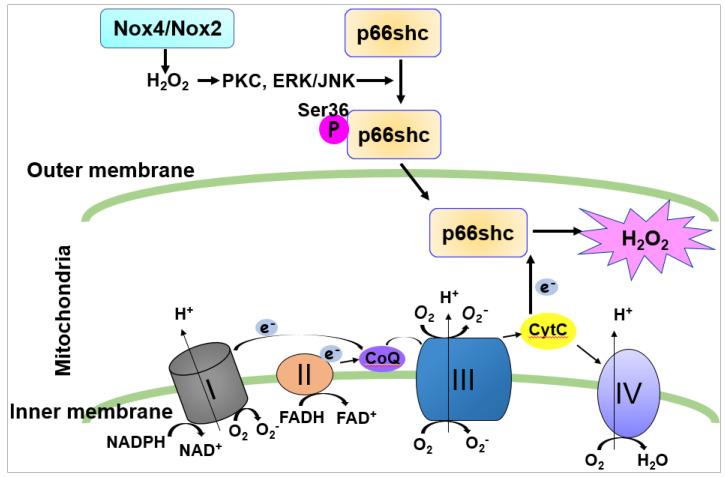
Angiogenesis, a new vessel formation from the pre-existing ones, is essential for embryonic development, wound repair and treatment of ischemic heart and limb diseases. However, dysregulated angiogenesis contributes to various pathologies such as diabetic retinopathy, atherosclerosis and cancer. Reactive oxygen species (ROS) derived from NADPH oxidase (NOX) as well as mitochondria play an important role in promoting the angiogenic switch from quiescent endothelial cells (ECs). However, how highly diffusible ROS produced from different sources and location can communicate with each other to regulate angiogenesis remains unclear. To detect a localized ROS signal in distinct subcellular compartments in real time in situ, compartment-specific genetically encoded redox-sensitive fluorescence biosensors have been developed. Recently, the intercellular communication, "cross-talk", between ROS derived from NOX and mitochondria, termed "ROS-induced ROS release", has been proposed as a mechanism for ROS amplification at distinct subcellular compartments, which are essential for activation of redox signaling. This "ROS-induced ROS release" may represent a feed-forward mechanism of localized ROS production to maintain sustained signaling, which can be targeted under pathological conditions with oxidative stress or enhanced to promote therapeutic angiogenesis. In this review, we summarize the recent knowledge regarding the role of the cross-talk between NOX and mitochondria organizing the sustained ROS signaling involved in VEGF signaling, neovascularization and tissue repair.
血管生成,即从已有的血管中形成新的血管,对于胚胎发育、伤口修复以及缺血性心脏和肢体疾病的治疗至关重要。然而,失调的血管生成会导致多种病理情况,如糖尿病视网膜病变、动脉粥样硬化和癌症。来自 NADPH 氧化酶(NOX)和线粒体的活性氧(ROS)在促进从静止的内皮细胞(EC)向血管生成转化的过程中发挥着重要作用。然而,来自不同来源和位置的高扩散性 ROS 如何相互交流以调节血管生成仍然不清楚。为了实时原位检测不同亚细胞区室中局部 ROS 信号,已经开发了亚细胞特异性的基因编码氧化还原敏感荧光生物传感器。最近,NOX 和线粒体产生的 ROS 之间的细胞间通讯,称为“ROS 诱导的 ROS 释放”,被提出作为在不同亚细胞区室中 ROS 放大的机制,这对于氧化还原信号的激活至关重要。这种“ROS 诱导的 ROS 释放”可能代表了局部 ROS 产生的一种正反馈机制,以维持持续的信号,这可以在氧化应激或增强的病理条件下作为治疗靶点,以促进治疗性血管生成。在这篇综述中,我们总结了关于 NOX 和线粒体之间的串扰在 VEGF 信号转导、新血管生成和组织修复中所涉及的持续 ROS 信号转导中的作用的最新知识。



 Zotero 插件