
运用电子健康素养视角:针对社会弱势群体的电子健康干预措施的系统评价。
Applying the Electronic Health Literacy Lens: Systematic Review of Electronic Health Interventions Targeted at Socially Disadvantaged Groups.
机构信息
Centre for Global Health and Equity, Faculty of Health, Arts and Design, Swinburne University of Technology, Hawthorn, Australia.
Deakin University, School of Health and Social Development, Faculty of Health, Burwood, Australia.
出版信息
J Med Internet Res. 2020 Aug 13;22(8):e18476. doi: 10.2196/18476.
BACKGROUND
Electronic health (eHealth) has the potential to improve health outcomes. However, eHealth systems need to match the eHealth literacy needs of users to be equitably adopted. Socially disadvantaged groups have lower access and skills to use technologies and are at risk of being digitally marginalized, leading to the potential widening of health disparities.
OBJECTIVE
This systematic review aims to explore the role of eHealth literacy and user involvement in developing eHealth interventions targeted at socially disadvantaged groups.
METHODS
A systematic search was conducted across 10 databases for eHealth interventions targeted at older adults, ethnic minority groups, low-income groups, low-literacy groups, and rural communities. The eHealth Literacy Framework was used to examine the eHealth literacy components of reviewed interventions. The results were analyzed using narrative synthesis.
RESULTS
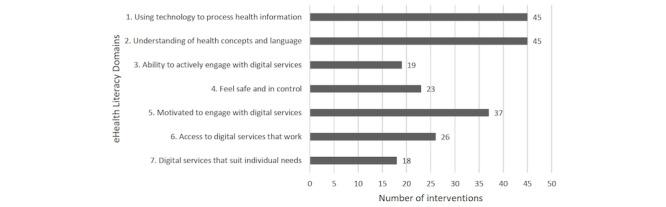
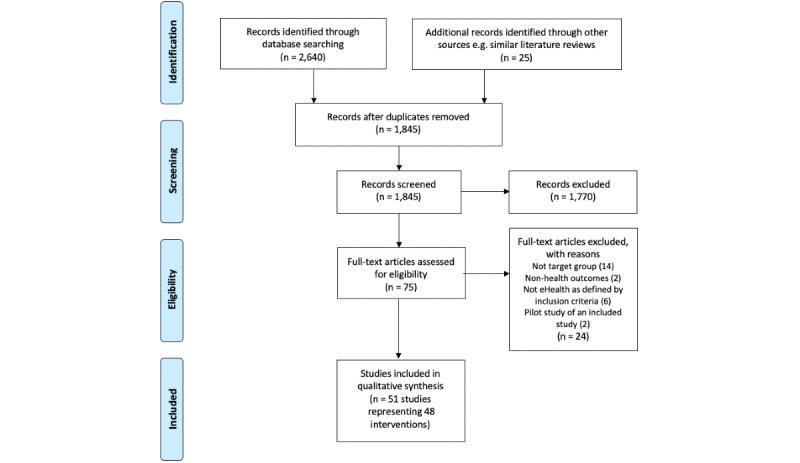
A total of 51 studies reporting on the results of 48 interventions were evaluated. Most studies were targeted at older adults and ethnic minorities, with only 2 studies focusing on low-literacy groups. eHealth literacy was not considered in the development of any of the studies, and no eHealth literacy assessment was conducted. User involvement in designing interventions was limited, and eHealth intervention developmental frameworks were rarely used. Strategies to assist users in engaging with technical systems were seldom included in the interventions, and accessibility features were limited. The results of the included studies also provided inconclusive evidence on the effectiveness of eHealth interventions.
CONCLUSIONS
The findings highlight that eHealth literacy is generally overlooked in developing eHealth interventions targeted at socially disadvantaged groups, whereas evidence about the effectiveness of such interventions is limited. To ensure equal access and inclusiveness in the age of eHealth, eHealth literacy of disadvantaged groups needs to be addressed to help avoid a digital divide. This will assist the realization of recent technological advancements and, importantly, improve health equity.
背景
电子健康(eHealth)有改善健康结果的潜力。然而,eHealth 系统需要满足用户的 eHealth 素养需求,才能公平地采用。社会弱势群体在获取和使用技术方面的机会较少,并且面临被数字化边缘化的风险,这可能导致健康差距进一步扩大。
目的
本系统评价旨在探讨 eHealth 素养和用户参与在开发针对社会弱势群体的 eHealth 干预措施中的作用。
方法
在 10 个数据库中进行了系统搜索,以查找针对老年人、少数民族群体、低收入群体、低识字群体和农村社区的 eHealth 干预措施。使用电子健康素养框架来检查所审查干预措施的电子健康素养组成部分。使用叙述性综合分析来分析结果。
结果
共评估了 51 项研究,这些研究报告了 48 项干预措施的结果。大多数研究针对老年人和少数民族群体,只有 2 项研究针对低识字群体。没有考虑 eHealth 素养在任何研究的开发中,也没有进行任何 eHealth 素养评估。用户在设计干预措施中的参与度有限,很少使用 eHealth 干预措施开发框架。在干预措施中很少包括帮助用户与技术系统互动的策略,并且可访问性功能有限。纳入研究的结果也提供了关于 eHealth 干预措施有效性的不确定证据。
结论
研究结果表明,在开发针对社会弱势群体的 eHealth 干预措施时,通常会忽略 eHealth 素养,而此类干预措施的有效性证据有限。为了确保在 eHealth 时代实现平等的获取和包容性,需要解决弱势群体的 eHealth 素养问题,以避免数字鸿沟。这将有助于实现最近的技术进步,重要的是,改善健康公平。
 Zotero 插件