
子宫内和儿童时期暴露于烟草烟雾与儿童的多层分子特征。
In utero and childhood exposure to tobacco smoke and multi-layer molecular signatures in children.
机构信息
Centre for Genomic Regulation (CRG), The Barcelona Institute of Science and Technology, Barcelona, Spain.
ISGlobal, Barcelona, Spain.
出版信息
BMC Med. 2020 Aug 19;18(1):243. doi: 10.1186/s12916-020-01686-8.
BACKGROUND
The adverse health effects of early life exposure to tobacco smoking have been widely reported. In spite of this, the underlying molecular mechanisms of in utero and postnatal exposure to tobacco smoke are only partially understood. Here, we aimed to identify multi-layer molecular signatures associated with exposure to tobacco smoke in these two exposure windows.
METHODS
We investigated the associations of maternal smoking during pregnancy and childhood secondhand smoke (SHS) exposure with molecular features measured in 1203 European children (mean age 8.1 years) from the Human Early Life Exposome (HELIX) project. Molecular features, covering 4 layers, included blood DNA methylation and gene and miRNA transcription, plasma proteins, and sera and urinary metabolites.
RESULTS
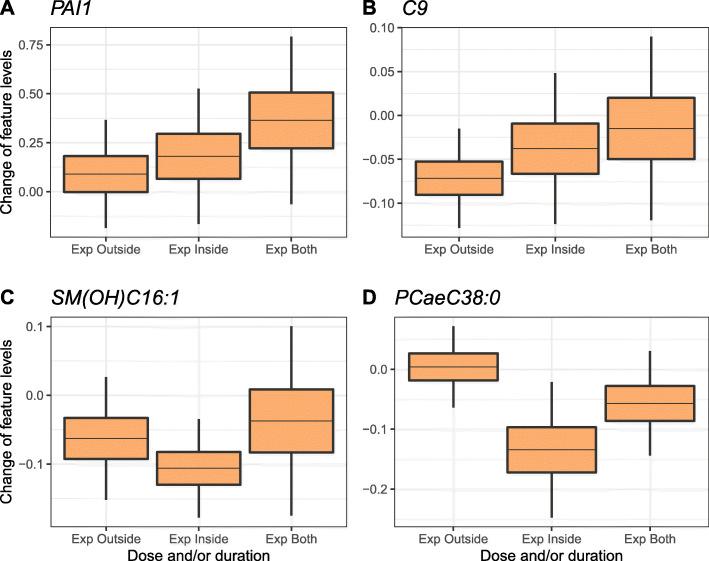
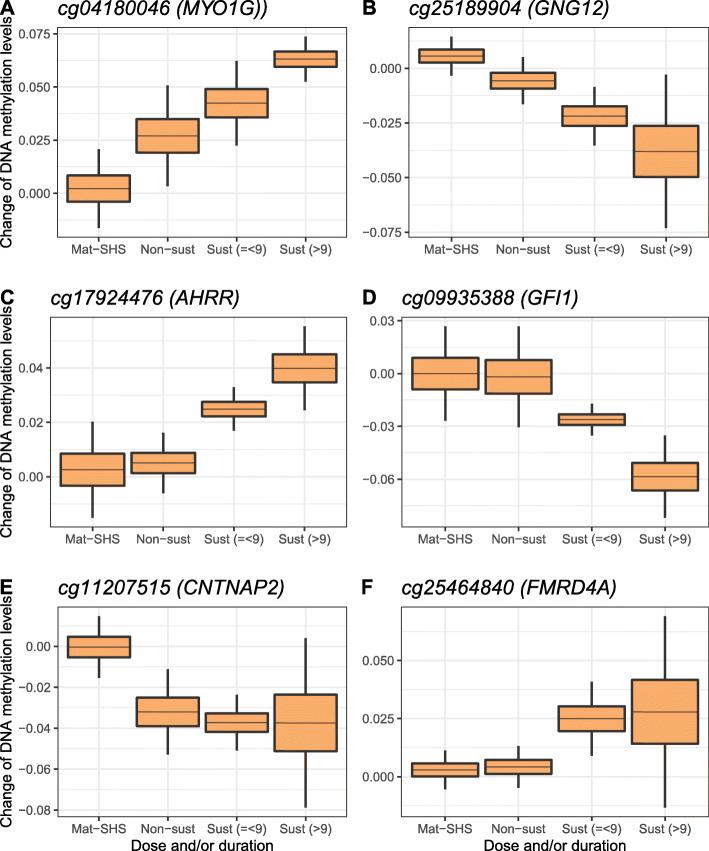
Maternal smoking during pregnancy was associated with DNA methylation changes at 18 loci in child blood. DNA methylation at 5 of these loci was related to expression of the nearby genes. However, the expression of these genes themselves was only weakly associated with maternal smoking. Conversely, childhood SHS was not associated with blood DNA methylation or transcription patterns, but with reduced levels of several serum metabolites and with increased plasma PAI1 (plasminogen activator inhibitor-1), a protein that inhibits fibrinolysis. Some of the in utero and childhood smoking-related molecular marks showed dose-response trends, with stronger effects with higher dose or longer duration of the exposure.
CONCLUSION
In this first study covering multi-layer molecular features, pregnancy and childhood exposure to tobacco smoke were associated with distinct molecular phenotypes in children. The persistent and dose-dependent changes in the methylome make CpGs good candidates to develop biomarkers of past exposure. Moreover, compared to methylation, the weak association of maternal smoking in pregnancy with gene expression suggests different reversal rates and a methylation-based memory to past exposures. Finally, certain metabolites and protein markers evidenced potential early biological effects of postnatal SHS, such as fibrinolysis.
背景
早孕期接触烟草烟雾对健康的不良影响已被广泛报道。尽管如此,宫内和产后暴露于烟草烟雾的潜在分子机制仍部分被理解。在这里,我们旨在确定与这两个暴露窗口中接触烟草烟雾相关的多层分子特征。
方法
我们调查了母亲怀孕期间吸烟和儿童期二手烟(SHS)暴露与在人类早期生活暴露组学(HELIX)项目中 1203 名欧洲儿童(平均年龄 8.1 岁)中测量的分子特征之间的关联。分子特征涵盖 4 层,包括血液 DNA 甲基化和基因及 miRNA 转录、血浆蛋白以及血清和尿液代谢物。
结果
母亲怀孕期间吸烟与儿童血液中 18 个位点的 DNA 甲基化变化相关。这些位点中的 5 个 DNA 甲基化与附近基因的表达有关。然而,这些基因本身的表达仅与母亲吸烟有关。相反,儿童期 SHS 与血液 DNA 甲基化或转录模式无关,但与几种血清代谢物水平降低以及血浆 PAI1(纤溶酶原激活物抑制剂-1)水平升高有关,PAI1 是一种抑制纤维蛋白溶解的蛋白质。一些宫内和儿童期吸烟相关的分子标记显示出剂量反应趋势,随着暴露剂量或持续时间的增加,作用更强。
结论
在这项涵盖多层次分子特征的首次研究中,妊娠和儿童期接触烟草烟雾与儿童的不同分子表型相关。甲基组中持久和剂量依赖性的变化使 CpG 成为开发过去暴露生物标志物的良好候选物。此外,与甲基化相比,母亲怀孕期间吸烟与基因表达的弱关联表明,逆转率不同,且基于甲基化的对过去暴露的记忆。最后,某些代谢物和蛋白质标志物证明了产后 SHS 的潜在早期生物学效应,如纤维蛋白溶解。



 Zotero 插件