
聚苯胺复合材料对……和……的抗菌性能 。(原文中“against”后面缺少具体对象)
Antimicrobial Properties of the Polyaniline Composites against and .
作者信息
Maruthapandi Moorthy, Saravanan Arumugam, Luong John H T, Gedanken Aharon
机构信息
Department of Chemistry, Bar-Ilan Institute for Nanotechnology and Advanced Materials, Bar-Ilan University, Ramat-Gan 52900, Israel.
School of Chemistry, University College Cork, Cork T12 YN60, Ireland.
出版信息
J Funct Biomater. 2020 Aug 19;11(3):59. doi: 10.3390/jfb11030059.
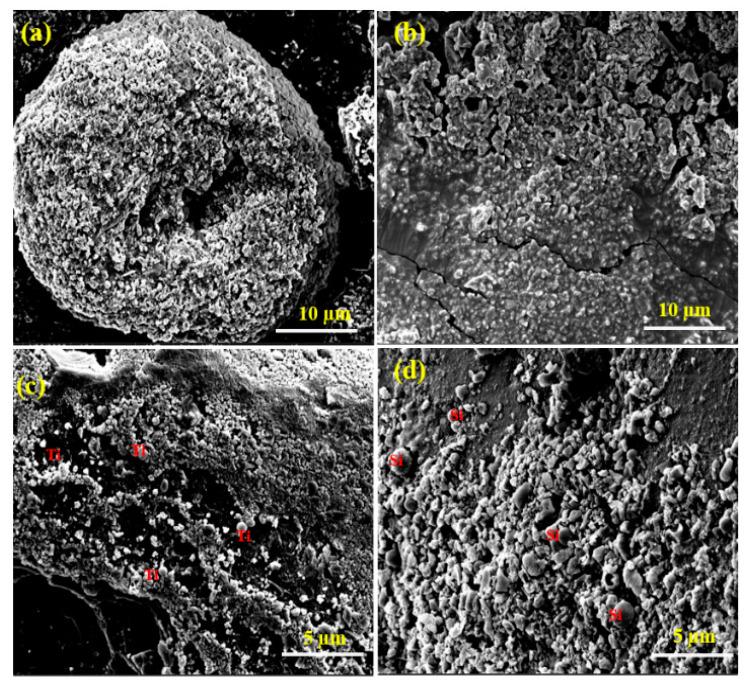
CuO, TiO or SiO was decorated on polyaniline (PANI) by a sonochemical method, and their antimicrobial properties were investigated for two common Gram-negative pathogens: (PA) and (KP). Without PANI, CuO, TiO, or SiO with a concentration of 220 µg/mL exhibited no antimicrobial activities. In contrast, PANI-CuO and PANI-TiO (1 mg/mL, each) completely suppressed the PA growth after 6 h of exposure, compared to 12 h for the PANI-SiO at the same concentration. The damage caused by PANI-SiO to KP was less effective, compared to that of PANI-TiO with the eradication time of 12 h versus 6 h, respectively. This bacterium was not affected by PANI-CuO. All the composites bind tightly to the negative groups of bacteria cell walls to compromise their regular activities, leading to the damage of the cell wall envelope and eventual cell lysis.
通过声化学方法将氧化铜(CuO)、二氧化钛(TiO)或二氧化硅(SiO)负载于聚苯胺(PANI)上,并针对两种常见的革兰氏阴性病原体——铜绿假单胞菌(PA)和肺炎克雷伯菌(KP)研究了它们的抗菌性能。在没有聚苯胺的情况下,浓度为220 µg/mL的氧化铜、二氧化钛或二氧化硅均未表现出抗菌活性。相比之下,聚苯胺-氧化铜(PANI-CuO)和聚苯胺-二氧化钛(PANI-TiO)(各1 mg/mL)在暴露6小时后完全抑制了铜绿假单胞菌的生长,而相同浓度的聚苯胺-二氧化硅(PANI-SiO)则需要12小时。与聚苯胺-二氧化钛对肺炎克雷伯菌的根除时间分别为6小时和12小时相比,聚苯胺-二氧化硅对肺炎克雷伯菌造成的损害效果较差。这种细菌不受聚苯胺-氧化铜的影响。所有复合材料都与细菌细胞壁的负性基团紧密结合,从而破坏其正常活动,导致细胞壁包膜受损并最终使细胞裂解。



 Zotero 插件