
设计新型双功能杂合化合物以增强阿片类药物的作用并拮抗非阿片肽的致痛作用,作为治疗神经病理性疼痛大鼠模型的有效镇痛药。
Novel bifunctional hybrid compounds designed to enhance the effects of opioids and antagonize the pronociceptive effects of nonopioid peptides as potent analgesics in a rat model of neuropathic pain.
机构信息
Maj Institute of Pharmacology, Polish Academy of Sciences, Department of Pain Pharmacology, Krakow, Poland.
Faculty of Chemistry, Biological, and Chemistry Research Centre, University of Warsaw, Warsaw, Poland.
出版信息
Pain. 2021 Feb 1;162(2):432-445. doi: 10.1097/j.pain.0000000000002045.
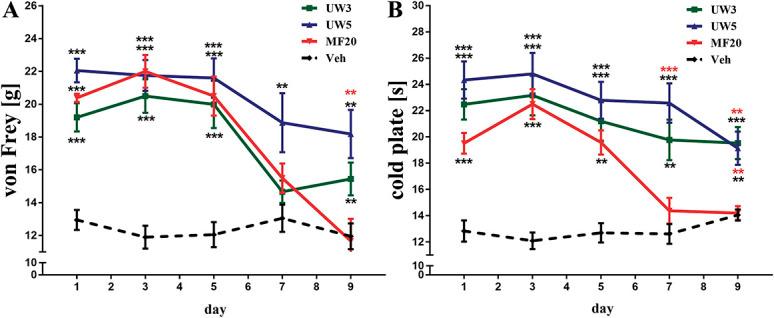
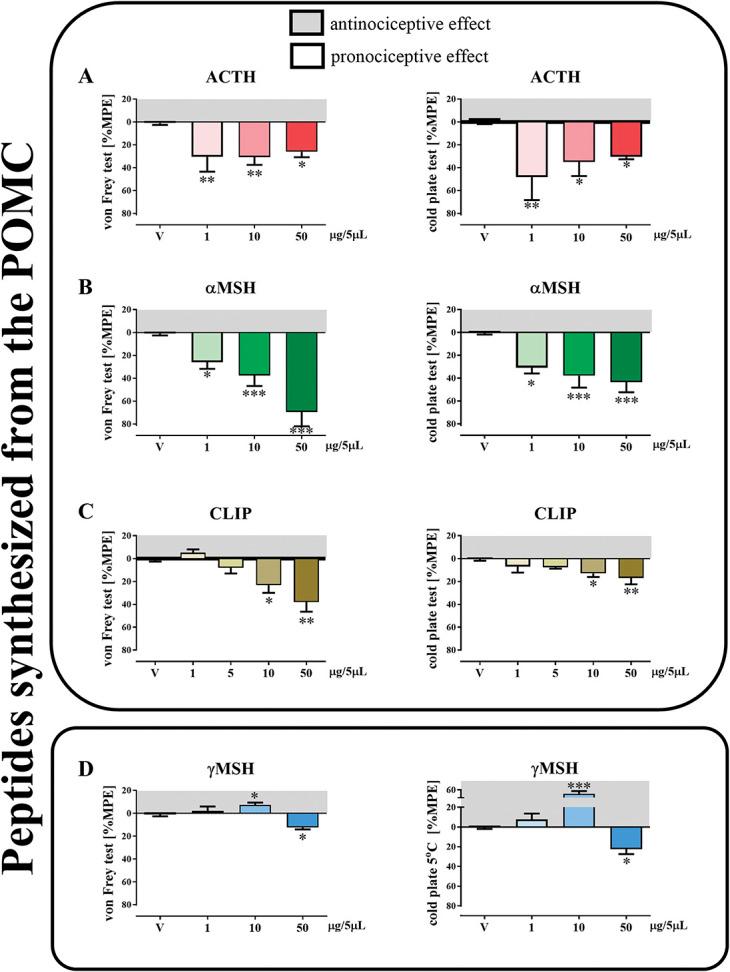
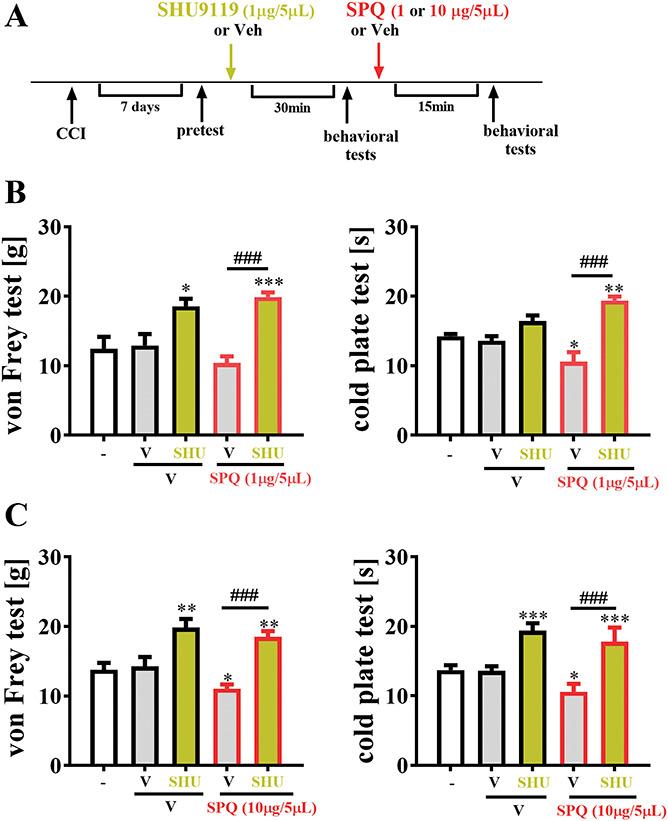
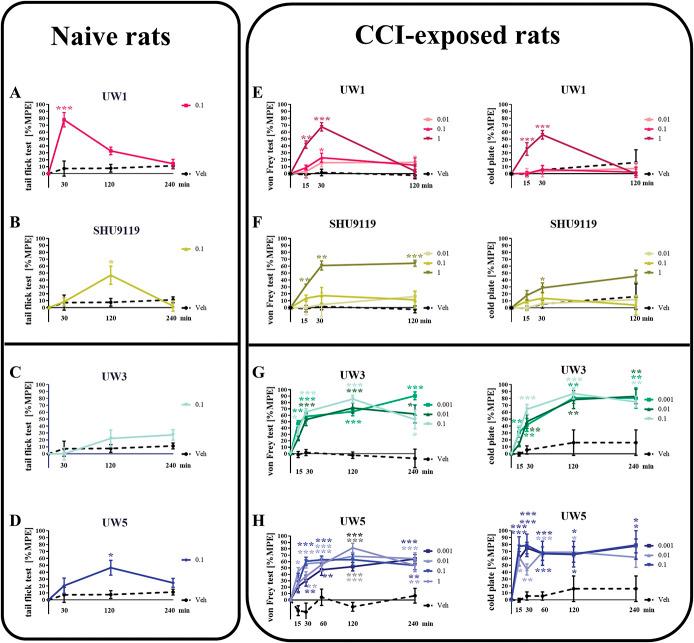
The purpose of our work was to determine the role of nonopioid peptides derived from opioid prohormones in sensory hypersensitivity characteristics of neuropathic pain and to propose a pharmacological approach to restore the balance of these endogenous opioid systems. Nonopioid peptides may have a pronociceptive effect and therefore contribute to less effective opioid analgesia in neuropathic pain. In our study, we used unilateral chronic constriction injury (CCI) of the sciatic nerve as a neuropathic pain model in rats. We demonstrated the pronociceptive effects of proopiomelanocortin- and proenkephalin-derived nonopioid peptides assessed by von Frey and cold plate tests, 7 to 14 days after injury. The concentration of proenkephalin-derived pronociceptive peptides was increased more robustly than that of Met-enkephalin in the ipsilateral lumbar spinal cord of CCI-exposed rats, as shown by mass spectrometry, and the pronociceptive effect of one of these peptides was blocked by an antagonist of the melanocortin 4 (MC4) receptor. The above results confirm our hypothesis regarding the possibility of creating an analgesic drug for neuropathic pain based on enhancing opioid activity and blocking the pronociceptive effect of nonopioid peptides. We designed and synthesized bifunctional hybrids composed of opioid (OP) receptor agonist and MC4 receptor antagonist (OP-linker-MC4). Moreover, we demonstrated that they have potent and long-lasting antinociceptive effects after a single administration and a delayed development of tolerance compared with morphine after repeated intrathecal administration to rats subjected to CCI. We conclude that the bifunctional hybrids OP-linker-MC4 we propose are important prototypes of drugs for use in neuropathic pain.
我们的工作目的是确定源自阿片原肽的非阿片肽在神经病理性疼痛感觉过敏特征中的作用,并提出一种恢复这些内源性阿片系统平衡的药理学方法。非阿片肽可能具有促伤害作用,因此在神经病理性疼痛中对阿片类药物的镇痛效果较差。在我们的研究中,我们使用单侧坐骨神经慢性缩窄性损伤(CCI)作为大鼠神经病理性疼痛模型。我们通过 von Frey 和冷板试验证明了源自 proopiomelanocortin 和 proenkephalin 的非阿片肽的促伤害作用,损伤后 7 至 14 天。与 CCI 暴露大鼠对侧腰脊髓中的 Met-enkephalin 相比,源自 proenkephalin 的促伤害性肽的浓度增加更明显,如质谱所示,其中一种肽的促伤害作用被黑素皮质素 4 (MC4) 受体拮抗剂阻断。上述结果证实了我们关于基于增强阿片活性和阻断非阿片肽促伤害作用来开发治疗神经病理性疼痛的镇痛药物的假设。我们设计并合成了由阿片(OP)受体激动剂和 MC4 受体拮抗剂(OP-接头-MC4)组成的双功能杂合体。此外,我们证明与重复鞘内给予吗啡相比,它们在单次给予后具有更强和持久的镇痛作用,并且在 CCI 大鼠中重复给予后耐受性发展延迟。我们得出结论,我们提出的双功能杂合体 OP-接头-MC4 是用于治疗神经病理性疼痛的重要药物原型。


 Zotero 插件