
抗病毒构建环境:从新冠疫情中吸取的教训。
Antivirus-built environment: Lessons learned from Covid-19 pandemic.
作者信息
Megahed Naglaa A, Ghoneim Ehab M
机构信息
Professor, Architecture and Urban Planning Department, Faculty of Engineering, Port Said University, Egypt.
Professor of Ophthalmology, Vice Dean for Community Services & Environmental Development Affairs, Faculty of Medicine, Port Said University, Egypt.
出版信息
Sustain Cities Soc. 2020 Oct;61:102350. doi: 10.1016/j.scs.2020.102350. Epub 2020 Jun 24.
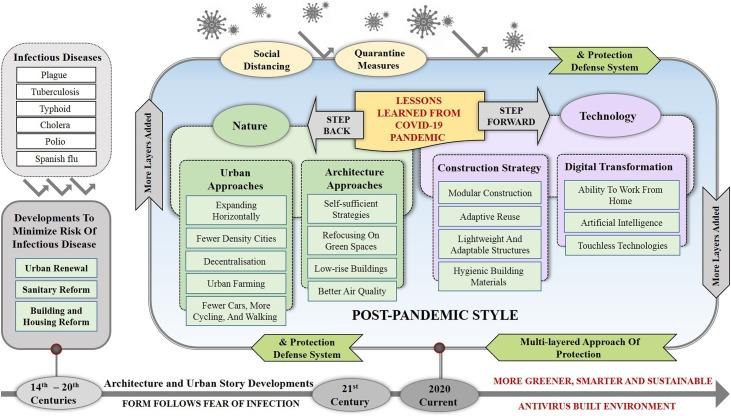
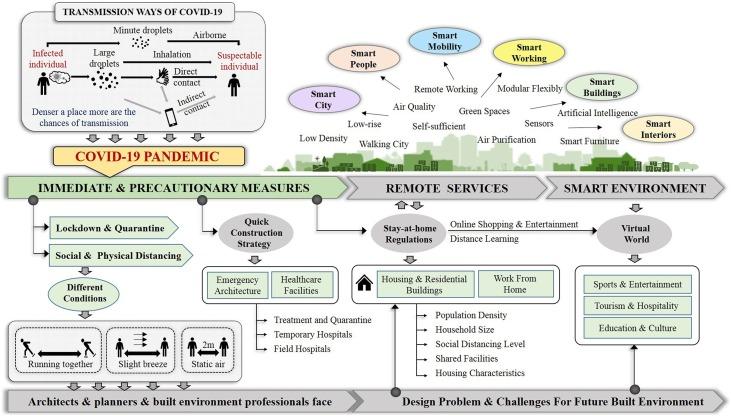
Before developing medications for an epidemic, one solution is to go back to the physical and built environment to reduce its impact. Epidemics have transformed our built environment because of the fear of infection. Consequently, architecture and urbanism after the Covid-19 epidemic will never be the same. Although the current global epidemic poses a challenge at all levels in the built environment, it will take time to develop an antivirus-enabled paradigm to reduce the potential risks or stop the virus from spreading. This study imagines what the antivirus-built environment looks like based on the lessons learned and the importance of designing a healthy and sustainable built environment. Many unanswered questions require further multidisciplinary studies. We aim to search for answers and learn from this forced experiment to add additional security layers to overcome future virus-like attacks.
在开发针对流行病的药物之前,一种解决方案是回归物理和建筑环境以减轻其影响。由于对感染的恐惧,流行病改变了我们的建筑环境。因此,新冠疫情后的建筑和城市规划将与以往截然不同。尽管当前的全球疫情在建筑环境的各个层面都构成了挑战,但要开发一种具备抗病毒功能的范式以降低潜在风险或阻止病毒传播尚需时日。本研究基于所吸取的经验教训以及设计健康可持续建筑环境的重要性,设想了抗病毒建筑环境的样子。许多未解决的问题需要进一步开展多学科研究。我们旨在寻找答案,并从这个强制实验中学习,以增加额外的安全层面,从而抵御未来类似病毒的攻击。
 Zotero 插件