
用于评估 COVID-19 患者抗血栓形成药物的微流控出血芯片设计
Design of a Microfluidic Bleeding Chip to Evaluate Antithrombotic Agents for Use in COVID-19 Patients.
作者信息
Lakshmanan Hari Hara Sudhan, Pore Adity A, Kohs Tia C L, Yazar Feyza, Thompson Rachel M, Jurney Patrick L, Maddala Jeevan, Olson Sven R, Shatzel Joseph J, Vanapalli Siva A, McCarty Owen J T
机构信息
Department of Biomedical Engineering, Oregon Health & Science University, 3303 SW Bond Ave; CH13B, Portland, OR 97239 USA.
Department of Chemical Engineering, Texas Tech University, Lubbock, TX USA.
出版信息
Cell Mol Bioeng. 2020 Aug 6;13(4):331-339. doi: 10.1007/s12195-020-00644-x. eCollection 2020 Aug.
INTRODUCTION
Interventions that could prevent thrombosis, clinical decompensation, and respiratory compromise in patients with novel coronavirus disease (COVID-19) are key to decrease mortality rate. Studies show that profound cytokine release and excessive activation of blood coagulation appear to be key drivers of COVID-19 associated mortality. Since limited methods exist for assessing the effects of anticoagulants on hemostasis, the development of novel therapies to safely prevent thrombosis in COVID-19 patients relies on preclinical animal models and early phase human trials. Herein we present the design of a microfluidic "bleeding chip" to evaluate the effects of antithrombotic therapies on hemostatic plug formation .
METHODS
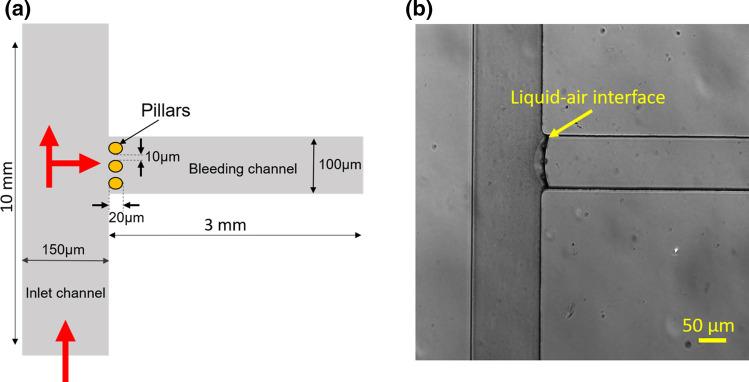
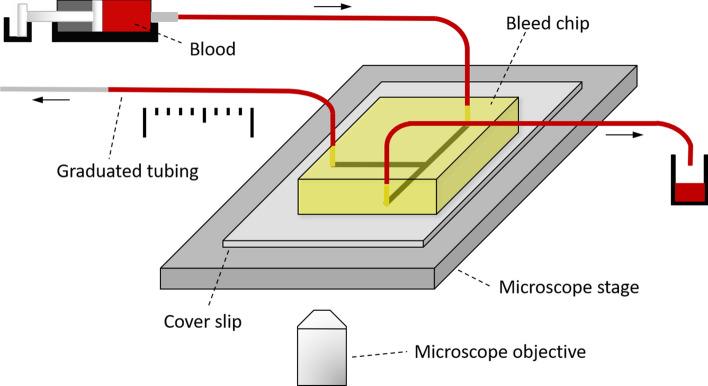
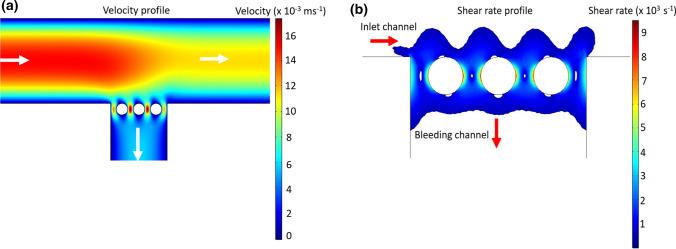
The design of the microfluidic device consists of two orthogonal channels: an inlet that serves as a model blood vessel, and a bleeding channel to model hemostatic plug formation at sites of compromised endothelial barrier function. This is achieved by placing a series of 3 pillars spaced 10 m apart at the intersection of the two channels. The pillars and bleeding channel are coated with the extracellular matrix protein collagen.
RESULTS
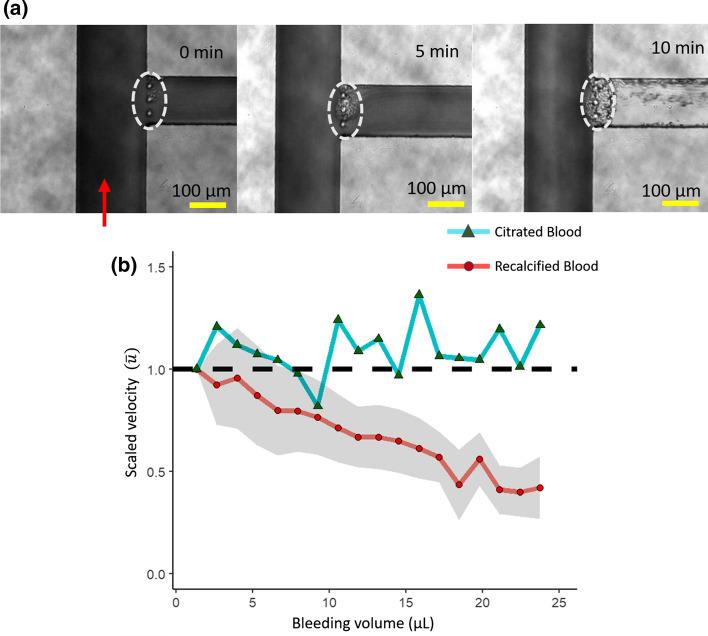
Perfusion of human whole blood through the microfluidic bleeding chip led to initial platelet adhesion and aggregation at the pillars followed by hemostatic plug formation and occlusion of the bleeding channel.
CONCLUSIONS
Safe and effective mitigating agents are needed for treatment and prevention of thrombotic complications in COVID-19 patients. This simple microfluidic device holds potential to be developed into a tool for assessing the effects of anticoagulant therapy on hemostasis.
引言
能够预防新型冠状病毒病(COVID-19)患者血栓形成、临床失代偿和呼吸功能不全的干预措施是降低死亡率的关键。研究表明,细胞因子的大量释放和凝血的过度激活似乎是COVID-19相关死亡率的关键驱动因素。由于评估抗凝剂对止血作用的方法有限,开发安全预防COVID-19患者血栓形成的新疗法依赖于临床前动物模型和早期人体试验。在此,我们展示一种微流控“出血芯片”的设计,以评估抗血栓治疗对止血栓形成的影响。
方法
微流控装置的设计由两个正交通道组成:一个作为模型血管的入口,以及一个用于模拟在内皮屏障功能受损部位形成止血栓的出血通道。这是通过在两个通道的交叉处放置一系列间距为10μm的3个柱子来实现的。柱子和出血通道涂有细胞外基质蛋白胶原蛋白。
结果
将人全血灌注通过微流控出血芯片,导致血小板最初在柱子处黏附并聚集,随后形成止血栓并阻塞出血通道。
结论
治疗和预防COVID-19患者血栓形成并发症需要安全有效的缓解剂。这种简单的微流控装置有潜力发展成为一种评估抗凝治疗对止血作用的工具。

 Zotero 插件