
基于全基因组测序的以色列分离株抗菌药物耐药性预测与分析
WGS-Based Prediction and Analysis of Antimicrobial Resistance in Isolates From Israel.
作者信息
Rokney Assaf, Valinsky Lea, Vranckx Katleen, Feldman Noa, Agmon Vered, Moran-Gilad Jacob, Weinberger Miriam
机构信息
Central Government Laboratories, Israel Ministry of Health, Jerusalem, Israel.
Applied Maths NV, Sint-Martens-Latem, Belgium.
出版信息
Front Cell Infect Microbiol. 2020 Aug 13;10:365. doi: 10.3389/fcimb.2020.00365. eCollection 2020.
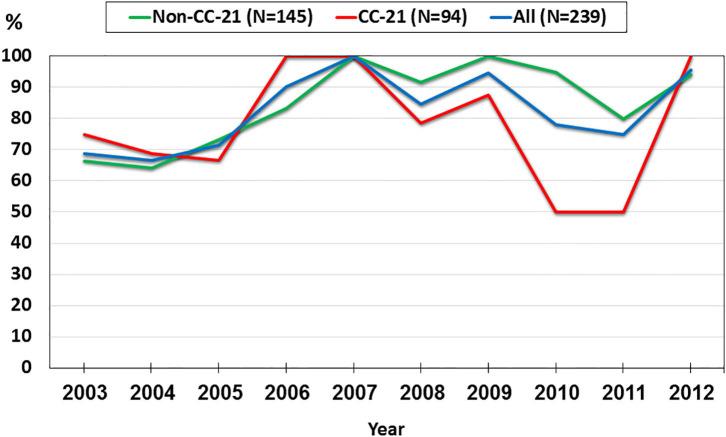
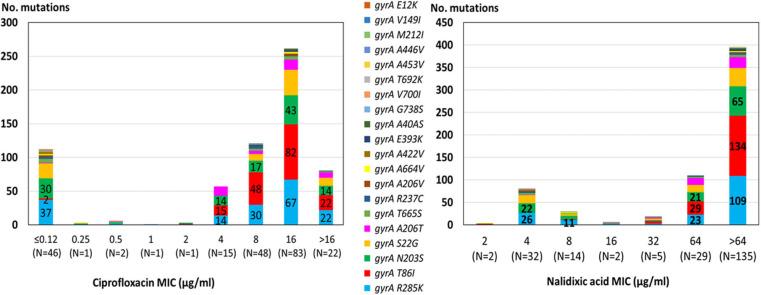
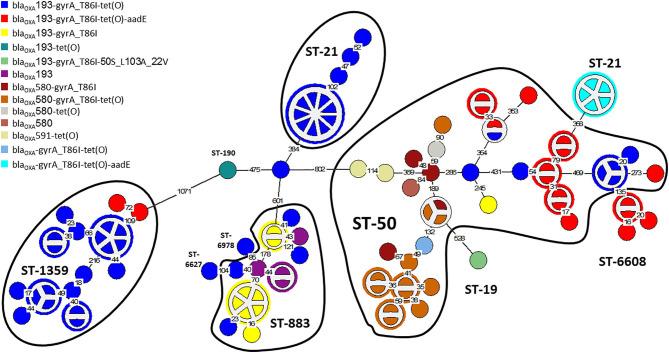
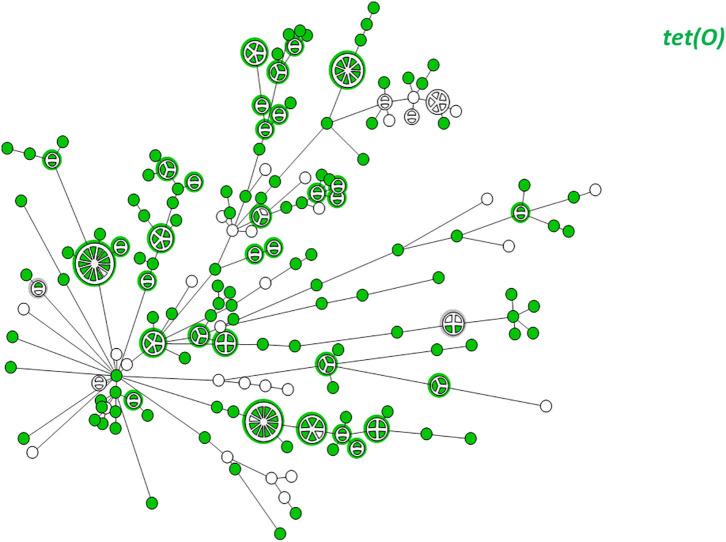
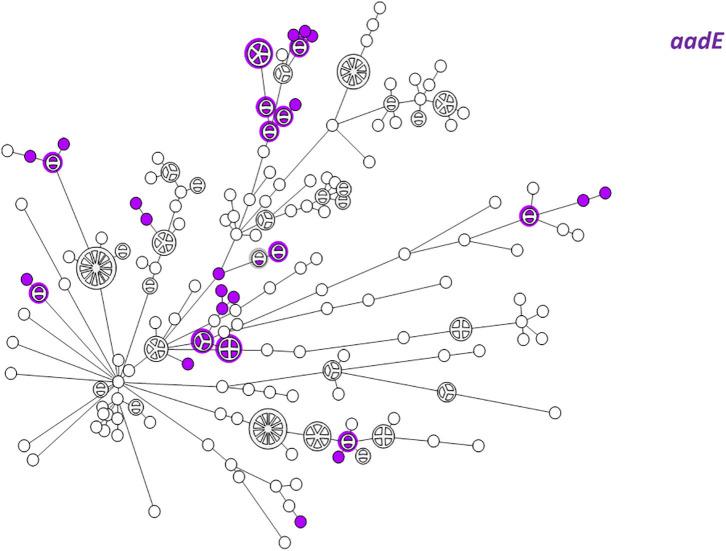
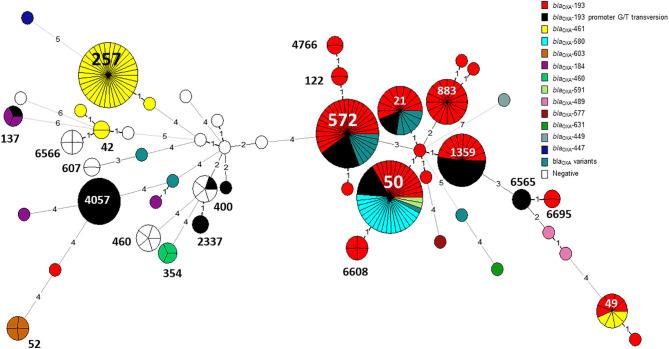
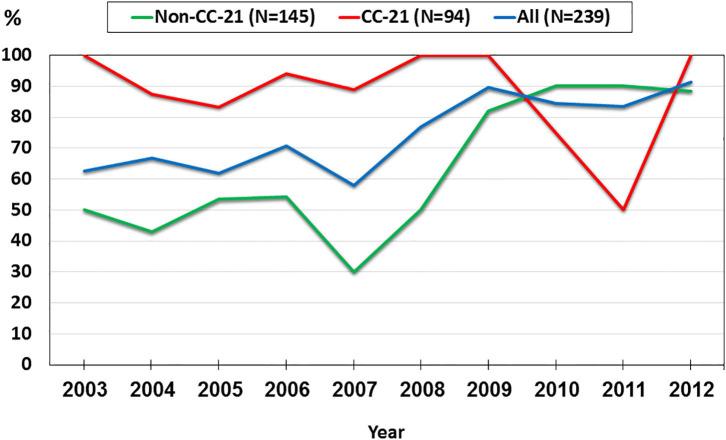
Rapid developments in the field of whole genome sequencing (WGS) make antimicrobial resistance (AMR) a target within reach. is a leading cause of foodborne infections in Israel with increasing rates of resistance. We applied WGS analysis to study the prevalence and genetic basis of AMR in 263 human and veterinary representative isolates retrieved from a national collection during 2003-2012. We evaluated the prediction of phenotypic AMR from genomic data. Genomes were screened by the NCBI AMRFinderPlus and the BioNumerics tools for acquired AMR genes and point mutations. The results were compared to phenotypic resistance determined by broth microdilution. The most prevalent resistant determinants were the multi-drug efflux transporter gene (100%), the tetracycline resistance gene (82.1%), the quinolone resistance g T861 point mutation (75.7%), and the streptomycin resistance gene. A variety of 12 known β lactam resistance genes ( variants) were detected in 241 (92%) isolates, the most prevalent being , , and (56, 16, and 7%, respectively). Other aminoglycoside resistance genes and the macrolide resistance point mutation were rare (<1%). The overall correlation rate between WGS-based genotypic prediction and phenotypic resistance was 98.8%, sensitivity, specificity, positive, and negative predictive values being 98.0, 99.3, 99.1, and 98.5%, respectively. wgMLST-based phylogeny indicated a high level of clonality and clustering among the studied isolates. Closely related isolates that were part of a genetic cluster (single linkage distance ≤ 15 alleles) based on wgMLST phylogeny mostly shared a homogenous AMR determinant profile. This was observed in 18 of 20 (90.0%) clusters within clonal complex-21, suggesting clonal expansion of resistant isolates. Strong association to lineage was noted for the gene and the various genes. High resistance rates to tetracycline and quinolones and a low resistance rate to macrolides were detected among the Israeli isolates. While a high genotypic-phenotypic correlation was found, some resistance phenotypes could not be predicted by the presence of AMR determinants, and particularly not the level of resistance. WGS-based prediction of antimicrobial resistance in requires further optimization in order to integrate this approach in the routine workflow of public health laboratories for foodborne surveillance.
全基因组测序(WGS)领域的快速发展使抗菌药物耐药性(AMR)成为一个触手可及的目标。[病原体名称]是以色列食源性感染的主要原因,其耐药率不断上升。我们应用WGS分析来研究2003年至2012年期间从国家菌种保藏中心获取的263株人类和兽医领域代表性分离株中AMR的流行情况和遗传基础。我们评估了从基因组数据预测表型AMR的情况。通过NCBI AMRFinderPlus和BioNumerics工具筛选基因组中的获得性AMR基因和点突变。将结果与肉汤微量稀释法测定的表型耐药性进行比较。最常见的耐药决定因素是多药外排转运蛋白基因(100%)、四环素耐药基因(82.1%)、喹诺酮耐药基因T861点突变(75.7%)和链霉素耐药基因。在241株(92%)分离株中检测到12种已知的β-内酰胺耐药基因(变体),最常见的是[具体基因1]、[具体基因2]和[具体基因3](分别为56%、16%和7%)。其他氨基糖苷类耐药基因和大环内酯耐药点突变很少见(<1%)。基于WGS的基因型预测与表型耐药性之间的总体相关性为98.8%,敏感性、特异性、阳性预测值和阴性预测值分别为98.0%、99.3%、99.1%和98.5%。基于wgMLST的系统发育分析表明,所研究的分离株之间存在高度的克隆性和聚类性。基于wgMLST系统发育分析属于遗传簇(单连锁距离≤15个等位基因)的密切相关分离株大多共享一致的AMR决定因素谱。在克隆复合体-21内的20个簇中的18个(90.0%)中观察到了这一点,表明耐药分离株的克隆性扩增。注意到[具体基因]和各种[具体基因]与菌系有很强的关联。在以色列[病原体名称]分离株中检测到对四环素和喹诺酮类药物的高耐药率以及对大环内酯类药物的低耐药率。虽然发现了较高的基因型-表型相关性,但一些耐药表型无法通过AMR决定因素的存在来预测,尤其是耐药水平。基于WGS预测[病原体名称]的抗菌药物耐药性需要进一步优化,以便将这种方法整合到公共卫生实验室用于食源性监测的常规工作流程中。


 Zotero 插件