
三种BALB/c亚系背景对二甲基苯并蒽(DMBA)和十四酰佛波醇乙酯(TPA)联合处理诱导皮肤肿瘤效果的影响。
Influence of three BALB/c substrain backgrounds on the skin tumor induction efficacy to DMBA and TPA cotreatment.
作者信息
Kang Mi Ju, Gong Jeong Eun, Kim Ji Eun, Choi Hyeon Jun, Bae Su Ji, Choi Yun Ju, Lee Su Jin, Seo Min-Soo, Kim Kil Soo, Jung Young-Suk, Cho Joon-Yong, Lim Yong, Hwang Dae Youn
机构信息
Department of Biomaterials Science, College of Natural Resources and Life Science/Life and Industry Convergence Research Institute/Laboratory Animals Resources Center, Pusan National University, Miryang, South Korea.
Laboratory Animal Center, Daegu-Gyeongbuk Medical Innovation Foundation, Daegu, South Korea.
出版信息
Lab Anim Res. 2020 Sep 3;36:30. doi: 10.1186/s42826-020-00063-z. eCollection 2020.
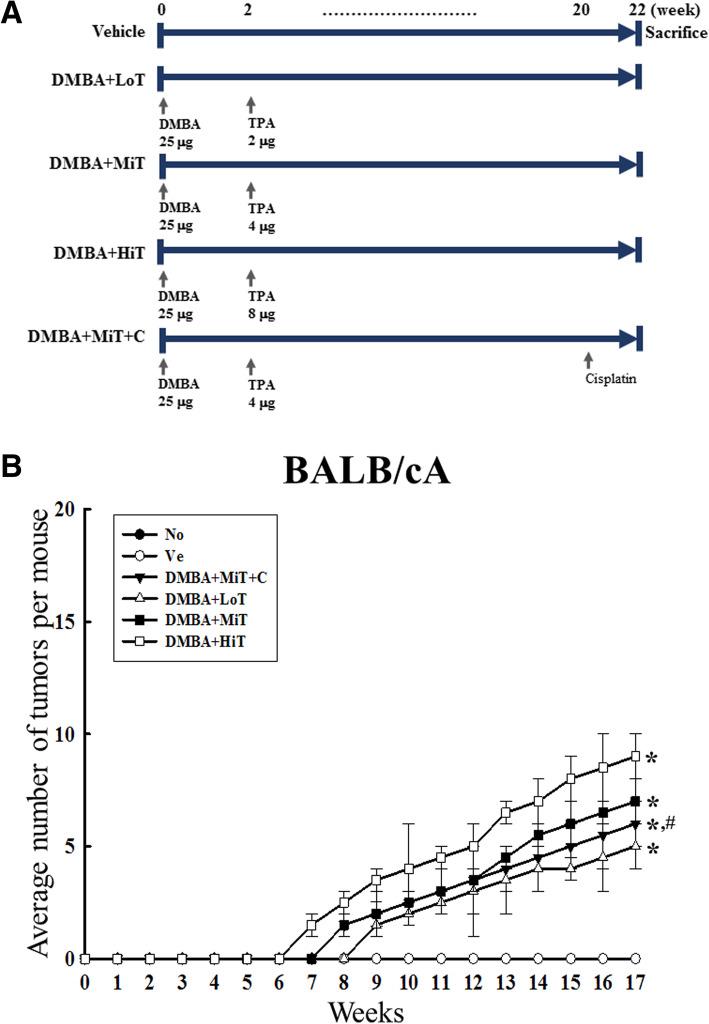
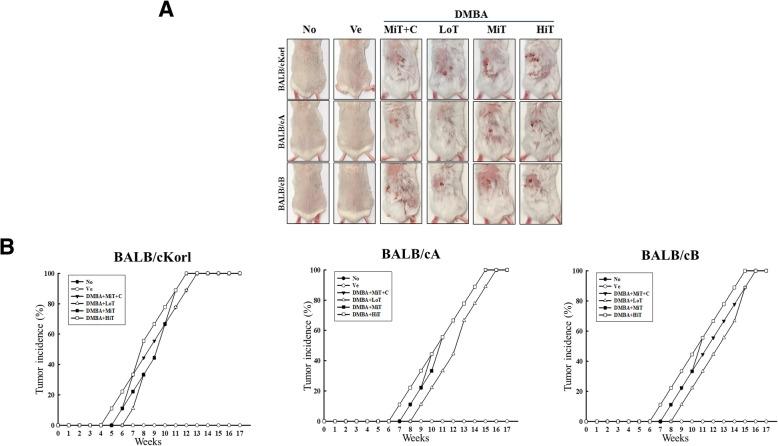
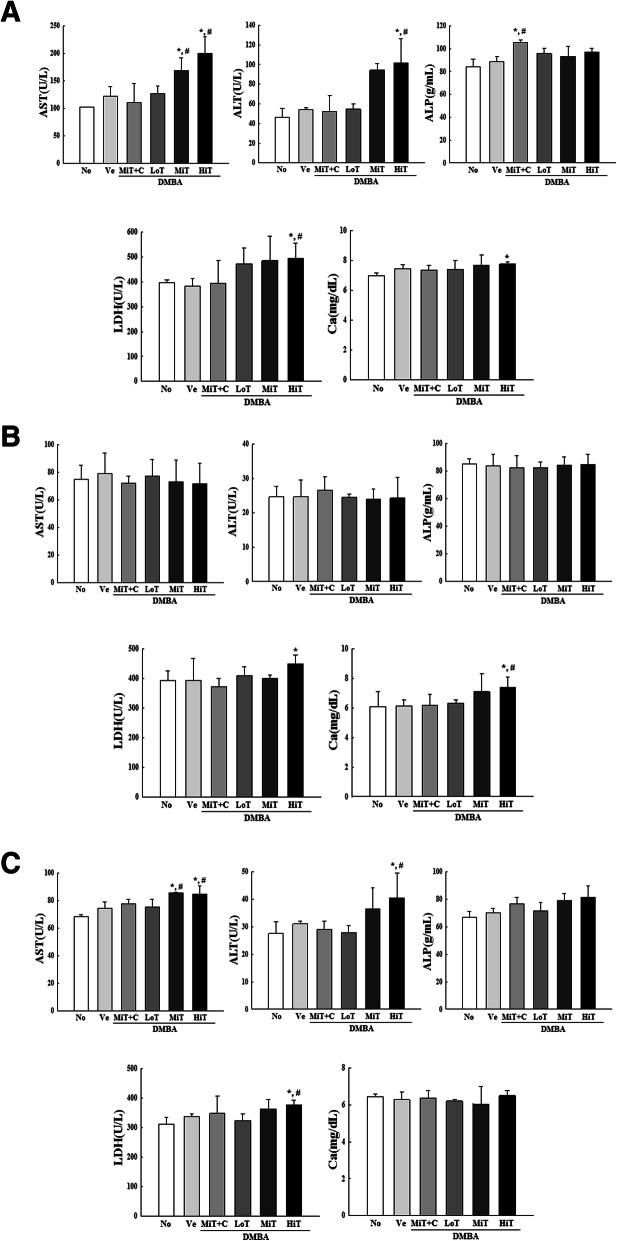
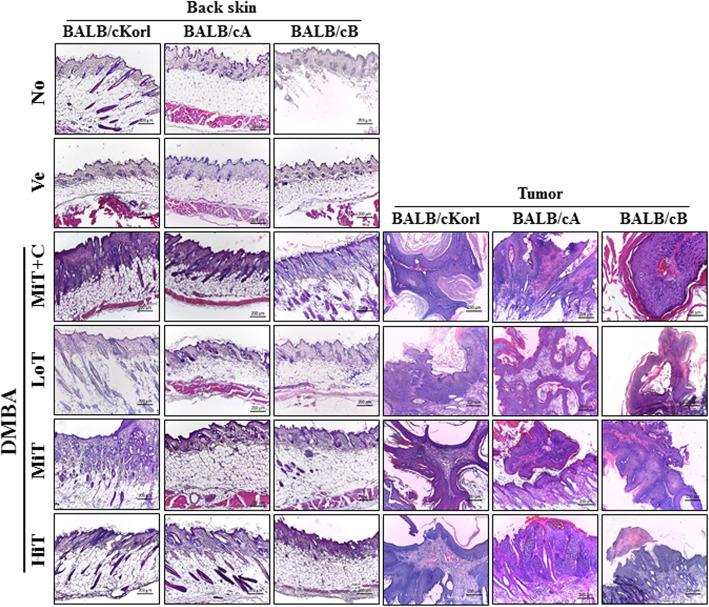
Differences in responsiveness of BALB/c substrains have been investigated in various fields, including diabetes induction, corpus callosum deficiency, virus-induced demyelinating disease, aggressive behavior and osteonecrosis. However, induction efficacy of skin tumor remains untried. We therefore investigated the influence of BALB/c substrain backgrounds on the skin tumor induction efficacy in response to DMBA (7,12-Dimethylbenz[a]anthracene) and TPA (12-O-tetradecanoylphorbol-13-acetate) cotreatment. Alterations in the levels of tumor growth related factors, histopathological structure, and the expression to tumor related proteins were measured in three BALB/c substrains (BALB/cKorl, BALB/cA and BALB/cB) after exposure to DMBA (25 μg/kg) and three different doses of TPA (2, 4 and 8 μg/kg). The average number and induction efficacy of tumors in response to DMBA+TPA treatment were significantly greater in the BALB/cKorl substrain than in BALB/cA and BALB/cB. However, cotreatment with DMBA+TPA induced similar responses for body and organ weights of all three substrains. Few differences were detected in the serum analyzing factors, while similar responsiveness was observed for blood analyzing factors after DMBA+TPA treatment. Furthermore, the three BALB/c substrains exhibited similar patterns in their histopathological structure in DMBA+TPA-induced tumors. The expression levels of apoptotic proteins and tumor related proteins were constantly maintained in all three BALB/c substrains treated with DMBA+TPA. In addition, the responsiveness to cisplatin treatment was overall very similar in the three BALB/c substrains with DMBA+TPA-induced tumors. Taken together, these results indicate that genetic background of the three BALB/c substrains does not have a major effect on the DMBA+TPA-induced skin carcinogenesis and therapeutic responsiveness of cisplatin, except induction efficacy.
在包括糖尿病诱导、胼胝体缺乏、病毒诱导的脱髓鞘疾病、攻击行为和骨坏死等各个领域,已经对BALB/c亚系的反应性差异进行了研究。然而,皮肤肿瘤的诱导效果尚未得到尝试。因此,我们研究了BALB/c亚系背景对皮肤肿瘤诱导效果的影响,该诱导效果是针对二甲基苯并蒽(DMBA)和十四酰佛波醇乙酯(TPA)联合处理而言的。在暴露于DMBA(25μg/kg)和三种不同剂量的TPA(2、4和8μg/kg)后,对三种BALB/c亚系(BALB/cKorl、BALB/cA和BALB/cB)中肿瘤生长相关因子水平、组织病理学结构以及肿瘤相关蛋白表达的变化进行了测量。与BALB/cA和BALB/cB相比,BALB/cKorl亚系对DMBA+TPA处理的肿瘤平均数量和诱导效果显著更高。然而,DMBA+TPA联合处理对所有三个亚系的体重和器官重量诱导了相似的反应。在血清分析因子中检测到的差异很少,而在DMBA+TPA处理后的血液分析因子中观察到了相似的反应性。此外,在DMBA+TPA诱导的肿瘤中,三种BALB/c亚系的组织病理学结构表现出相似的模式。在用DMBA+TPA处理的所有三个BALB/c亚系中,凋亡蛋白和肿瘤相关蛋白的表达水平持续保持稳定。此外,对于患有DMBA+TPA诱导肿瘤的三个BALB/c亚系,它们对顺铂治疗的反应性总体上非常相似。综上所述,这些结果表明,除诱导效果外,三种BALB/c亚系的遗传背景对DMBA+TPA诱导的皮肤致癌作用和顺铂的治疗反应性没有重大影响。



 Zotero 插件