
墨西哥南部边境强化执法的影响:从中美洲被遣返者得到的证据。
The Effects of Enhanced Enforcement at Mexico's Southern Border: Evidence From Central American Deportees.
机构信息
Migration and Integration Research Group, RWI - Leibniz-Institute for Economic Research, Hohenzollernstr. 1-3, 45128, Essen, Germany.
出版信息
Demography. 2020 Oct;57(5):1597-1623. doi: 10.1007/s13524-020-00914-3.
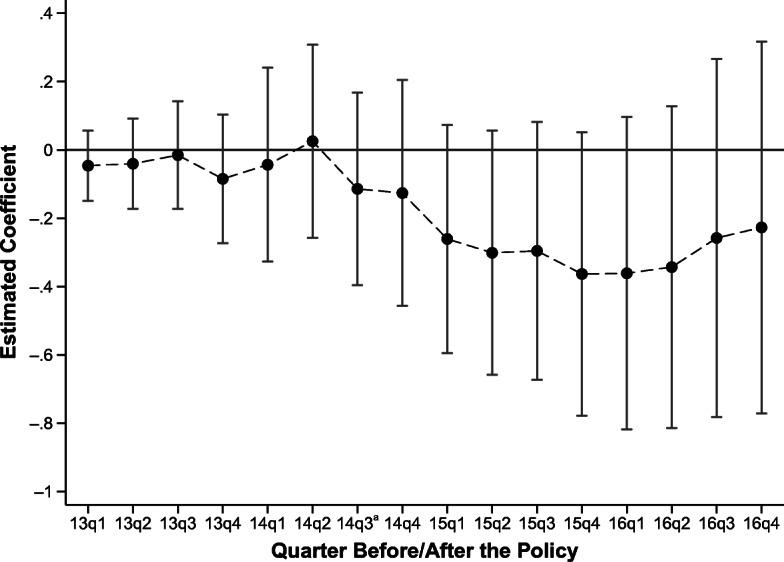
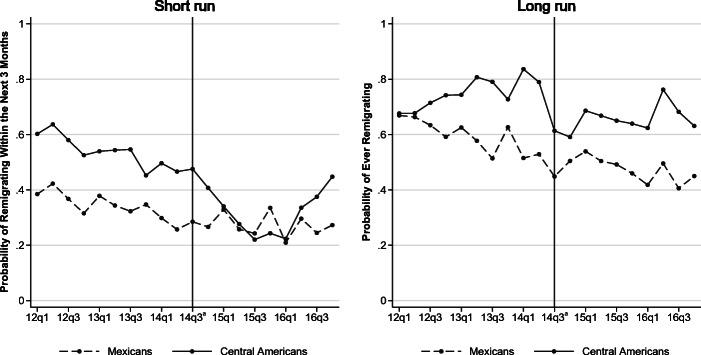
Immigration enforcement cooperation between final-destination and transit countries has increased in the last decades. I examine whether the Southern Border Plan, an immigration enforcement program implemented by the Mexican government in 2014, has curbed intentions of unauthorized migrants from El Salvador, Guatemala, and Honduras to migrate to the United States. I use the announcement of the Southern Border Plan to implement a difference-in-differences approach and compare the evolution of short-run intentions to engage in additional unauthorized crossings of Central American (treatment group) relative to Mexican deportees (comparison group). The findings suggest that increased enforcement in Mexico decreases the likelihood of attempting repeated unauthorized crossings.
在过去几十年中,最终目的国和过境国之间的移民执法合作有所增加。我考察了 2014 年墨西哥政府实施的南部边境计划(Southern Border Plan)是否遏制了来自萨尔瓦多、危地马拉和洪都拉斯的非正规移民前往美国的意图。我利用南部边境计划的宣布实施了一个双重差分法,并比较了中美洲人(处理组)和墨西哥被驱逐者(对照组)短期再次进行非正规越境的意图演变。研究结果表明,墨西哥加强执法力度降低了试图再次进行非正规越境的可能性。
 Zotero 插件