
基于医院人群的淋巴细胞增多症患者的单克隆 B 淋巴细胞扩增的筛查:一项观察性队列研究。
Screening for monoclonal B-lymphocyte expansion in a hospital-based Chinese population with lymphocytosis: an observational cohort study.
机构信息
Hematology, Zhongshan Hospital, Fudan University, Shanghai, China.
Hematology, Zhongshan Hospital, Fudan University, Shanghai, China
出版信息
BMJ Open. 2020 Sep 15;10(9):e036006. doi: 10.1136/bmjopen-2019-036006.
OBJECTIVES
Screening of monoclonal B-cell lymphocytosis (MBL) has improved the early detection of B-cell lymphoproliferative disorders (B-LPDs). This study was designed to find the most cost-effective way to screen for asymptomatic B-LPD.
DESIGN
Observational study.
SETTING
A lymphocytosis screening project was conducted at a large-scale hospital among the Chinese population.
PARTICIPANTS
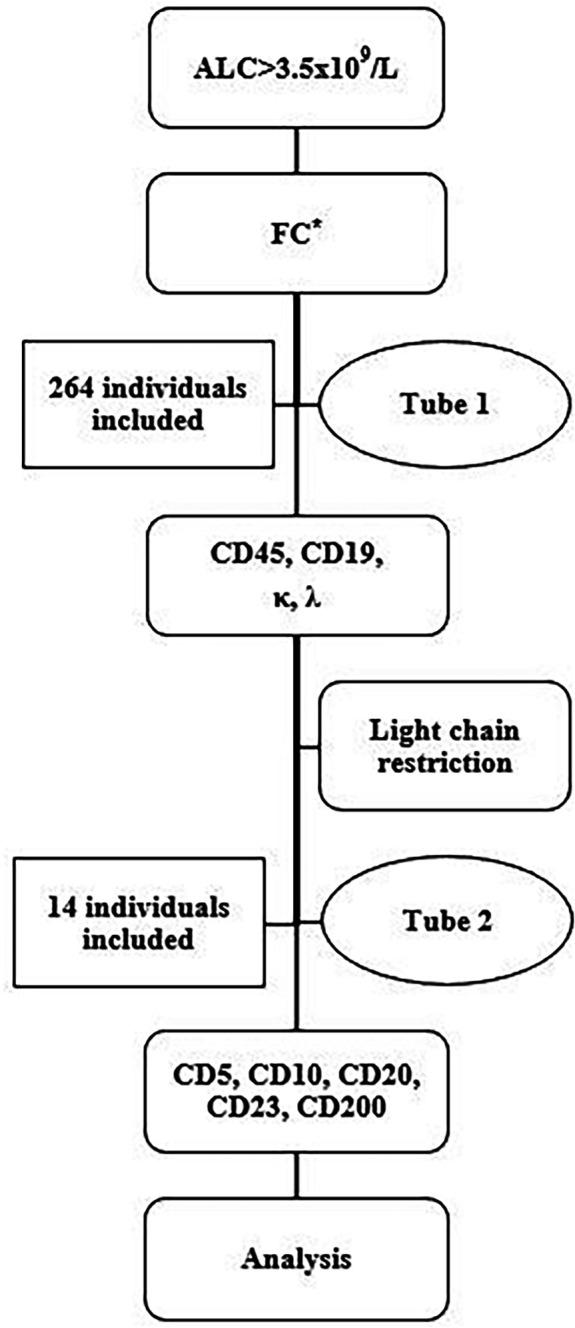
For 10 consecutive working days in 2018, 22 809 adult patients who received a complete blood count (CBC) were reviewed. These patients were selected from the outpatient, inpatient and health examination departments of a National Medical Centre in China.
RESULTS
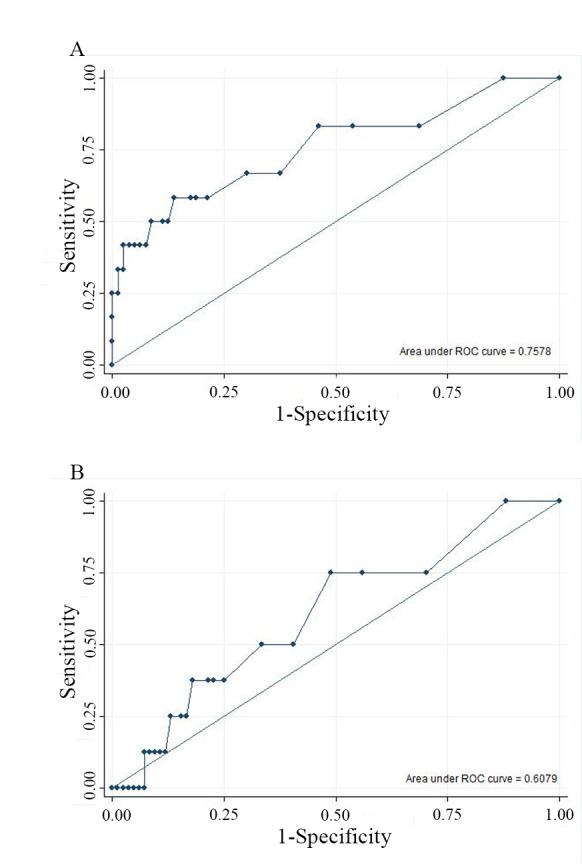
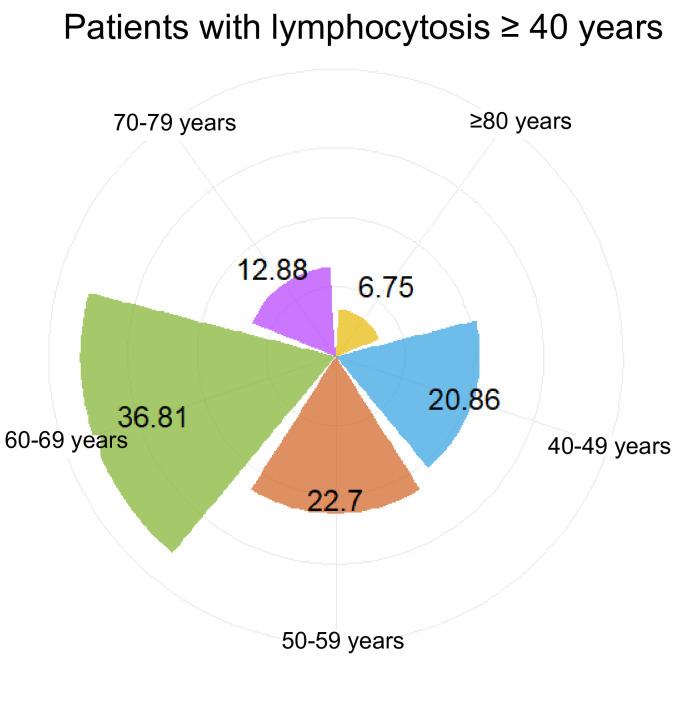
A total of 254 patients (1.1%, 254/22 809) were found to have lymphocytosis (absolute lymphocyte count (ALC) >3.5×10/L). Among them, a population of circulating monoclonal B-lymphocytes were detected in 14 patients, with 4 having chronic lymphocytic leukaemia (CLL) and 10 having MBL, indicating an overall prevalence of 5.5% for B-LPD (3.9% for MBL). The prevalence of CLL among the elderly patients with lymphocytosis (≥60 years) was determined to be 4.3% (4/92). In the patients over 60 years of age, the prevalence of MBL was found to be 8.7%. CD5 (-) non-CLL-like MBL was observed to be the most common subtype (8, 80%), followed by CLL-like phenotype (1, 10.0%) and atypical CLL phenotype (1, 10.0%). The receiver operating characteristic curve analysis for the CBC results revealed that the ALC of 4.7×10/L may serve as the optimal and cost-effective cut-off for screening for early-stage asymptomatic B-LPD.
CONCLUSION
In Chinese patients with lymphocytosis, there was a relatively high proportion of patients with CLL among individuals over 60 years of age. MBL is an age-related disorder. Non-CLL-like MBL was the most common MBL subtype, almost all of whom displayed a pattern of 'marginal zone lymphoma (MZL)-like' MBL. Lymphocytosis screening among the elderly would be effective in the detection of B-LPD and MBL.
目的
单克隆 B 细胞淋巴增生症(MBL)的筛查提高了 B 细胞淋巴增生性疾病(B-LPD)的早期检出率。本研究旨在寻找筛查无症状 B-LPD 的最具成本效益的方法。
设计
观察性研究。
地点
在中国的一家大型医院进行了一项淋巴细胞增生筛查项目。
参与者
2018 年连续 10 个工作日,共对 22809 例接受全血细胞计数(CBC)的成年患者进行了回顾性分析。这些患者选自中国国家医学中心的门诊、住院和体检部门。
结果
共发现 254 例(1.1%,254/22809)患者存在淋巴细胞增多症(绝对淋巴细胞计数(ALC)>3.5×10/L)。其中 14 例检测到循环单克隆 B 淋巴细胞,包括 4 例慢性淋巴细胞白血病(CLL)和 10 例 MBL,B-LPD 的总体患病率为 5.5%(MBL 为 3.9%)。≥60 岁淋巴细胞增多症患者中 CLL 的患病率为 4.3%(4/92)。在 60 岁以上的患者中,MBL 的患病率为 8.7%。观察到 CD5(-)非 CLL 样 MBL 是最常见的亚型(8 例,80%),其次是 CLL 样表型(1 例,10.0%)和非典型 CLL 表型(1 例,10.0%)。CBC 结果的受试者工作特征曲线分析显示,ALC 为 4.7×10/L 可能是筛查早期无症状 B-LPD 的最佳和最具成本效益的截止值。
结论
在中国淋巴细胞增多症患者中,≥60 岁患者中 CLL 所占比例相对较高。MBL 是一种与年龄相关的疾病。非 CLL 样 MBL 是最常见的 MBL 亚型,几乎所有患者均表现出“边缘区淋巴瘤(MZL)样”MBL 模式。对老年人进行淋巴细胞增多症筛查可有效发现 B-LPD 和 MBL。

 Zotero 插件