
酵母中 GCN 敏感的蛋白质翻译。
GCN sensitive protein translation in yeast.
机构信息
Department of Biology, Wesleyan University, Middletown, CT, United States of America.
Department of Molecular Biology and Biochemistry, Wesleyan University, Middletown, CT, United States of America.
出版信息
PLoS One. 2020 Sep 18;15(9):e0233197. doi: 10.1371/journal.pone.0233197. eCollection 2020.
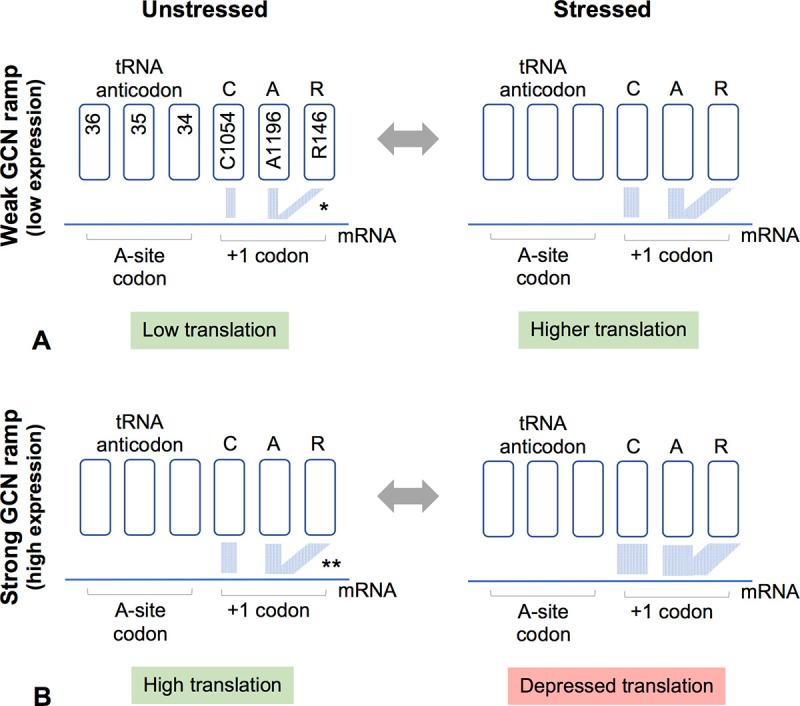
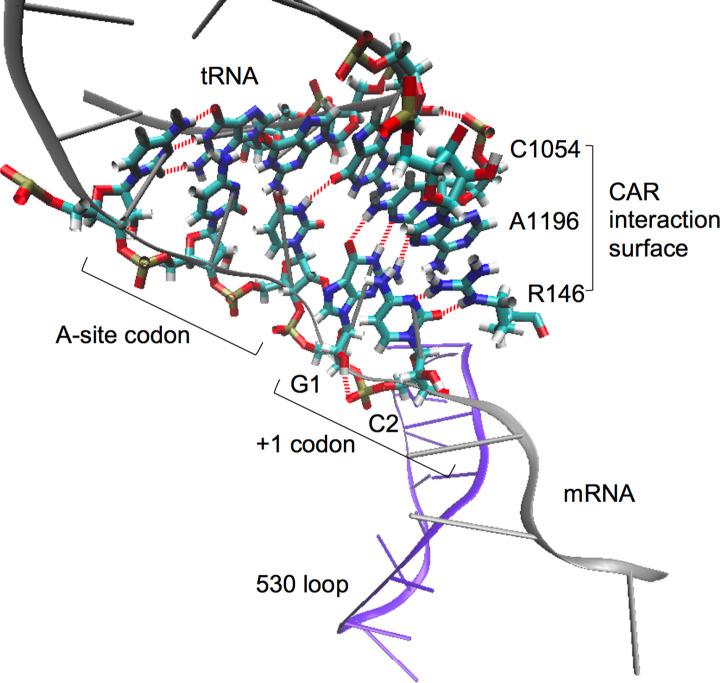
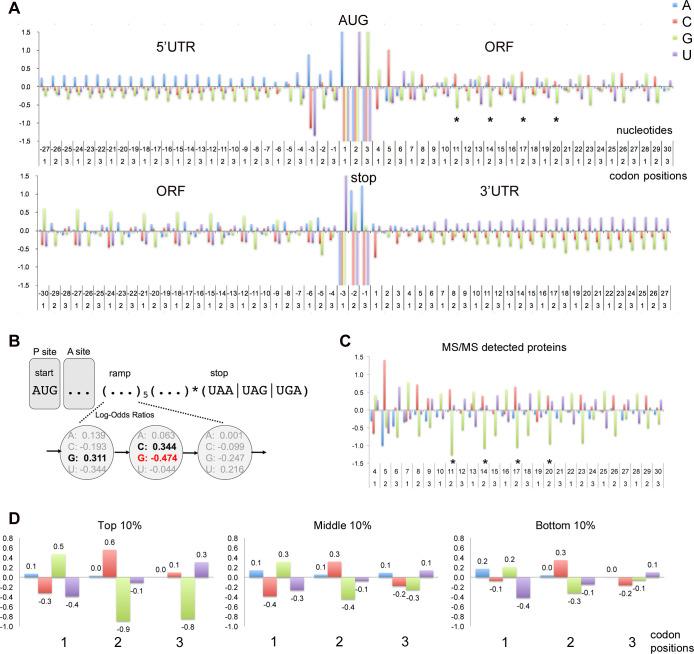
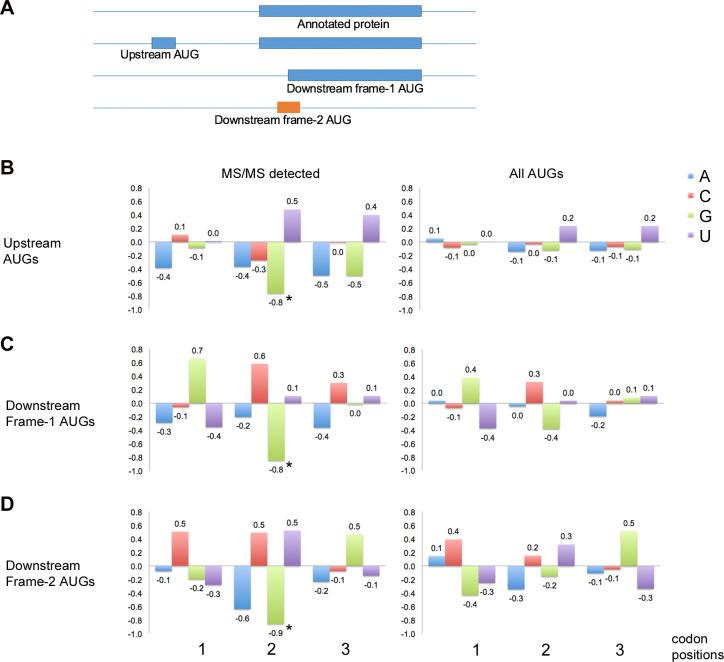
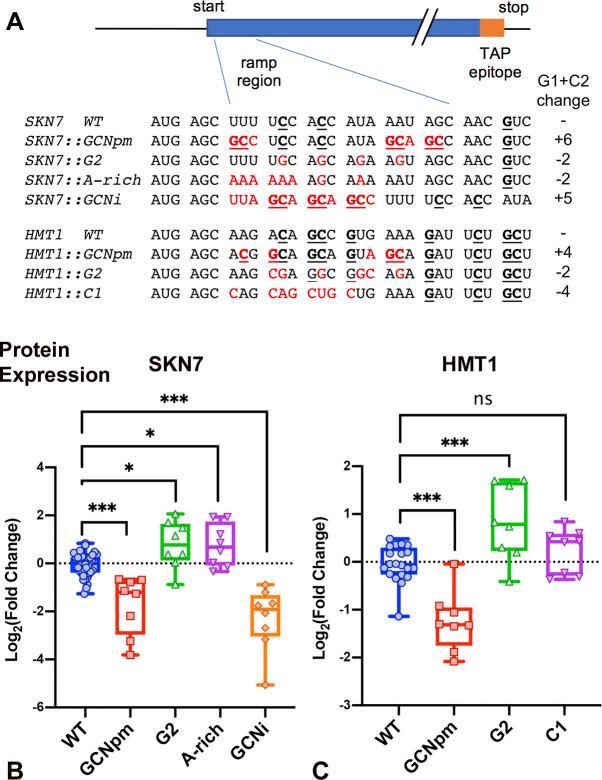
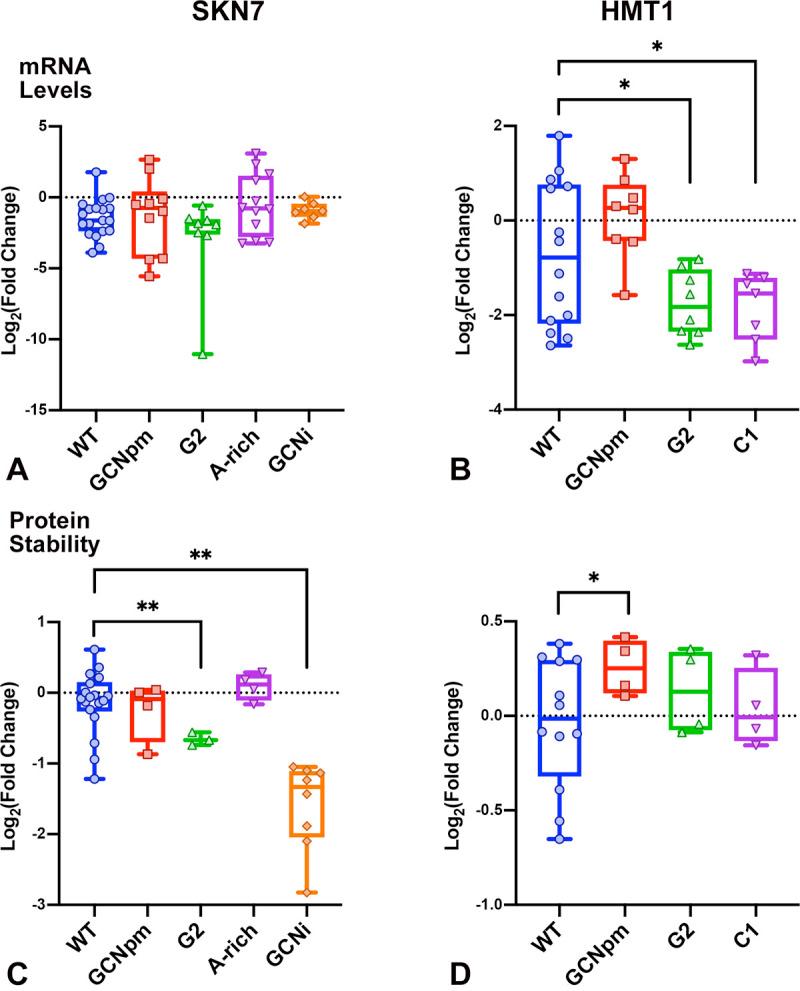
Levels of protein translation by ribosomes are governed both by features of the translation machinery as well as sequence properties of the mRNAs themselves. We focus here on a striking three-nucleotide periodicity, characterized by overrepresentation of GCN codons and underrepresentation of G at the second position of codons, that is observed in Open Reading Frames (ORFs) of mRNAs. Our examination of mRNA sequences in Saccharomyces cerevisiae revealed that this periodicity is particularly pronounced in the initial codons-the ramp region-of ORFs of genes with high protein expression. It is also found in mRNA sequences immediately following non-standard AUG start sites, located upstream or downstream of the standard annotated start sites of genes. To explore the possible influences of the ramp GCN periodicity on translation efficiency, we tested edited ramps with accentuated or depressed periodicity in two test genes, SKN7 and HMT1. Greater conformance to (GCN)n was found to significantly depress translation, whereas disrupting conformance had neutral or positive effects on translation. Our recent Molecular Dynamics analysis of a subsystem of translocating ribosomes in yeast revealed an interaction surface that H-bonds to the +1 codon that is about to enter the ribosome decoding center A site. The surface, comprised of 16S/18S rRNA C1054 and A1196 (E. coli numbering) and R146 of ribosomal protein Rps3, preferentially interacts with GCN codons, and we hypothesize that modulation of this mRNA-ribosome interaction may underlie GCN-mediated regulation of protein translation. Integration of our expression studies with large-scale reporter studies of ramp sequence variants suggests a model in which the C1054-A1196-R146 (CAR) interaction surface can act as both an accelerator and braking system for ribosome translation.
核糖体翻译蛋白的水平既受翻译机制的特点控制,也受 mRNA 本身序列特性的控制。我们在这里关注一个引人注目的三核苷酸周期性,其特征是 GCN 密码子的过度表达和密码子第二位 G 的不足,这种周期性在 mRNA 的开放阅读框 (ORF) 中观察到。我们对酿酒酵母中 mRNA 序列的检查表明,这种周期性在高蛋白表达基因的 ORF 起始密码子(斜坡区)中尤为明显。它也存在于非标准 AUG 起始位点之后的 mRNA 序列中,位于基因标准注释起始位点的上游或下游。为了探索斜坡 GCN 周期性对翻译效率的可能影响,我们在两个测试基因 SKN7 和 HMT1 中测试了具有强调或减弱周期性的编辑斜坡。发现与(GCN)n 的更大一致性显著抑制翻译,而破坏一致性对翻译具有中性或积极影响。我们最近对酵母中转录核糖体亚系统的分子动力学分析揭示了一个与即将进入核糖体解码中心 A 位的+1 密码子氢键的相互作用表面。该表面由 16S/18S rRNA C1054 和 A1196(大肠杆菌编号)和核糖体蛋白 Rps3 的 R146 组成,优先与 GCN 密码子相互作用,我们假设这种 mRNA-核糖体相互作用的调节可能是 GCN 调节蛋白质翻译的基础。我们的表达研究与大规模报告基因斜坡序列变异的研究相结合,提出了一个模型,其中 C1054-A1196-R146(CAR)相互作用表面可以作为核糖体翻译的加速和制动系统。

 Zotero 插件