
弓形虫感染后猫小肠的乙酰化蛋白质组分析。
Acetylome analysis of the feline small intestine following Toxoplasma gondii infection.
作者信息
Meng Yu-Meng, Zhai Bin-Tao, Elsheikha Hany M, Xie Shi-Chen, Wang Ze-Xiang, Zhao Quan, Zhu Xing-Quan, He Jun-Jun
机构信息
College of Animal Science and Technology, Jilin Agricultural University, Changchun, Jilin Province, 130118, People's Republic of China.
State Key Laboratory of Veterinary Etiological Biology, Key Laboratory of Veterinary Parasitology of Gansu Province, Lanzhou Veterinary Research Institute, Chinese Academy of Agricultural Sciences, Lanzhou, Gansu, 730046, People's Republic of China.
出版信息
Parasitol Res. 2020 Nov;119(11):3649-3657. doi: 10.1007/s00436-020-06880-4. Epub 2020 Sep 20.
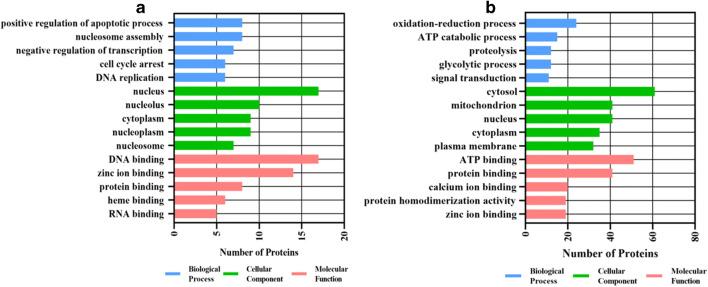
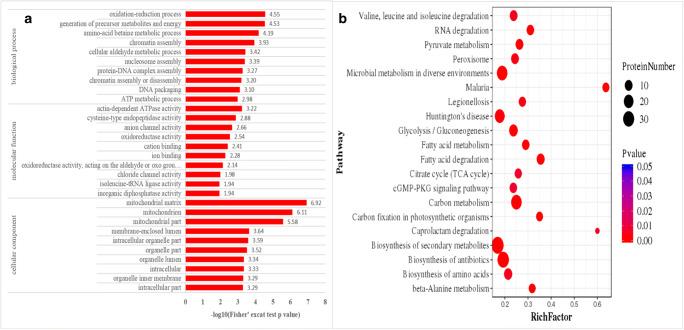
Toxoplasma gondii is a protozoan parasite capable of infecting a large number of warm-blooded animals and causes serious health complications in immunocompromised patients. T. gondii infection of the feline small intestine is critical for the completion of the life cycle and transmission of T. gondii. Protein acetylation is an important posttranslational modification, which plays roles in the regulation of various cellular processes. Therefore, understanding of how T. gondii reprograms the protein acetylation status of feline definitive host can help to thwart the production and spread of T. gondii. Here, we used affinity enrichment and high-resolution liquid chromatography with tandem mass spectrometry to profile the alterations of the acetylome in cat small intestine 10 days after infection by T. gondii Prugniuad (Pru) strain. Our analysis showed that T. gondii induced significant changes in the acetylation of proteins in the cat intestine. We identified 2606 unique lysine acetylation sites in 1357 acetylated proteins. The levels of 334 acetylated peptides were downregulated, while the levels of 82 acetylated peptides were increased in the infected small intestine. The proteins with differentially acetylated peptides were particularly enriched in the bioenergetics-related processes, such as tricarboxylic acid cycle, oxidative phosphorylation, and oxidation-reduction. These results provide the first baseline of the global acetylome of feline small intestine following T. gondii infection and should facilitate further analysis of the role of acetylated protein in the pathogenesis of T. gondii infection in its definitive host.
刚地弓形虫是一种原生动物寄生虫,能够感染大量温血动物,并在免疫功能低下的患者中引发严重的健康并发症。刚地弓形虫感染猫的小肠对于其生命周期的完成和传播至关重要。蛋白质乙酰化是一种重要的翻译后修饰,在各种细胞过程的调节中发挥作用。因此,了解刚地弓形虫如何重新编程猫终末宿主的蛋白质乙酰化状态有助于阻止刚地弓形虫的产生和传播。在此,我们使用亲和富集和高分辨率液相色谱串联质谱法来分析刚地弓形虫Prugniuad(Pru)株感染猫小肠10天后乙酰化蛋白质组的变化。我们的分析表明,刚地弓形虫诱导了猫肠道中蛋白质乙酰化的显著变化。我们在1357个乙酰化蛋白质中鉴定出2606个独特的赖氨酸乙酰化位点。在感染的小肠中,334个乙酰化肽段的水平下调,而82个乙酰化肽段的水平上调。具有差异乙酰化肽段的蛋白质特别富集于生物能量学相关过程,如三羧酸循环、氧化磷酸化和氧化还原。这些结果提供了刚地弓形虫感染后猫小肠整体乙酰化蛋白质组的首个基线,应有助于进一步分析乙酰化蛋白质在刚地弓形虫终末宿主感染发病机制中的作用。


 Zotero 插件