
在长时间寒冷暴露期间及之后,[具体对象]的季节性形态型在关键生活史特征方面存在差异。 (你原文中“Seasonal morphotypes of ”这里少了具体内容哦 )
Seasonal morphotypes of differ in key life-history traits during and after a prolonged period of cold exposure.
作者信息
Panel Aurore D C, Pen Ido, Pannebakker Bart A, Helsen Herman H M, Wertheim Bregje
机构信息
Groningen Institute for Evolutionary Life Sciences University of Groningen Groningen The Netherlands.
Laboratory of Genetics Wageningen University & Research Wageningen The Netherlands.
出版信息
Ecol Evol. 2020 Aug 11;10(17):9085-9099. doi: 10.1002/ece3.6517. eCollection 2020 Sep.
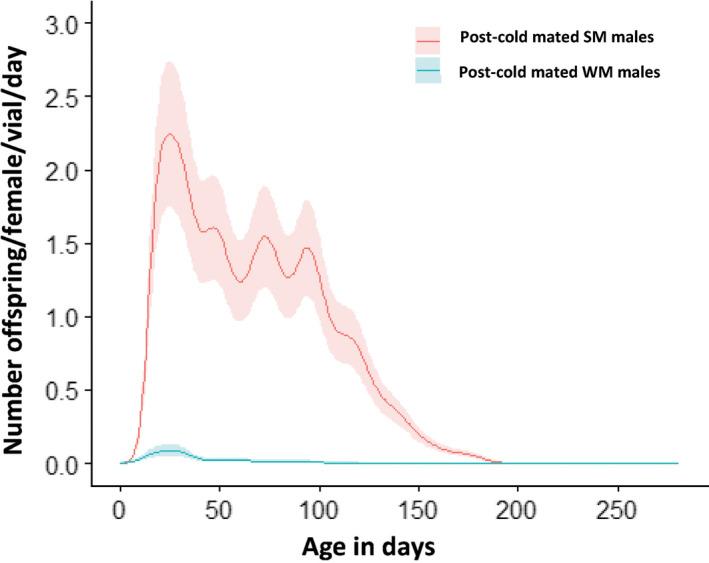
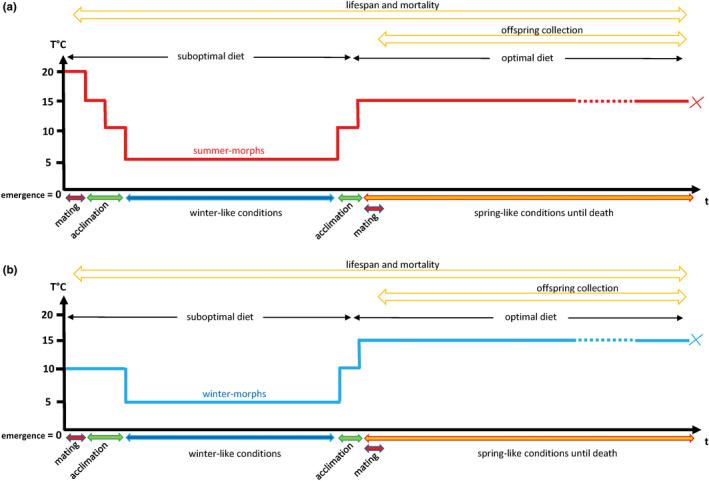
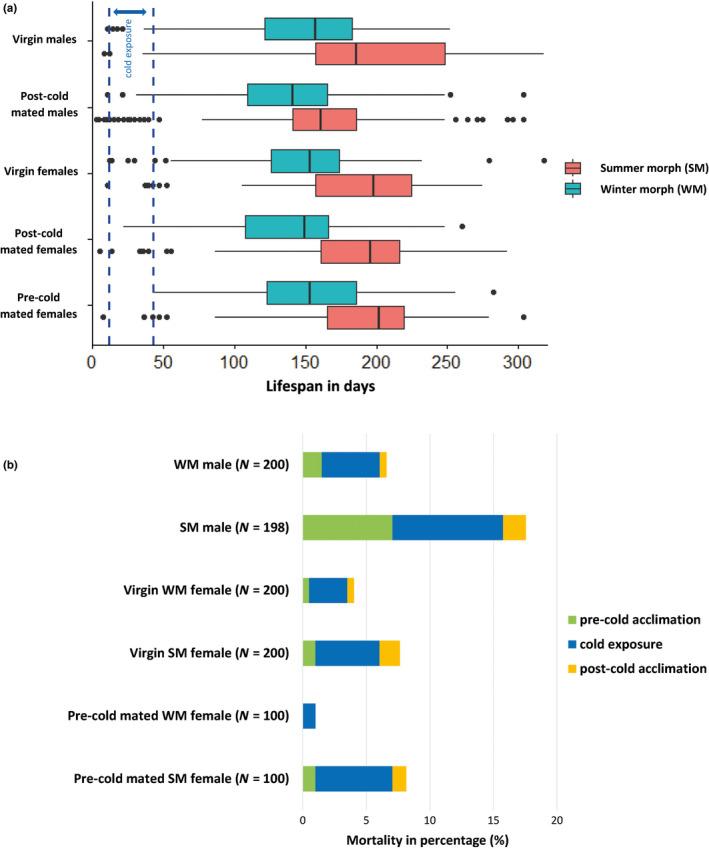
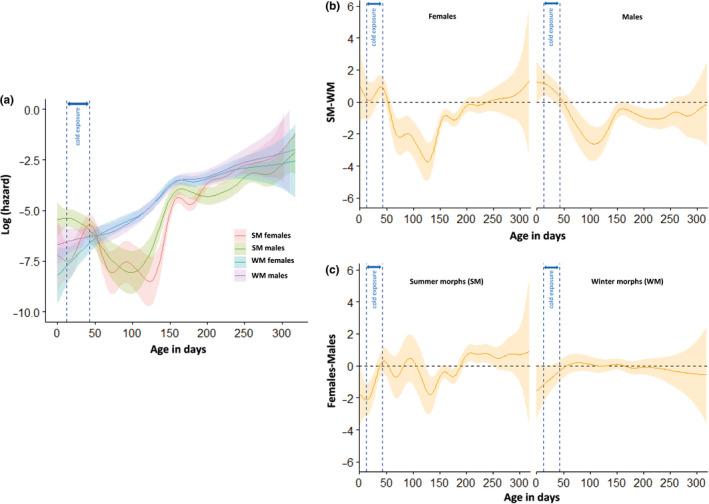
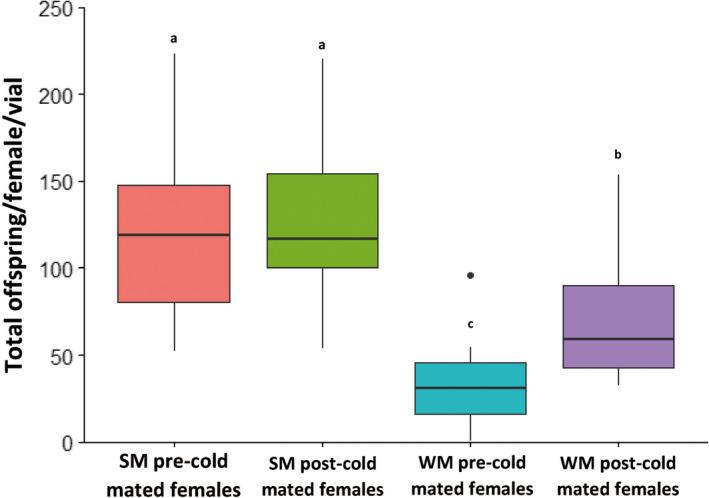
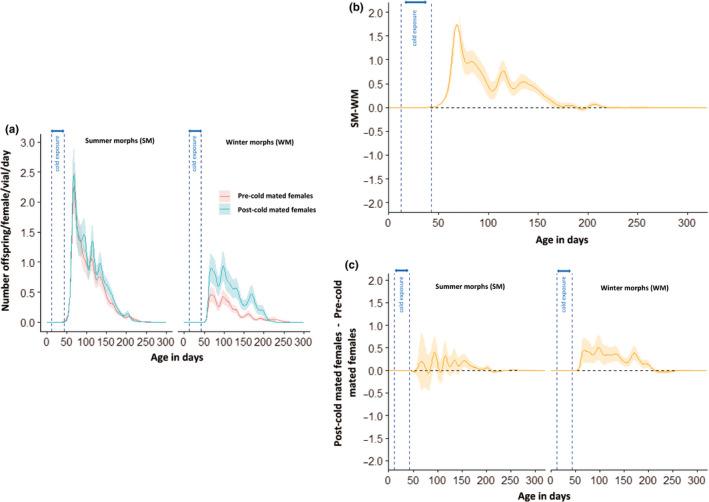
Seasonal polyphenism in manifests itself in two discrete adult morphotypes, the "winter morph" (WM) and the "summer morph" (SM). These morphotypes are known to differ in thermal stress tolerance, and they co-occur during parts of the year. In this study, we aimed to estimate morph-specific survival and fecundity in laboratory settings simulating field conditions. We specifically analyzed how WM and SM differed in mortality and reproduction during and after a period of cold exposure resembling winter and spring conditions in temperate climates. The median lifespan of varied around 5 months for the WM flies and around 7 months for the SM flies. WM flies showed higher survival during the cold-exposure period compared with SM flies, and especially SM males suffered high mortality under these conditions. In contrast, SM flies had lower mortality rates than WM flies under spring-like conditions. Intriguingly, reproductive status (virgin or mated) did not impact the fly survival, either during the cold exposure or during spring-like conditions. Even though the reproductive potential of WM flies was greatly reduced compared with SM flies, both WM and SM females that had mated before the cold exposure were able to continuously produce viable offspring for 5 months under spring-like conditions. Finally, the fertility of the overwintered WM males was almost zero, while the surviving SM males did not suffer reduced fertility. Combined with other studies on monitoring and overwintering behavior, these results suggest that overwintered flies of both morphotypes could live long enough to infest the first commercial crops of the season. The high mortality of SM males and the low fertility of WM males after prolonged cold exposure also highlight the necessity for females to store sperm over winter to be able to start reproducing early in the following spring.
[物种名称]的季节性多型现象表现为两种不同的成年形态类型,即“冬季形态”(WM)和“夏季形态”(SM)。已知这些形态类型在热应激耐受性方面存在差异,并且它们在一年中的部分时间共同出现。在本研究中,我们旨在估计在模拟野外条件的实验室环境中形态特异性的存活率和繁殖力。我们具体分析了在类似于温带气候中冬季和春季条件的冷暴露期间及之后,WM和SM在死亡率和繁殖方面的差异。WM果蝇的平均寿命约为5个月,SM果蝇约为7个月。与SM果蝇相比,WM果蝇在冷暴露期间的存活率更高,尤其是SM雄性在这些条件下死亡率很高。相比之下,在类似春季的条件下,SM果蝇的死亡率低于WM果蝇。有趣的是,生殖状态(处女蝇或已交配蝇)在冷暴露期间或类似春季的条件下均不影响果蝇的存活。尽管与SM果蝇相比,WM果蝇的繁殖潜力大大降低,但在冷暴露前已交配的WM和SM雌性在类似春季的条件下都能够连续5个月产生有活力的后代。最后,越冬的WM雄性的生育力几乎为零,而存活的SM雄性的生育力没有降低。结合其他关于[物种名称]监测和越冬行为的研究,这些结果表明,两种形态类型的越冬果蝇都可以活得足够长,以侵染本季节的第一批商业作物。长时间冷暴露后SM雄性的高死亡率和WM雄性的低生育力也凸显了雌性在冬季储存精子以便能够在次年早春开始繁殖的必要性。

 Zotero 插件