
用于伤口愈合局部治疗的载柚皮素壳聚糖包衣纳米乳剂的研制与优化
Development and Optimization of Naringenin-Loaded Chitosan-Coated Nanoemulsion for Topical Therapy in Wound Healing.
作者信息
Akrawi Sabah H, Gorain Bapi, Nair Anroop B, Choudhury Hira, Pandey Manisha, Shah Jigar N, Venugopala Katharigatta N
机构信息
Department of Pharmaceutical Sciences, College of Clinical Pharmacy, King Faisal University, Al-Ahsa 31982, Saudi Arabia.
School of Pharmacy, Faculty of Health and Medical Sciences, Taylor's University, Subang Jaya, Selangor 47500, Malaysia.
出版信息
Pharmaceutics. 2020 Sep 20;12(9):893. doi: 10.3390/pharmaceutics12090893.
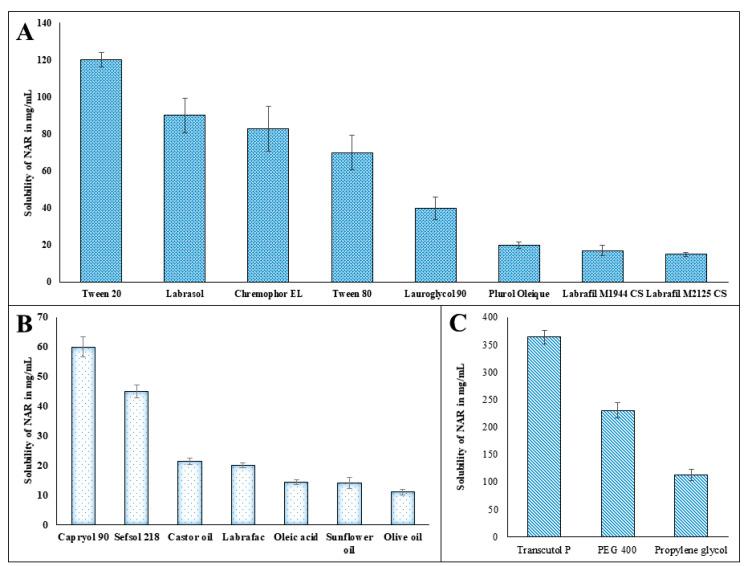
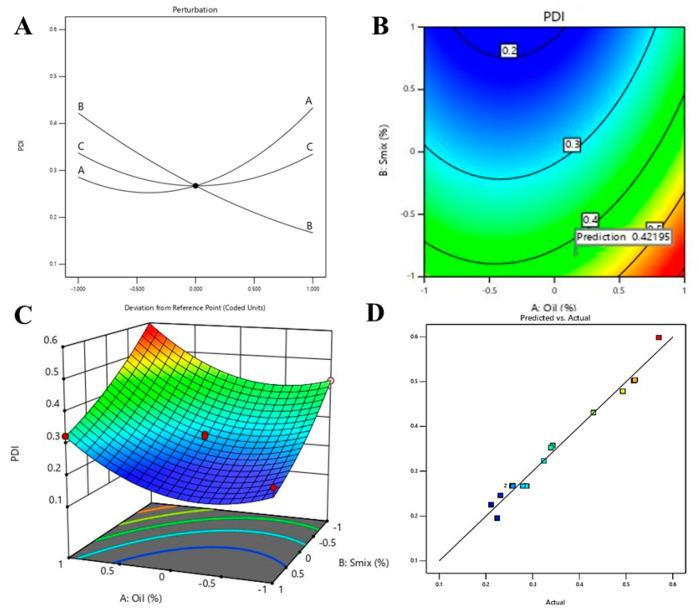
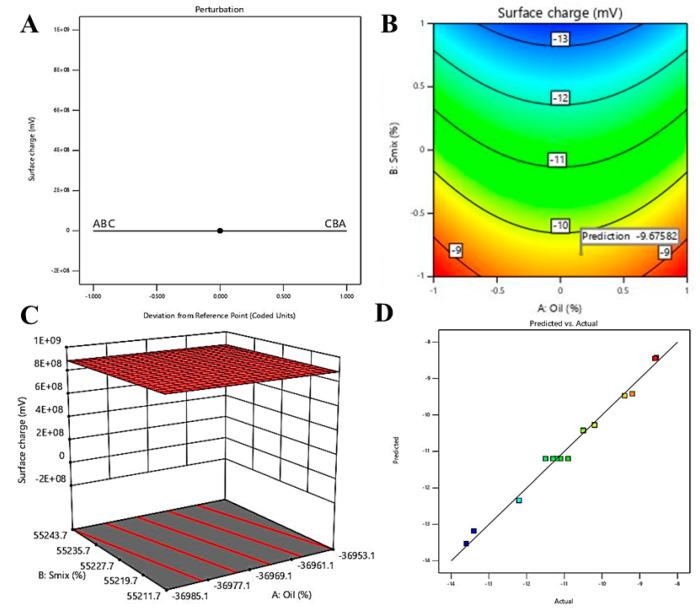
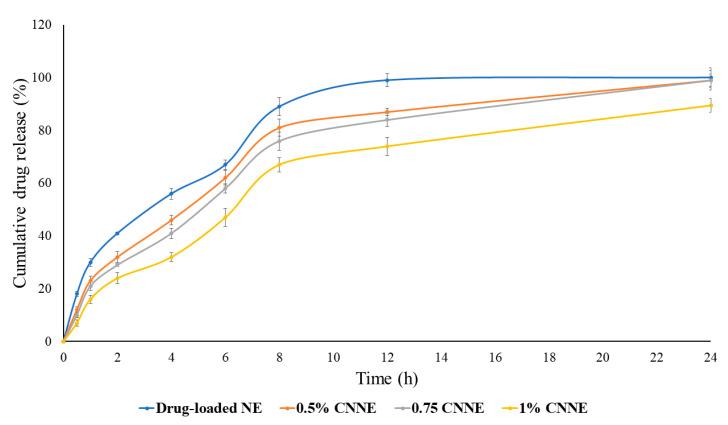
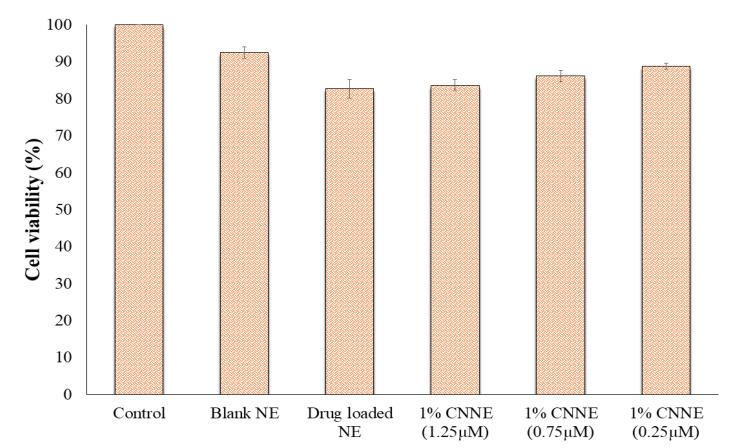
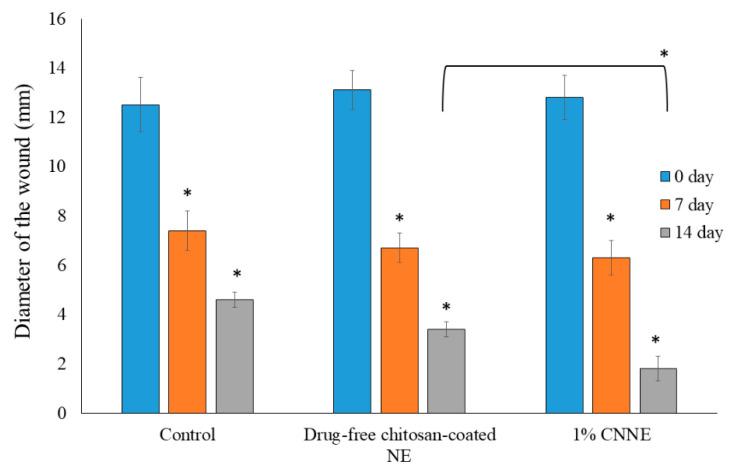
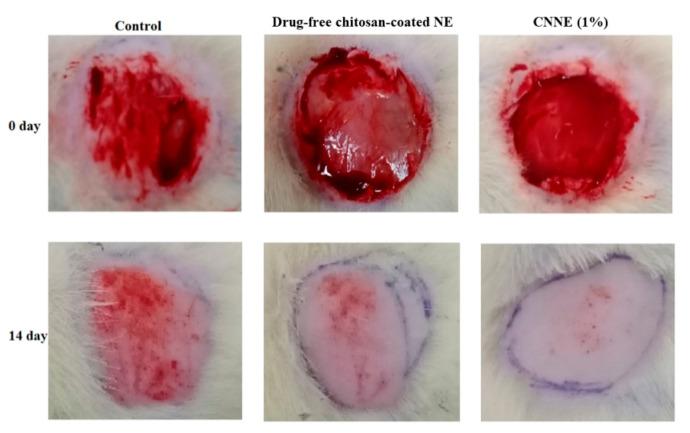
The potential role of naringenin (NAR), a natural flavonoid, in the treatment of chronic wound has prompted the present research to deliver the drug in nanoemulsion (NE) form, where synergistic role of chitosan was achieved through development of chitosan-coated NAR NE (CNNE). The NE consisted of Capryol 90, Tween 20 and Transcutol P, which was fabricated by low-energy emulsification method to encapsulate NAR within the oil core. The optimization of the formulated NEs was performed using Box-Behnken statistical design to obtain crucial variable parameters that influence globule size, size distribution and surface charge. Finally, the optimized formulation was coated with different concentrations of chitosan and subsequently characterized in vitro. The size of the CNNE was found to be increased when the drug-loaded formulation was coated with chitosan. Controlled release characteristics depicted 67-81% release of NAR from the CNNE, compared to 89% from the NE formulation. Cytotoxicity study of the formulation was performed in vitro using fibroblast cell line (NIH-3T3), where no inhibition in proliferation of the cells was observed with CNNE. Finally, the wound healing potential of the CNNE was evaluated in an abrasion-created wound model in experimental animals where the animals were treated and compared histologically at 0 and 14 days. Significant improvement in construction of the abrasion wound was observed when the animals were treated with formulated CNNE, whereas stimulation of skin regeneration was depicted in the histological examination. Therefore, it could be summarized that the chitosan coating of the developed NAR NE is a potential platform to accelerate healing of wounds.
天然黄酮类化合物柚皮素(NAR)在慢性伤口治疗中的潜在作用促使本研究以纳米乳剂(NE)形式递送该药物,通过开发壳聚糖包被的NAR纳米乳剂(CNNE)实现壳聚糖的协同作用。该纳米乳剂由辛酸癸酸甘油三酯90、吐温20和肉豆蔻酸异丙酯组成,采用低能乳化法制备,将NAR包裹在油相中。使用Box-Behnken统计设计对所制备的纳米乳剂进行优化,以获得影响球粒大小、大小分布和表面电荷的关键可变参数。最后,用不同浓度的壳聚糖对优化后的制剂进行包被,随后进行体外表征。发现用壳聚糖包被载药制剂时,CNNE的粒径会增大。控释特性表明,NAR从CNNE中的释放率为67%-81%,而纳米乳剂制剂的释放率为89%。使用成纤维细胞系(NIH-3T3)在体外对该制剂进行细胞毒性研究,结果显示CNNE未观察到对细胞增殖的抑制作用。最后,在实验动物的擦伤创面模型中评估CNNE的伤口愈合潜力,在0天和14天时对动物进行治疗并进行组织学比较。用所制备的CNNE治疗动物时,观察到擦伤创面的愈合有显著改善,组织学检查显示有皮肤再生的迹象。因此,可以总结出,所开发的NAR纳米乳剂的壳聚糖包被是加速伤口愈合的潜在平台。






 Zotero 插件