
抗肌肉特异性激酶的重症肌无力:临床特征、病理生理学及治疗的最新进展
Myasthenia Gravis With Antibodies Against Muscle Specific Kinase: An Update on Clinical Features, Pathophysiology and Treatment.
作者信息
Cao Michelangelo, Koneczny Inga, Vincent Angela
机构信息
Nuffield Department of Clinical Neurosciences, Weatherall Institute of Molecular Medicine, University of Oxford, Oxford, United Kingdom.
Division of Neuropathology and Neurochemistry, Department of Neurology, Medical University of Vienna, Vienna, Austria.
出版信息
Front Mol Neurosci. 2020 Sep 2;13:159. doi: 10.3389/fnmol.2020.00159. eCollection 2020.
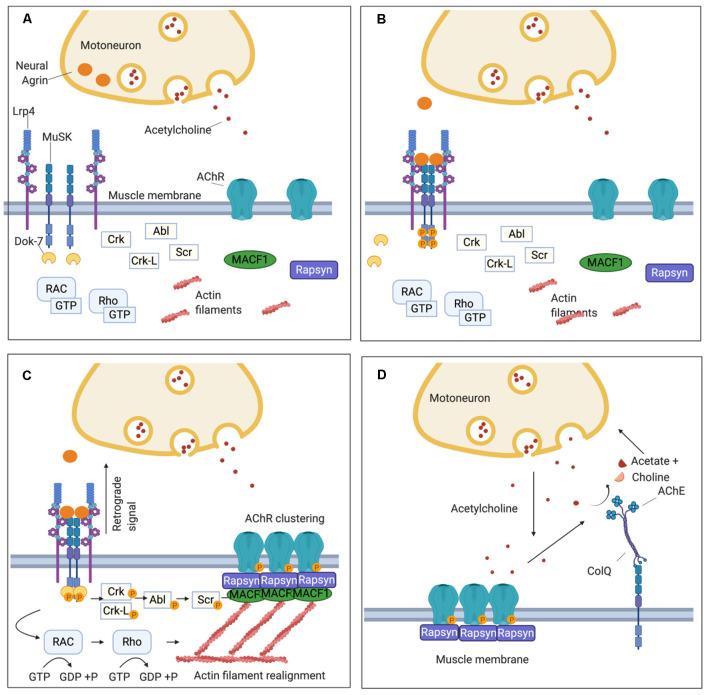
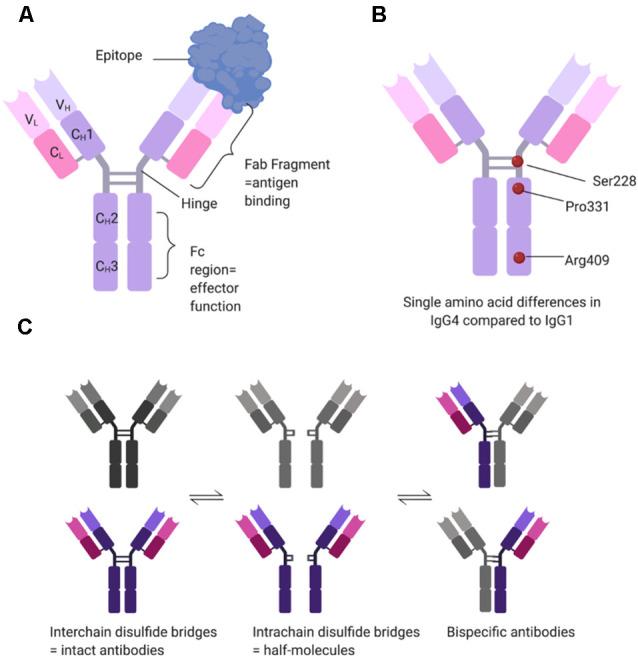
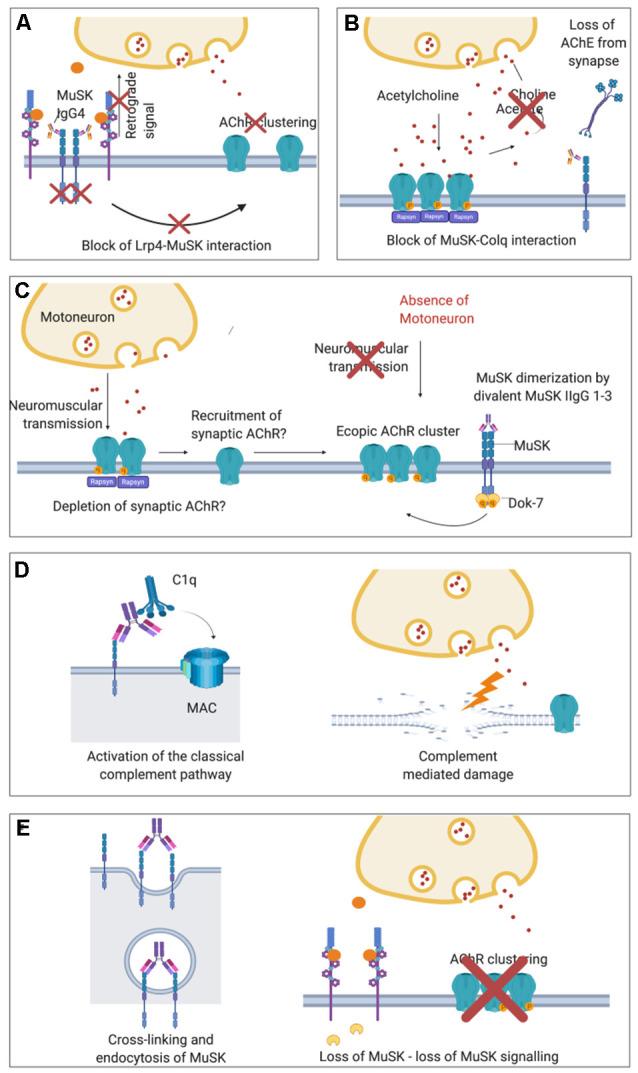
Muscle Specific Kinase myasthenia gravis (MuSK-MG) is an autoimmune disease that impairs neuromuscular transmission leading to generalized muscle weakness. Compared to the more common myasthenia gravis with antibodies against the acetylcholine receptor (AChR), MuSK-MG affects mainly the bulbar and respiratory muscles, with more frequent and severe myasthenic crises. Treatments are usually less effective with the need for prolonged, high doses of steroids and other immunosuppressants to control symptoms. Under physiological condition, MuSK regulates a phosphorylation cascade which is fundamental for the development and maintenance of postsynaptic AChR clusters at the neuromuscular junction (NMJ). Agrin, secreted by the motor nerve terminal into the synaptic cleft, binds to low density lipoprotein receptor-related protein 4 (LRP4) which activates MuSK. In MuSK-MG, monovalent MuSK-IgG4 autoantibodies block MuSK-LRP4 interaction preventing MuSK activation and leading to the dispersal of AChR clusters. Lower levels of divalent MuSK IgG1, 2, and 3 antibody subclasses are also present but their contribution to the pathogenesis of the disease remains controversial. This review aims to provide a detailed update on the epidemiological and clinical features of MuSK-MG, focusing on the pathophysiological mechanisms and the latest indications regarding the efficacy and safety of different treatment options.
肌肉特异性激酶重症肌无力(MuSK-MG)是一种自身免疫性疾病,会损害神经肌肉传递,导致全身肌肉无力。与更常见的抗乙酰胆碱受体(AChR)抗体型重症肌无力相比,MuSK-MG主要影响延髓和呼吸肌,肌无力危象更频繁且严重。治疗通常效果较差,需要长期、高剂量使用类固醇和其他免疫抑制剂来控制症状。在生理条件下,MuSK调节一个磷酸化级联反应,这对于神经肌肉接头(NMJ)处突触后AChR簇的发育和维持至关重要。运动神经末梢分泌到突触间隙的聚集蛋白与低密度脂蛋白受体相关蛋白4(LRP4)结合,从而激活MuSK。在MuSK-MG中,单价MuSK-IgG4自身抗体阻断MuSK-LRP4相互作用,阻止MuSK激活,导致AChR簇分散。二价MuSK IgG1、2和3抗体亚类水平也较低,但其对疾病发病机制的作用仍存在争议。本综述旨在详细介绍MuSK-MG的流行病学和临床特征,重点关注病理生理机制以及不同治疗方案疗效和安全性的最新研究进展。
 Zotero 插件