
1990 年至 2017 年巴西与收缩压高相关的流行率、死亡率和发病率趋势:来自“全球疾病负担 2017”(GBD 2017)研究的估计。
Trends in prevalence, mortality, and morbidity associated with high systolic blood pressure in Brazil from 1990 to 2017: estimates from the "Global Burden of Disease 2017" (GBD 2017) study.
机构信息
Faculdade de Medicina, Universidade Federal de Minas Gerais, Belo Horizonte, MG, Brazil.
Hospital das Clínicas, Universidade Federal de Minas Gerais, Avenida Professor Alfredo Balena, 110, Belo Horizonte, MG, Brazil.
出版信息
Popul Health Metr. 2020 Sep 30;18(Suppl 1):17. doi: 10.1186/s12963-020-00218-z.
BACKGROUND
Hypertension remains the leading risk factor for cardiovascular disease (CVD) worldwide, and its impact in Brazil should be assessed in order to better address the issue. We aimed to describe trends in prevalence and burden of disease attributable to high systolic blood pressure (HSBP) among Brazilians ≥ 25 years old according to sex and federal units (FU) using the Global Burden of Disease (GBD) 2017 estimates.
METHODS
We used the comparative risk assessment developed for the GBD study to estimate trends in attributable deaths and disability-adjusted life-years (DALY), by sex, and FU for HSBP from 1990 to 2017. This study included 14 HSBP-outcome pairs. HSBP was defined as ≥ 140 mmHg for prevalence estimates, and a theoretical minimum risk exposure level (TMREL) of 110-115 mmHg was considered for disease burden. We estimated the portion of deaths and DALYs attributed to HSBP. We also explored the drivers of trends in HSBP burden, as well as the correlation between disease burden and sociodemographic development index (SDI).
RESULTS
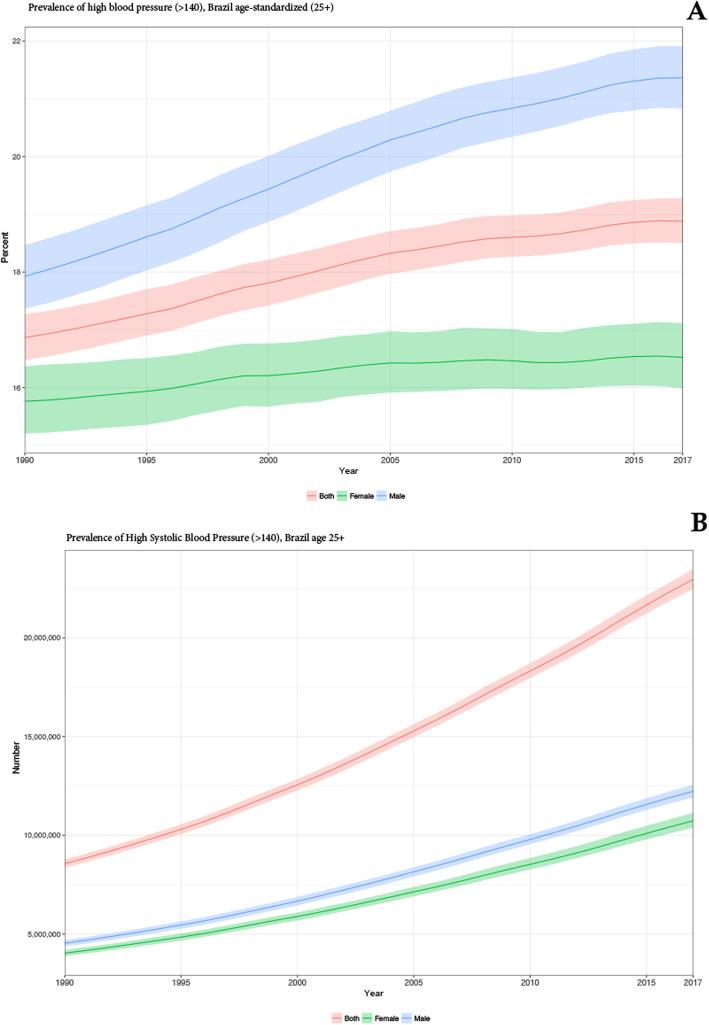
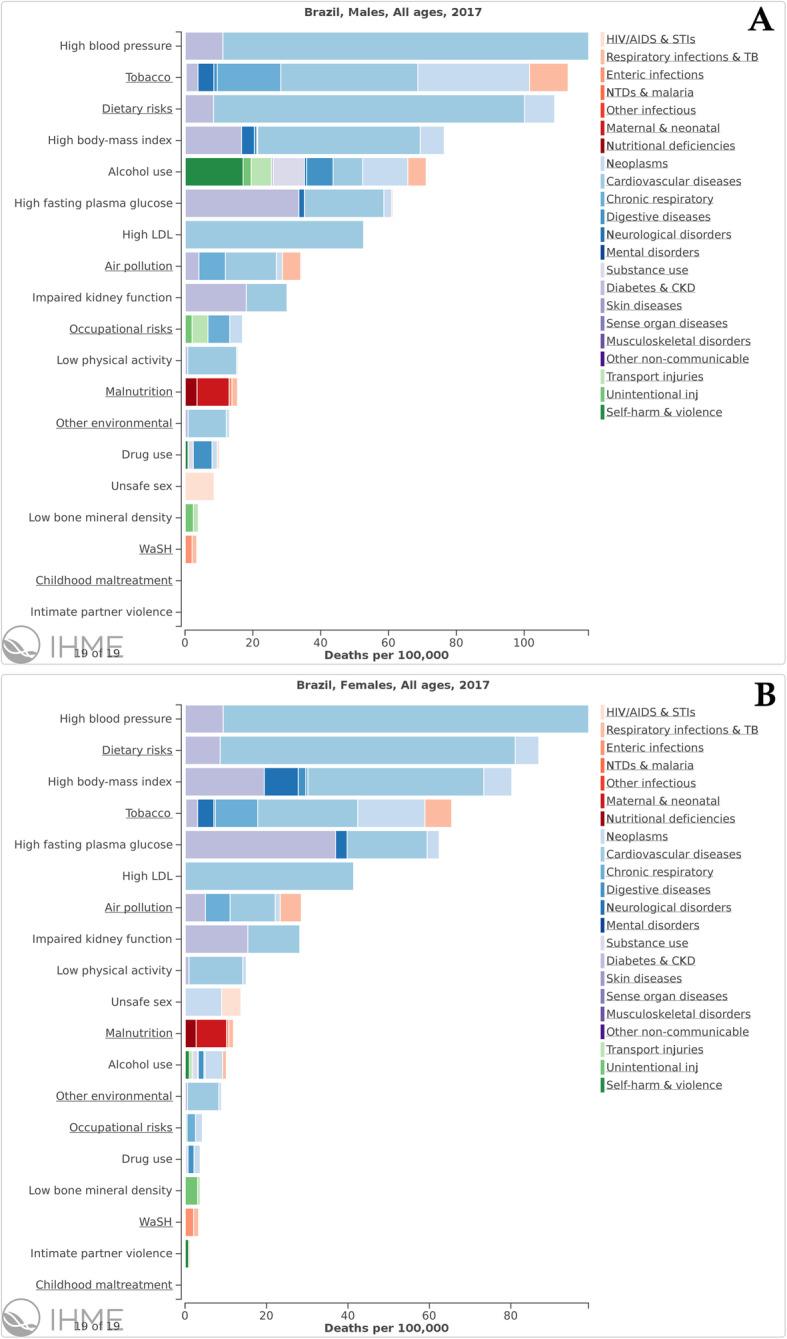
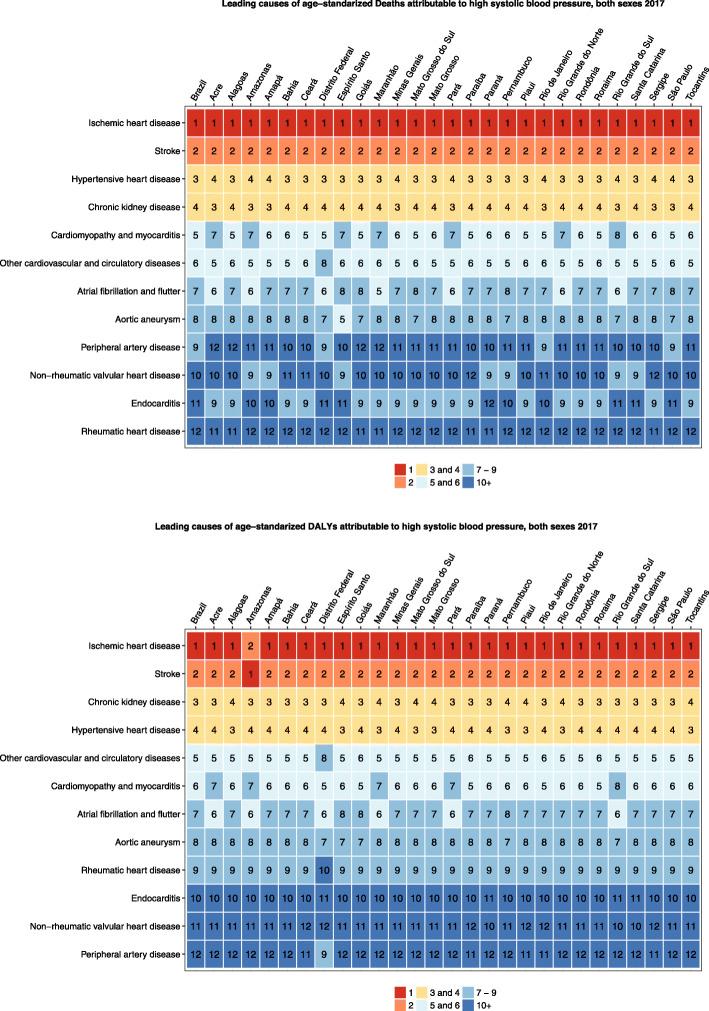
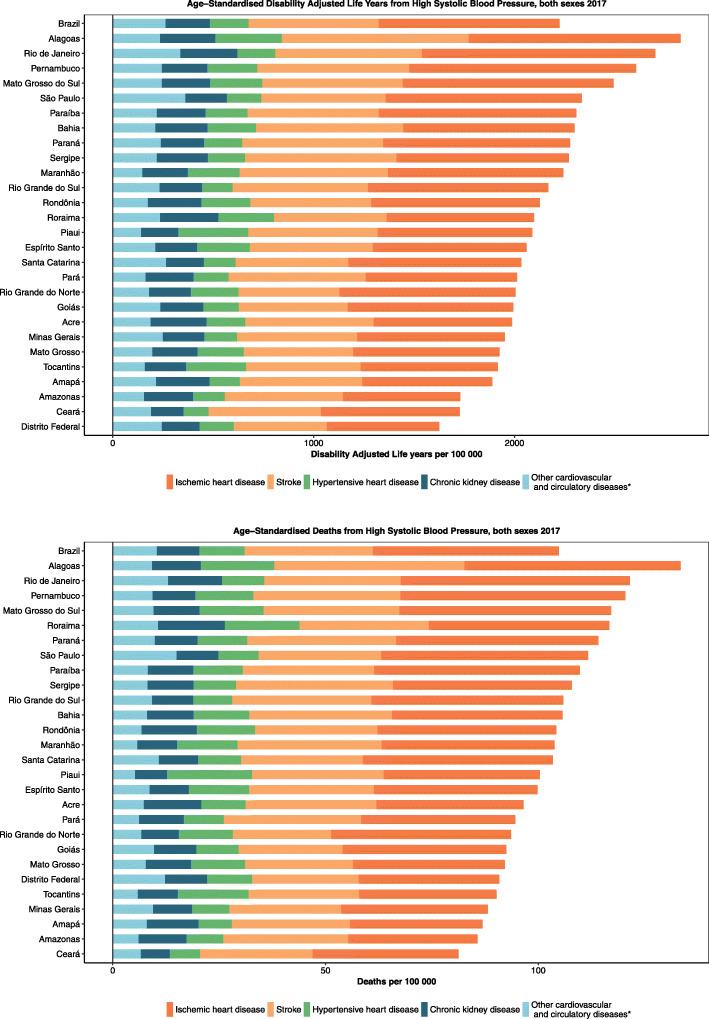
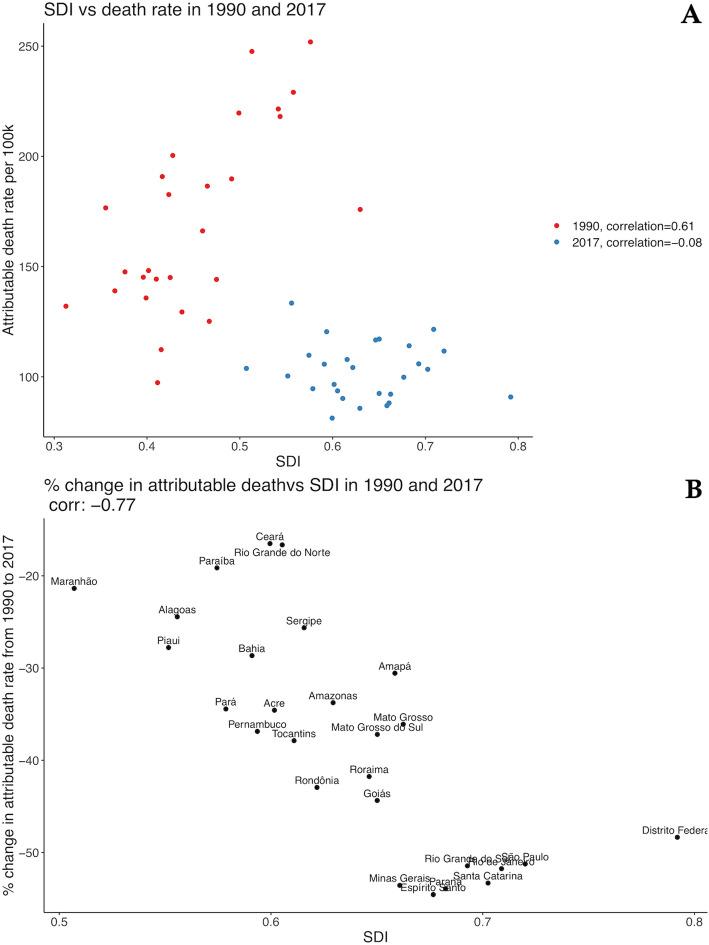
In Brazil, the prevalence of HSBP is 18.9% (95% uncertainty intervals [UI] 18.5-19.3%), with an annual 0.4% increase rate, while age-standardized death rates attributable to HSBP decreased from 189.2 (95%UI 168.5-209.2) deaths to 104.8 (95%UI 94.9-114.4) deaths per 100,000 from 1990 to 2017. In spite of that, the total number of deaths attributable to HSBP increased 53.4% and HSBP raised from 3rd to 1st position, as the leading risk factor for deaths during the period. Regarding total DALYs, HSBP raised from 4th in 1990 to 2nd cause in 2017. The main driver of change of HSBP burden is population aging. Across FUs, the reduction in the age-standardized death rates attributable to HSBP correlated with higher SDI.
CONCLUSIONS
While HSBP prevalence shows an increasing trend, age-standardized death and DALY rates are decreasing in Brazil, probably as results of successful public policies for CVD secondary prevention and control, but suboptimal control of its determinants. Reduction was more significant in FUs with higher SDI, suggesting that the effect of health policies was heterogeneous. Moreover, HSBP has become the main risk factor for death in Brazil, mainly due to population aging.
背景
高血压仍然是全球心血管疾病(CVD)的主要危险因素,为了更好地解决这一问题,应该评估其在巴西的影响。我们旨在根据性别和联邦单位(FU),使用 2017 年全球疾病负担(GBD)估计值,描述巴西≥25 岁人群中收缩压升高(HSBP)的患病率和疾病负担趋势。
方法
我们使用 GBD 研究开发的比较风险评估来估计 1990 年至 2017 年期间,HSBP 归因于死亡和残疾调整生命年(DALY)的趋势,按性别和 FU 进行。本研究包括 14 个 HSBP-结局对。HSBP 的定义为收缩压≥140mmHg 用于患病率估计,疾病负担采用 110-115mmHg 的理论最小风险暴露水平(TMREL)。我们估计了 HSBP 导致的死亡和 DALY 的比例。我们还探讨了 HSBP 负担趋势的驱动因素,以及疾病负担与社会人口发展指数(SDI)之间的相关性。
结果
在巴西,HSBP 的患病率为 18.9%(95%不确定区间[UI]为 18.5-19.3%),年增长率为 0.4%,而归因于 HSBP 的年龄标准化死亡率从 1990 年的每 10 万人 189.2(95%UI 为 168.5-209.2)下降到 2017 年的每 10 万人 104.8(95%UI 为 94.9-114.4)。尽管如此,归因于 HSBP 的总死亡人数增加了 53.4%,HSBP 从第 3 位上升到第 1 位,成为该期间死亡的主要危险因素。在总 DALY 方面,HSBP 从 1990 年的第 4 位上升到 2017 年的第 2 位。HSBP 负担变化的主要驱动因素是人口老龄化。在各 FU 中,归因于 HSBP 的年龄标准化死亡率的下降与较高的 SDI 相关。
结论
虽然 HSBP 的患病率呈上升趋势,但巴西的年龄标准化死亡率和 DALY 呈下降趋势,这可能是 CVD 二级预防和控制的成功公共政策的结果,但对其决定因素的控制不理想。在 SDI 较高的 FU 中,降幅更为显著,表明卫生政策的效果存在异质性。此外,HSBP 已成为巴西死亡的主要危险因素,主要原因是人口老龄化。




 Zotero 插件