
了解食管癌:未来十年的挑战与机遇
Understanding Esophageal Cancer: The Challenges and Opportunities for the Next Decade.
作者信息
Yang Jianjun, Liu Xiguang, Cao Sai, Dong Xiaoying, Rao Shuan, Cai Kaican
机构信息
Department of Thoracic Surgery, Nanfang Hospital, Southern Medical University, Guangzhou, China.
出版信息
Front Oncol. 2020 Sep 10;10:1727. doi: 10.3389/fonc.2020.01727. eCollection 2020.
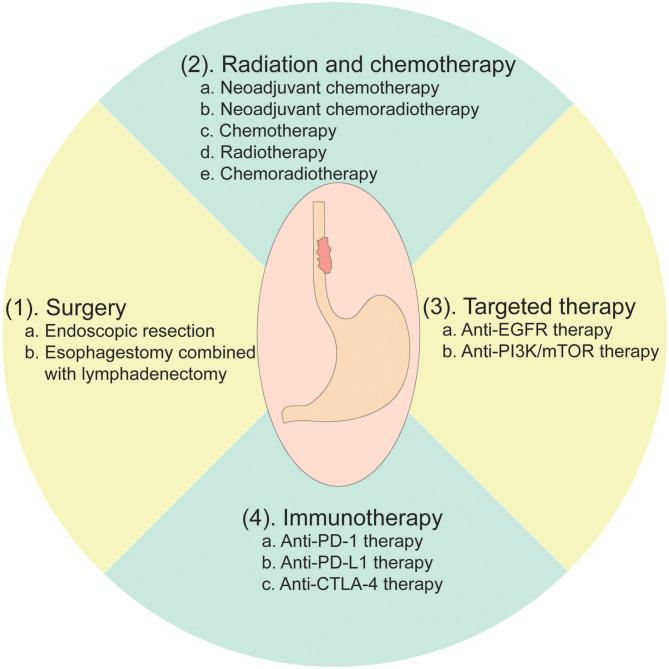
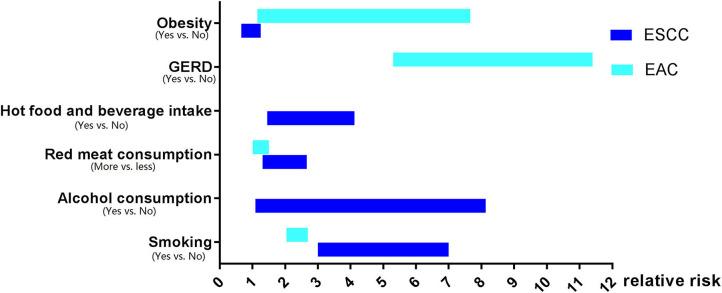
Esophageal cancer (EC) is the seventh most common cancer worldwide with over 570,000 new cases annually. In China, the incidence of EC is particularly high where approximately 90% of cases are defined as esophageal squamous cell carcinoma (ESCC). Although various risk factors have been identified, the knowledge of genetic drivers for ESCC is still limited due to high mutational loading of the cancer and lack of appropriate EC models, resulting in inadequate treatment choices for EC patients. Currently, surgery, chemotherapy, radiation, and limited targeted therapy options can only bring dismal survival advantages; thus, the prognosis for ESCC is very poor. However, cancer immunotherapy has unleashed a new era of cancer treatment with extraordinary therapeutic benefits for cancer patients, including EC patients. This review discusses the latest understanding of the risk factors and clinical rational for EC treatment and provides accumulated information, which describes the ongoing development of immunotherapy for EC with a specific emphasis on ESCC, the most prevalent EC subtype in the Chinese population.
食管癌(EC)是全球第七大常见癌症,每年新增病例超过57万例。在中国,食管癌的发病率特别高,约90%的病例被定义为食管鳞状细胞癌(ESCC)。尽管已经确定了各种风险因素,但由于该癌症的高突变负荷以及缺乏合适的食管癌模型,ESCC的遗传驱动因素的相关知识仍然有限,导致食管癌患者的治疗选择不足。目前,手术、化疗、放疗以及有限的靶向治疗方案只能带来有限的生存优势;因此,ESCC的预后非常差。然而,癌症免疫疗法开启了癌症治疗的新时代,为包括食管癌患者在内的癌症患者带来了非凡的治疗益处。本综述讨论了对食管癌治疗的风险因素和临床合理性的最新认识,并提供了积累的信息,描述了食管癌免疫疗法的持续发展,特别强调了ESCC,这是中国人群中最常见的食管癌亚型。
 Zotero 插件