
关节炎住院患者阿片类物质使用障碍的趋势及相关因素
Trends of Opioid Use Disorder and Associated Factors in Hospitalized Patients With Arthritis.
作者信息
Oladunjoye Adeolu O, Oladunjoye Olubunmi O, Gauvin Jean, Yee Maria Ruiza, Espiridion Eduardo D
机构信息
Medical Critical Care, Boston Children's Hospital; Harvard Medical School, Boston, USA.
Psychiatry, Reading Hospital Tower Health, West Reading, USA.
出版信息
Cureus. 2020 Sep 2;12(9):e10203. doi: 10.7759/cureus.10203.
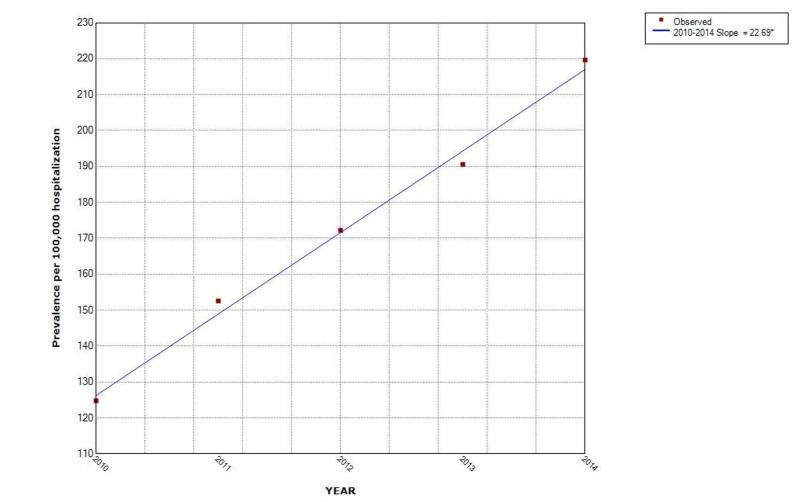
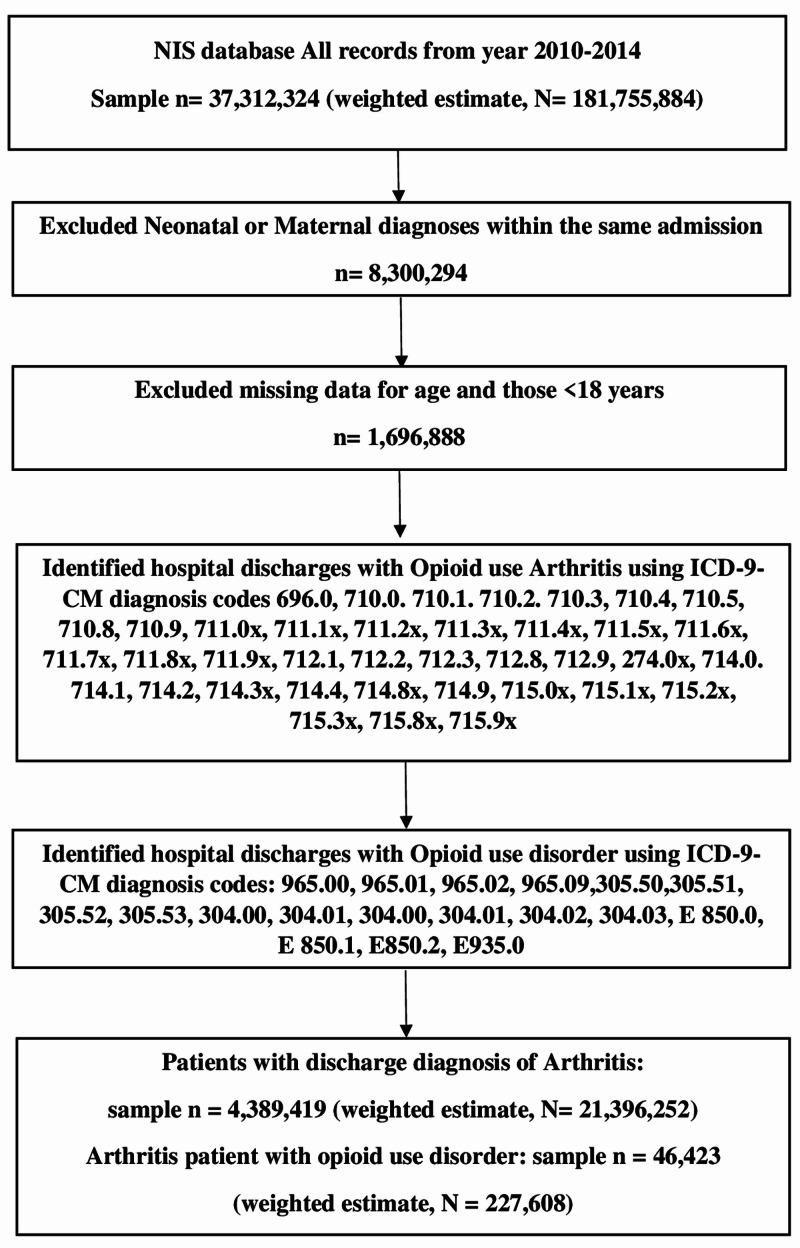
Introduction Opioid use was primarily limited to acute pain, postsurgical care, and end of life care setting but now is the most prescribed medication for chronic pain. Arthritis is a chronic disease associated with chronic pain. Given limited options for pain relief in the patient population, these patients are often prescribed opioids and are at increased risk of opioid use disorder (OUD). Therefore, our study aimed to identify factors associated with OUD in patients with arthritis. Methods We analyzed hospitalized adult patients with arthritis with and without OUD using discharge data from National Inpatient Sample (NIS) over five years from January 1, 2010, to December 31, 2014. We looked at trends of OUD in hospitalized patients with arthritis and compared demographic and clinical characteristics of patients with and without OUD using Student's t-test and chi-square test. Multivariate analysis was also used to adjust for variables. Results A total of 21,396,252 arthritis hospitalizations were identified during the five-year study period among which 227,608 had OUD. The prevalence of OUD in arthritis hospitalization increased over the five-year period by 43%. After adjusting for other variables, mental health (OR 2.50 (2.43-2.58)), and substance use (OR 6.39 (6.14-6.66)) disorders were associated with increased odds of OUD. Conclusion The prevalence of OUD among patients with arthritis increased over the five-year study period. Mental health and substance use disorders were associated with increased odds of OUD. More studies are needed to explore alternative pain management options for arthritis patients particularly in those with mental health and substance use disorders.
引言
阿片类药物的使用最初主要局限于急性疼痛、术后护理和临终关怀环境,但现在是治疗慢性疼痛最常用的处方药。关节炎是一种与慢性疼痛相关的慢性疾病。鉴于该患者群体缓解疼痛的选择有限,这些患者经常被开阿片类药物,且患阿片类药物使用障碍(OUD)的风险增加。因此,我们的研究旨在确定与关节炎患者OUD相关的因素。方法:我们使用2010年1月1日至2014年12月31日五年间国家住院样本(NIS)的出院数据,分析了有和没有OUD的住院成年关节炎患者。我们研究了住院关节炎患者中OUD的趋势,并使用学生t检验和卡方检验比较了有和没有OUD的患者的人口统计学和临床特征。还使用多变量分析来调整变量。结果:在为期五年的研究期间,共确定了21396252例关节炎住院病例,其中227608例患有OUD。在这五年期间,关节炎住院患者中OUD的患病率增加了43%。在调整其他变量后,心理健康(OR 2.50(2.43 - 2.58))和物质使用障碍(OR 6.39(6.14 - 6.66))与OUD的患病几率增加相关。结论:在为期五年的研究期间,关节炎患者中OUD的患病率有所增加。心理健康和物质使用障碍与OUD的患病几率增加相关。需要更多的研究来探索针对关节炎患者,特别是那些患有心理健康和物质使用障碍的患者的替代疼痛管理方案。
 Zotero 插件