
环氧化酶活性介导结肠癌细胞对ω-3多不饱和脂肪酸二十碳五烯酸的抗性。
Cyclooxygenase activity mediates colorectal cancer cell resistance to the omega-3 polyunsaturated fatty acid eicosapentaenoic acid.
作者信息
Volpato Milene, Ingram Nicola, Perry Sarah L, Spencer Jade, Race Amanda D, Marshall Catriona, Hutchinson John M, Nicolaou Anna, Loadman Paul M, Coletta P Louise, Hull Mark A
机构信息
Leeds Institute of Medical Research at St James's, University of Leeds, St James's University Hospital, Leeds, LS9 7TF, UK.
Institute of Cancer Therapeutics, University of Bradford, Bradford, BD7 1DP, UK.
出版信息
Cancer Chemother Pharmacol. 2021 Feb;87(2):173-184. doi: 10.1007/s00280-020-04157-2. Epub 2020 Oct 11.
PURPOSE
The naturally-occurring omega-3 polyunsaturated fatty acid eicosapentaenoic acid (EPA) is safe, well-tolerated and inexpensive, making it an attractive anti-cancer intervention. However, EPA has only modest anti-colorectal cancer (CRC) activity, when used alone. Both cyclooxygenase (COX) isoforms metabolise EPA and are over-expressed in CRC cells. We investigated whether COX inhibition increases the sensitivity of CRC cells to growth inhibition by EPA.
METHODS
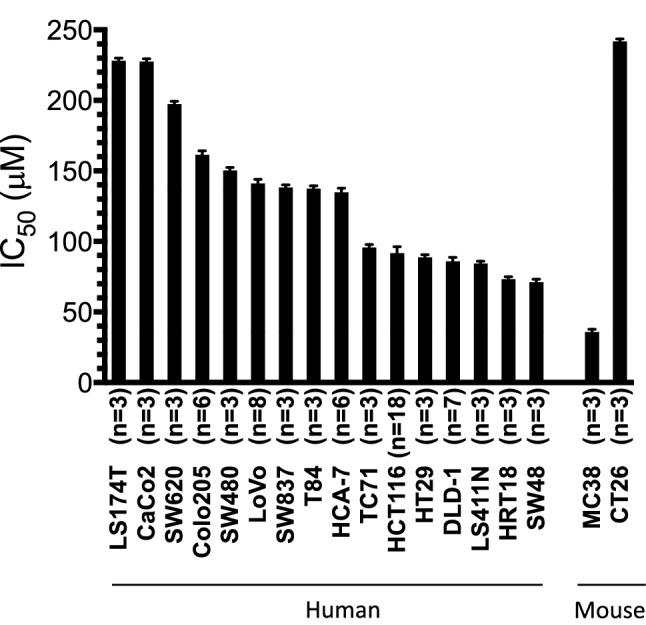
A panel of 18 human and mouse CRC cell lines was used to characterize the differential sensitivity of CRC cells to the growth inhibitory effects of EPA. The effect of CRISPR-Cas9 genetic deletion and pharmacological inhibition of COX-1 and COX-2 on the anti-cancer activity of EPA was determined using in vitro and in vivo models.
RESULTS
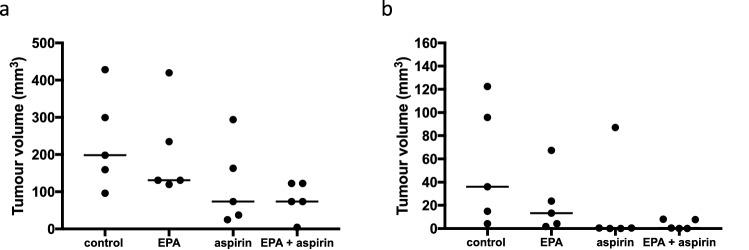
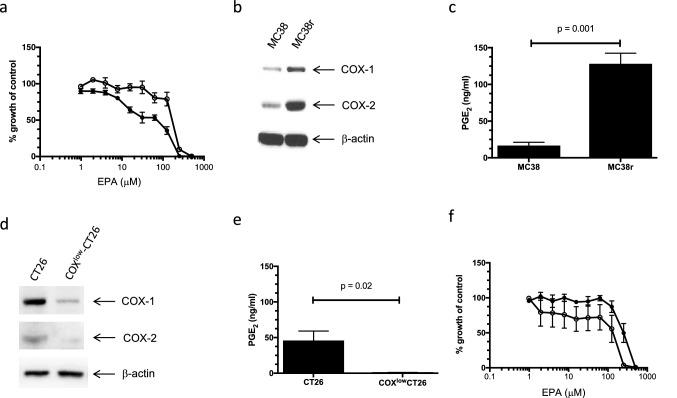
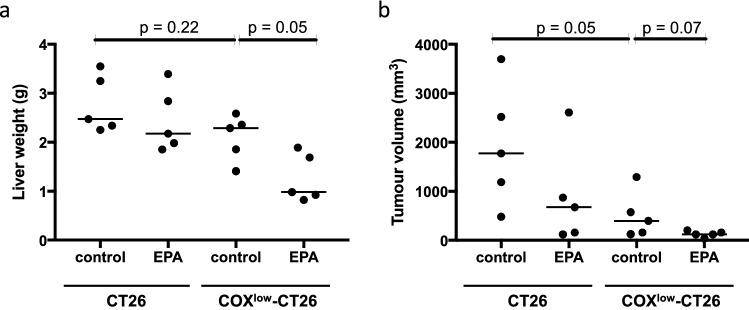
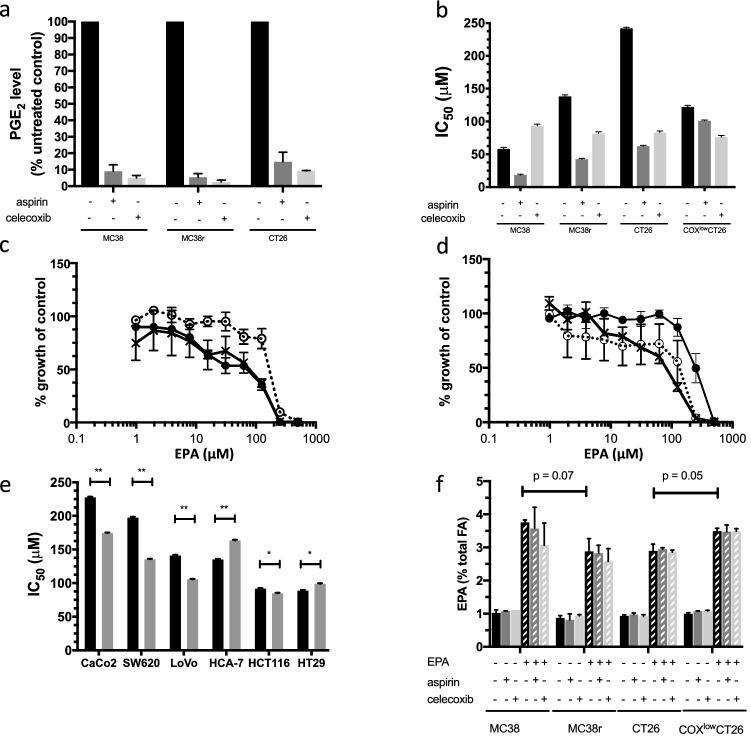
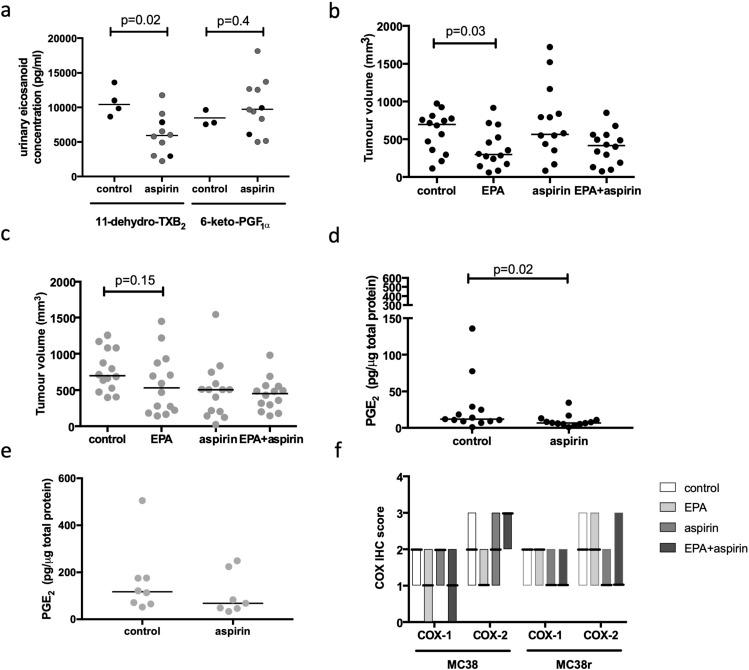
Genetic ablation of both COX isoforms increased sensitivity of CT26 mouse CRC cells to growth inhibition by EPA in vitro and in vivo. The non-selective COX inhibitor aspirin and the selective COX-2 inhibitor celecoxib increased sensitivity of several human and mouse CRC cell lines to EPA in vitro. However, in a MC38 mouse CRC cell tumour model, with dosing that mirrored low-dose aspirin use in humans, thereby producing significant platelet COX-1 inhibition, there was ineffective intra-tumoral COX-2 inhibition by aspirin and no effect on EPA sensitivity of MC38 cell tumours.
CONCLUSION
Cyclooxygenase inhibition by non-steroidal anti-inflammatory drugs represents a therapeutic opportunity to augment the modest anti-CRC activity of EPA. However, intra-tumoral COX inhibition is likely to be critical for this drug-nutrient interaction and careful tissue pharmacodynamic profiling is required in subsequent pre-clinical and human studies.
目的
天然存在的ω-3多不饱和脂肪酸二十碳五烯酸(EPA)安全、耐受性良好且价格低廉,使其成为一种有吸引力的抗癌干预手段。然而,单独使用时,EPA的抗结直肠癌(CRC)活性有限。环氧化酶(COX)的两种同工型均可代谢EPA,且在CRC细胞中过表达。我们研究了COX抑制是否会增加CRC细胞对EPA生长抑制的敏感性。
方法
使用一组18种人和小鼠CRC细胞系来表征CRC细胞对EPA生长抑制作用的差异敏感性。使用体外和体内模型确定CRISPR-Cas9基因缺失以及COX-1和COX-2的药理学抑制对EPA抗癌活性的影响。
结果
两种COX同工型的基因消融均增加了CT26小鼠CRC细胞在体外和体内对EPA生长抑制的敏感性。非选择性COX抑制剂阿司匹林和选择性COX-2抑制剂塞来昔布在体外增加了几种人和小鼠CRC细胞系对EPA的敏感性。然而,在MC38小鼠CRC细胞肿瘤模型中,给药剂量模拟了人类低剂量阿司匹林的使用,从而产生了显著的血小板COX-1抑制,阿司匹林对肿瘤内COX-2的抑制无效,且对MC38细胞肿瘤的EPA敏感性没有影响。
结论
非甾体抗炎药对环氧化酶的抑制代表了一个治疗机会,可增强EPA适度的抗CRC活性。然而,肿瘤内COX抑制可能对这种药物-营养相互作用至关重要,后续的临床前和人体研究需要仔细的组织药效学分析。
 Zotero 插件