
2019冠状病毒病(COVID-19)监测系统:COVID-19最小数据集及可互操作报告框架的制定
Coronavirus disease 2019 (COVID-19) surveillance system: Development of COVID-19 minimum data set and interoperable reporting framework.
作者信息
Shanbehzadeh Mostafa, Kazemi-Arpanahi Hadi, Mazhab-Jafari Komeil, Haghiri Hamideh
机构信息
Department of Health Information Technology, School of Paramedical, Ilam University of Medical Sciences, Ilam, Iran.
Department of Health Information Technology, Abadan Faculty of Medical Sciences, Abadan, Iran.
出版信息
J Educ Health Promot. 2020 Aug 31;9:203. doi: 10.4103/jehp.jehp_456_20. eCollection 2020.
INTRODUCTION
The 2019 coronavirus disease (COVID-19) is a major global health concern. Joint efforts for effective surveillance of COVID-19 require immediate transmission of reliable data. In this regard, a standardized and interoperable reporting framework is essential in a consistent and timely manner. Thus, this research aimed at to determine data requirements towards interoperability.
MATERIALS AND METHODS
In this cross-sectional and descriptive study, a combination of literature study and expert consensus approach was used to design COVID-19 Minimum Data Set (MDS). A MDS checklist was extracted and validated. The definitive data elements of the MDS were determined by applying the Delphi technique. Then, the existing messaging and data standard templates (Health Level Seven-Clinical Document Architecture [HL7-CDA] and SNOMED-CT) were used to design the surveillance interoperable framework.
RESULTS
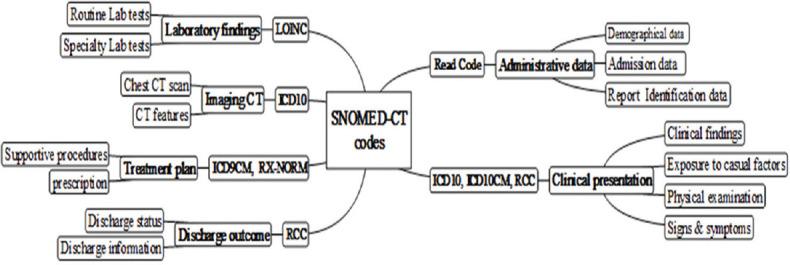
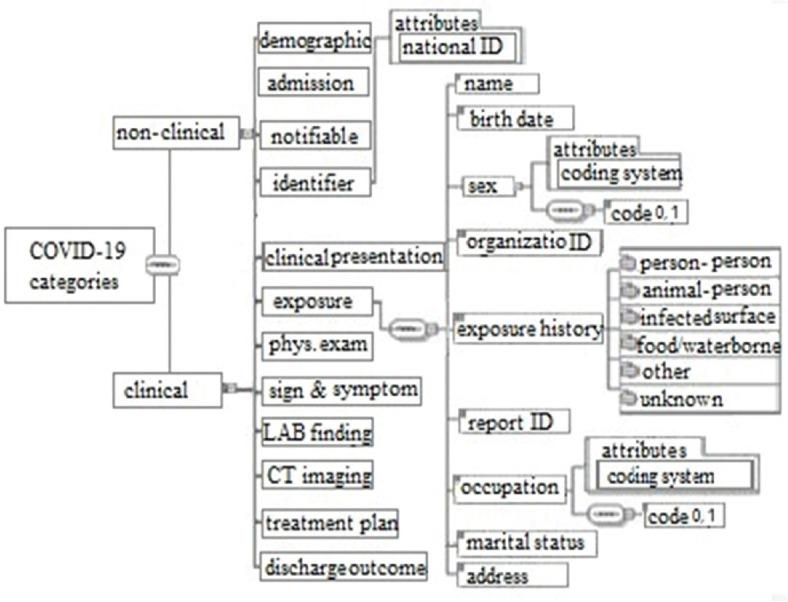
The proposed MDS was divided into administrative and clinical sections with three and eight data classes and 29 and 40 data fields, respectively. Then, for each data field, structured data values along with SNOMED-CT codes were defined and structured according HL7-CDA standard.
DISCUSSION AND CONCLUSION
The absence of effective and integrated system for COVID-19 surveillance can delay critical public health measures, leading to increased disease prevalence and mortality. The heterogeneity of reporting templates and lack of uniform data sets hamper the optimal information exchange among multiple systems. Thus, developing a unified and interoperable reporting framework is more effective to prompt reaction to the COVID-19 outbreak.
引言
2019冠状病毒病(COVID-19)是全球主要的卫生问题。为有效监测COVID-19而共同努力需要立即传输可靠数据。在这方面,一个标准化且可互操作的报告框架对于保持一致和及时性至关重要。因此,本研究旨在确定实现互操作性所需的数据。
材料与方法
在这项横断面描述性研究中,采用文献研究与专家共识相结合的方法设计COVID-19最小数据集(MDS)。提取并验证了MDS清单。通过德尔菲技术确定了MDS的最终数据元素。然后,使用现有的消息传递和数据标准模板(卫生信息交换标准第七版-临床文档架构[HL7-CDA]和医学系统命名法-临床术语[SNOMED-CT])设计监测互操作框架。
结果
提议的MDS分为行政和临床部分,分别有三个和八个数据类别以及29个和40个数据字段。然后,为每个数据字段定义了结构化数据值以及SNOMED-CT代码,并根据HL7-CDA标准进行了结构化处理。
讨论与结论
缺乏针对COVID-19监测的有效综合系统可能会延迟关键的公共卫生措施,导致疾病患病率和死亡率上升。报告模板的异质性和缺乏统一的数据集阻碍了多个系统之间的最佳信息交换。因此,开发一个统一且可互操作的报告框架对于迅速应对COVID-19疫情更为有效。

 Zotero 插件