
浮床型人工湿地与微生物燃料电池联合处理城市污水及生物能源生产。
Floating treatment wetlands integrated with microbial fuel cell for the treatment of urban wastewaters and bioenergy generation.
机构信息
Postgraduate Program in Environmental Technology, University of Santa Cruz do Sul (UNISC), Avenida Independência, 2293, Santa Cruz do Sul, Rio Grande do Sul 96815-900, Brazil.
Postgraduate Program in Environmental Technology, University of Santa Cruz do Sul (UNISC), Avenida Independência, 2293, Santa Cruz do Sul, Rio Grande do Sul 96815-900, Brazil.
出版信息
Sci Total Environ. 2021 Apr 20;766:142474. doi: 10.1016/j.scitotenv.2020.142474. Epub 2020 Sep 24.
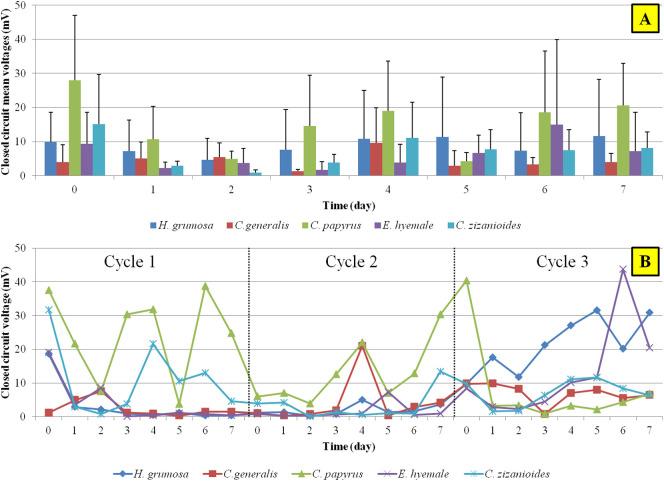
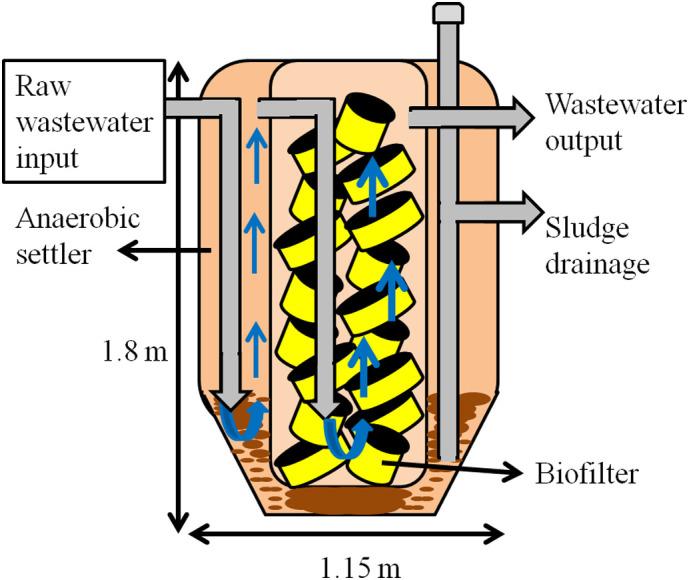
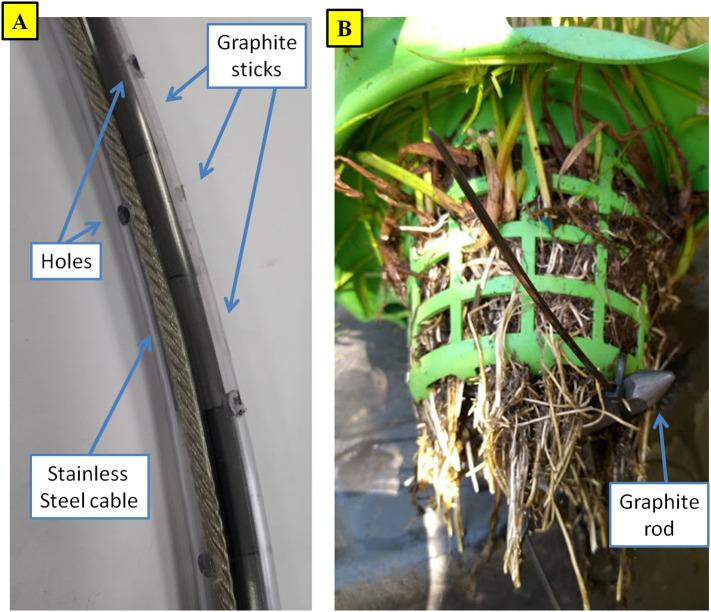
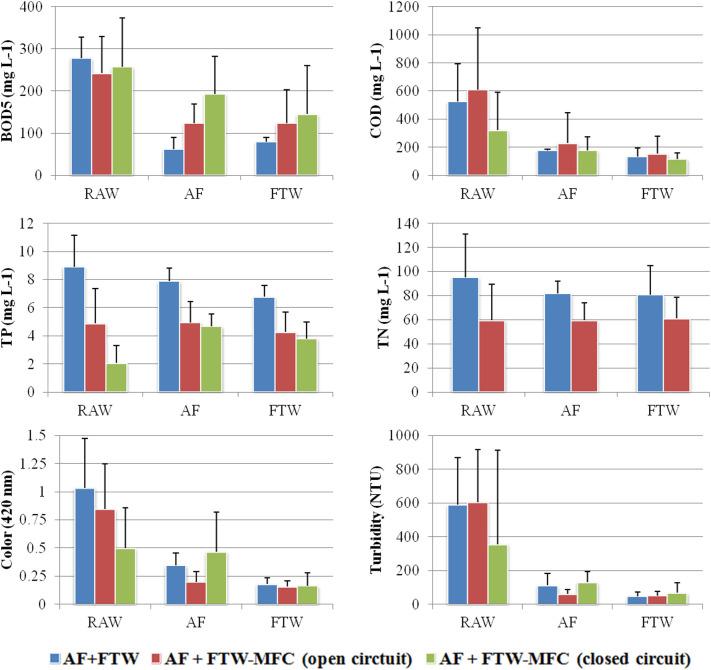
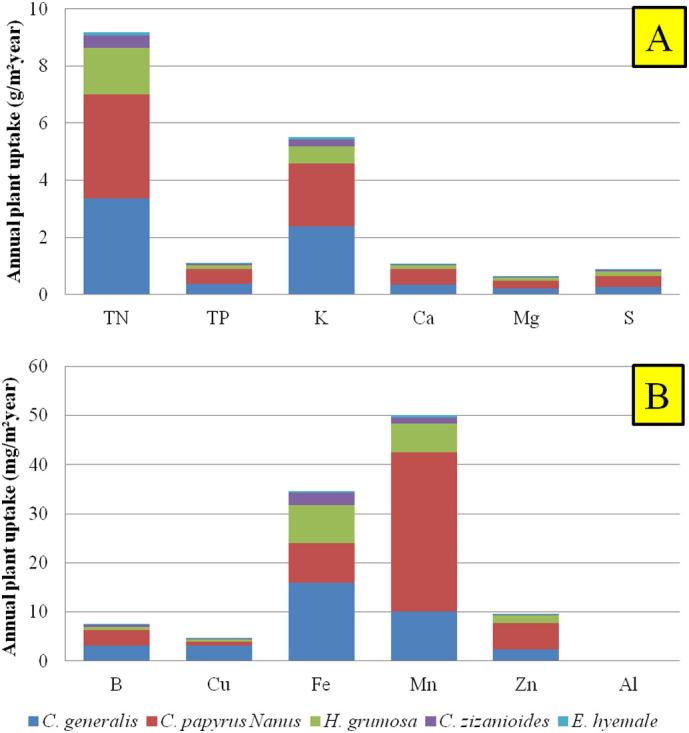
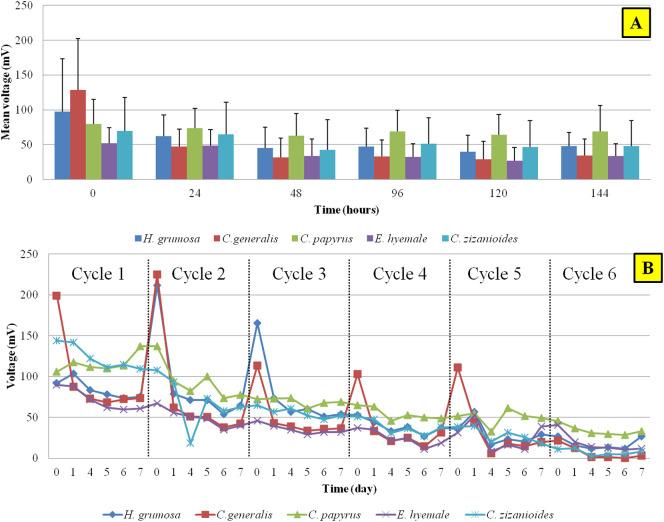
The objective of the present study was to develop a combined system composed of anaerobic biofilter (AF) and floating treatment wetlands (FTW) coupled with microbial fuel cells (MFC) in the buoyant support for treating wastewater from a university campus and generate bioelectricity. The raw wastewater was pumped to a 1450 L tank, operated in batch flow and filled with plastic conduits. The second treatment stage was composed of a 1000 L FTW box with a 200 L plastic drum inside (acting as settler in the entrance) and vegetated with mixed ornamental plants species floating in a polyurethane support fed once a week with 700 L of wastewater. In the plant roots, graphite rods were placed to act as cathodes, while on the bottom of the box 40 graphite sticks inside a plastic hose with a stainless-steel cable acting as the anode chamber. Open circuit voltages were daily measured for 6 weeks, and later as closed circuit with the connection of 1000 Ω resistors. Plant harvestings were conducted, in which biomass production and plant uptake from each of the species were measured. On average, system was efficient in reducing BOD (55.1%), COD (71.4%), turbidity (90.9%) and total coliforms (99.9%), but presented low efficiencies regarding total N (8.4%) and total P (11.4%). Concerning bioenergy generation, voltage peaks and maximum power density were observed on the feeding day, reaching 225 mV and 0.93 mW/m, respectively, and in general decaying over the 7 days. In addition, plant species with larger root development presented higher voltage values than plants with the smaller root systems, possible because of oxygen release. Therefore, the combined system presented potential of treating wastewater and generating energy by integrating FTW and MFC, but further studies should investigate the FTW-MFC combination in order to improve its treatment performance and maximize energy generation.
本研究的目的是开发一种组合系统,该系统由厌氧生物滤池 (AF) 和浮式处理湿地 (FTW) 与微生物燃料电池 (MFC) 耦合组成,以浮力支撑的方式处理大学校园废水并产生生物电能。原废水被泵入一个 1450 L 的水箱中,采用批量流动方式运行,并填充塑料管道。第二处理阶段由一个 1000 L 的 FTW 箱组成,内部有一个 200 L 的塑料桶(在入口处充当沉淀池),并用混合观赏植物物种在聚氨酯支撑物中进行植物浮床处理,每周用 700 L 的废水进行一次灌溉。在植物根部放置石墨棒作为阴极,而在箱底放置 40 根石墨棒,置于塑料软管内,不锈钢电缆作为阳极室。连续 6 周每天测量开路电压,之后通过连接 1000 Ω 电阻器进行闭路测量。进行植物收割,测量每种植物的生物量产量和植物吸收量。平均而言,该系统能够有效降低 BOD(55.1%)、COD(71.4%)、浊度(90.9%)和总大肠菌群(99.9%),但对总氮(8.4%)和总磷(11.4%)的去除效率较低。关于生物能源的产生,在进料日观察到电压峰值和最大功率密度,分别达到 225 mV 和 0.93 mW/m,并且通常在 7 天内衰减。此外,具有较大根系发育的植物物种比根系较小的植物物种具有更高的电压值,这可能是由于氧气释放所致。因此,该组合系统具有通过集成 FTW 和 MFC 处理废水和产生能源的潜力,但进一步的研究应该调查 FTW-MFC 组合,以提高其处理性能并最大限度地提高能源产生。


 Zotero 插件