
miR-223 在脓毒症诱导的死亡率中的保护作用。
The protective role of miR-223 in sepsis-induced mortality.
机构信息
College of Pulmonary and Critical Care Medicine, Chinese PLA General Hospital, 28 Fuxing Road, Beijing, 100853, China.
Department of Hematology and Oncology, International Cancer Center, Shenzhen University General Hospital, Shenzhen University Health Science Center, Shenzhen, 518000, China.
出版信息
Sci Rep. 2020 Oct 19;10(1):17691. doi: 10.1038/s41598-020-74965-2.
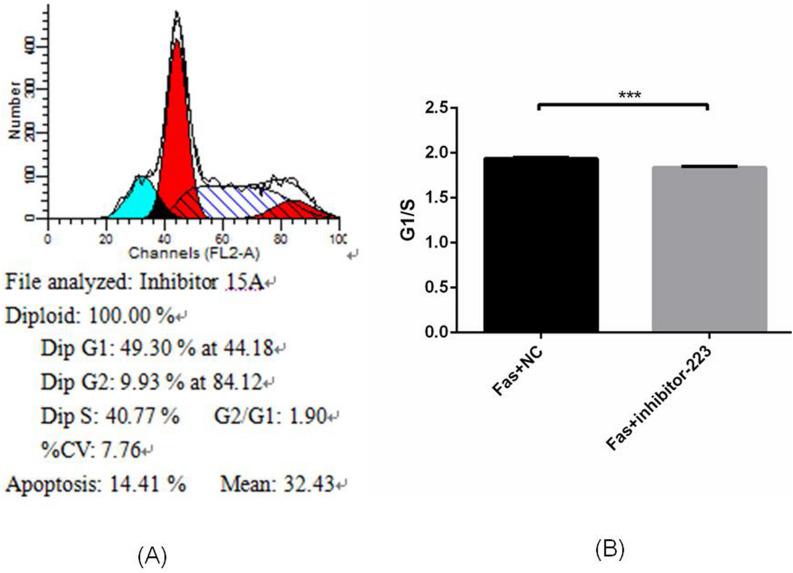
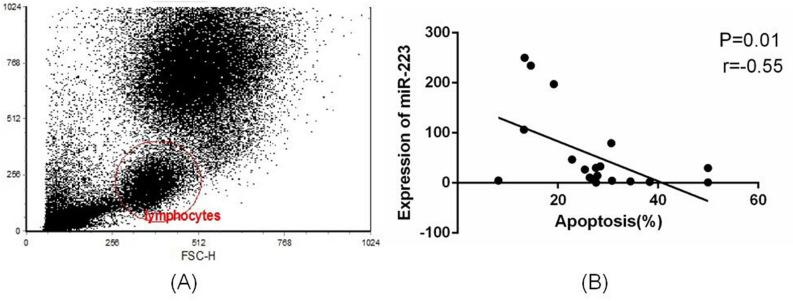
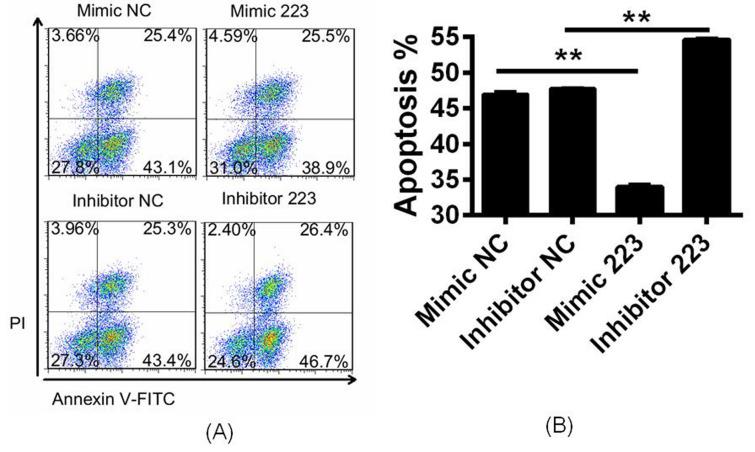
Lymphocyte apoptosis appears to play an important role in immunodysfunction in sepsis. We investigated the role of miR-223 in cell proliferation and apoptosis to identify potential target downstream proteins in sepsis. We recruited 143 patients with sepsis and 44 healthy controls from the Chinese PLA General Hospital. Flow cytometry was used to sort monocytes, lymphocytes, and neutrophils from fresh peripheral blood. A miR-223 mimic and inhibitor were used for transient transfection of Jurkat T cells. Quantitative reverse transcriptase-polymerase chain reaction (qRT-PCR) was used to assess expression of the miRNAs in cells. Western blot analysis was performed to measure protein expression. We evaluated the cell cycle and apoptosis by using flow cytometry (FCM) and terminal deoxynucleotidyl transferase dUTP nick end labeling (TUNEL). Expression of miR-223 was significantly higher in the survivor group than in the nonsurvivor group. Multiple linear regression analysis revealed that SOFA scores correlated negatively with miR-223 and monocyte counts, with β coefficients (95% CI) of - 0.048 (- 0.077, - 0.019) and - 47.707 (- 83.871, - 11.543), respectively. miR-223 expression also correlated negatively with the percentage of apoptosis in lymphocytes. The rate of apoptosis in the miR-223 mimic group was significantly lower than that of the negative control, with an adverse outcome observed in the miR-223 inhibitor group. We also found that miR-223 enhanced the proliferation of Jurkat T cells and that inhibiting miR-223 had an inhibitory effect on the G1/S transition. We conclude that miR-223 can serve as a protective factor in sepsis by reducing apoptosis and enhancing cell proliferation in lymphocytes by interacting with FOXO1. Potential downstream molecules are HSP60, HSP70, and HTRA.
淋巴细胞凋亡似乎在脓毒症免疫功能障碍中发挥重要作用。我们研究了 miR-223 在细胞增殖和凋亡中的作用,以确定脓毒症中的潜在下游靶蛋白。我们从中国人民解放军总医院招募了 143 名脓毒症患者和 44 名健康对照者。使用流式细胞术从新鲜外周血中分离单核细胞、淋巴细胞和中性粒细胞。使用 miR-223 模拟物和抑制剂对 Jurkat T 细胞进行瞬时转染。使用定量逆转录聚合酶链反应 (qRT-PCR) 评估细胞中 miRNA 的表达。通过 Western blot 分析测定蛋白表达。使用流式细胞术 (FCM) 和末端脱氧核苷酸转移酶 dUTP 缺口末端标记 (TUNEL) 评估细胞周期和细胞凋亡。幸存者组的 miR-223 表达明显高于非幸存者组。多元线性回归分析显示 SOFA 评分与 miR-223 和单核细胞计数呈负相关,β 系数(95%CI)分别为-0.048(-0.077,-0.019)和-47.707(-83.871,-11.543)。miR-223 表达也与淋巴细胞凋亡百分比呈负相关。miR-223 模拟物组的凋亡率明显低于阴性对照组,miR-223 抑制剂组观察到不良结局。我们还发现 miR-223 通过与 FOXO1 相互作用增强 Jurkat T 细胞的增殖,并且抑制 miR-223 对 G1/S 转换具有抑制作用。我们得出结论,miR-223 通过减少淋巴细胞凋亡和增强细胞增殖,在脓毒症中作为一种保护因子发挥作用,与 FOXO1 相互作用。潜在的下游分子是 HSP60、HSP70 和 HTRA。
 Zotero 插件