
铜毒性与阿尔茨海默病发病机制的关联及治疗方法。
Copper Toxicity Links to Pathogenesis of Alzheimer's Disease and Therapeutics Approaches.
机构信息
CAS Center for Excellence in Biotic Interactions, College of Life Science, University of Chinese Academy of Sciences, Yuquan Road 19, Beijing 100049, China.
School of Medical and Health Sciences, Edith Cowan University, Perth WA6027, Australia.
出版信息
Int J Mol Sci. 2020 Oct 16;21(20):7660. doi: 10.3390/ijms21207660.
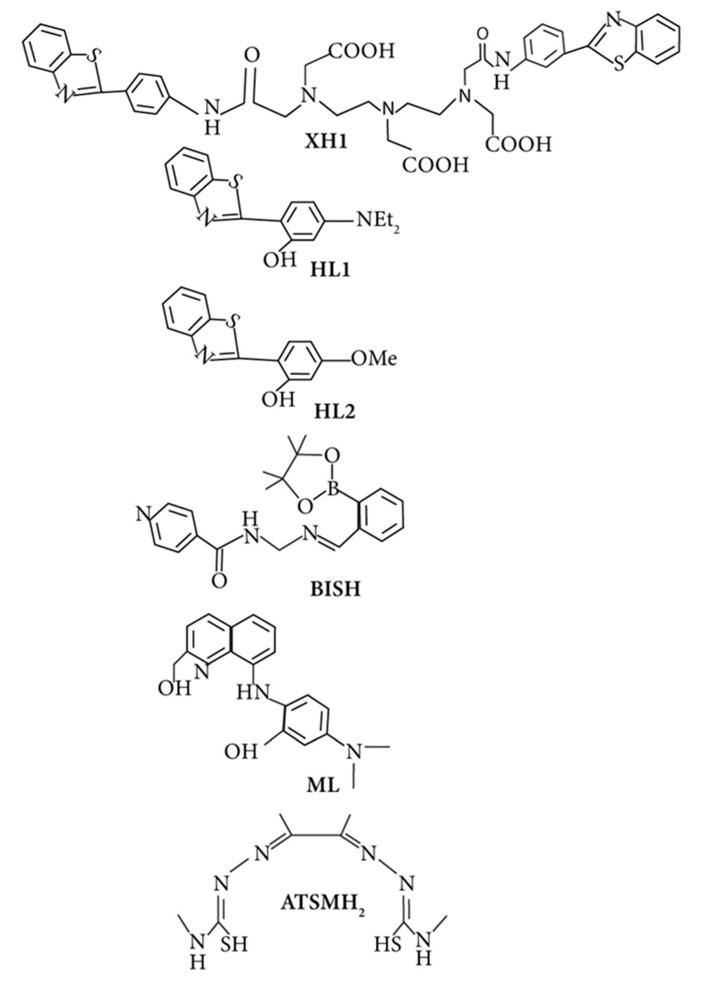
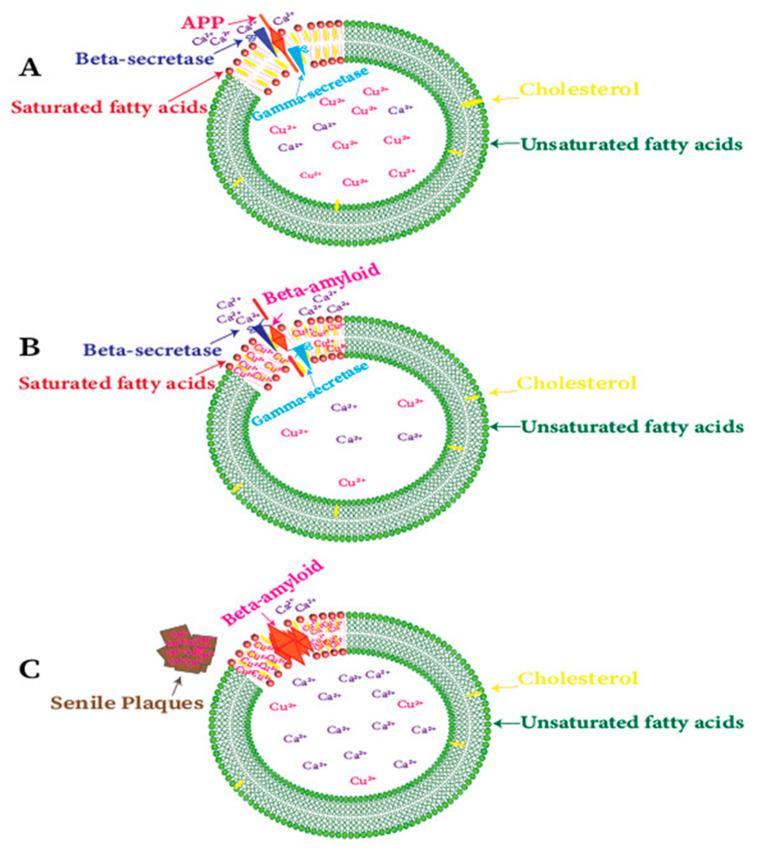
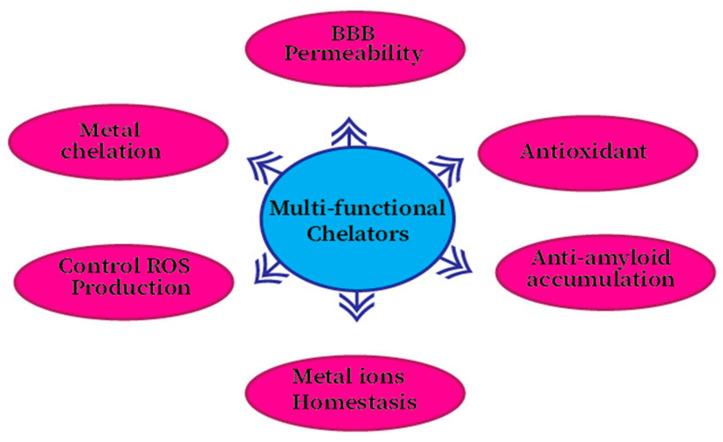
Alzheimer's disease (AD) is an irreversible, age-related progressive neurological disorder, and the most common type of dementia in aged people. Neuropathological lesions of AD are neurofibrillary tangles (NFTs), and senile plaques comprise the accumulated amyloid-beta (Aβ), loaded with metal ions including Cu, Fe, or Zn. Some reports have identified metal dyshomeostasis as a neurotoxic factor of AD, among which Cu ions seem to be a central cationic metal in the formation of plaque and soluble oligomers, and have an essential role in the AD pathology. Cu-Aβ complex catalyzes the generation of reactive oxygen species (ROS) and results in oxidative damage. Several studies have indicated that oxidative stress plays a crucial role in the pathogenesis of AD. The connection of copper levels in AD is still ambiguous, as some researches indicate a Cu deficiency, while others show its higher content in AD, and therefore there is a need to increase and decrease its levels in animal models, respectively, to study which one is the cause. For more than twenty years, many in vitro studies have been devoted to identifying metals' roles in Aβ accumulation, oxidative damage, and neurotoxicity. Towards the end, a short review of the modern therapeutic approach in chelation therapy, with the main focus on Cu ions, is discussed. Despite the lack of strong proofs of clinical advantage so far, the conjecture that using a therapeutic metal chelator is an effective strategy for AD remains popular. However, some recent reports of genetic-regulating copper transporters in AD models have shed light on treating this refractory disease. This review aims to succinctly present a better understanding of Cu ions' current status in several AD features, and some conflicting reports are present herein.
阿尔茨海默病(AD)是一种不可逆转的、与年龄相关的进行性神经退行性疾病,也是老年人中最常见的痴呆类型。AD 的神经病理学病变是神经纤维缠结(NFTs),而老年斑由累积的淀粉样β(Aβ)组成,负载有铜(Cu)、铁(Fe)或锌(Zn)等金属离子。一些报道已经确定金属动态平衡失调是 AD 的神经毒性因素之一,其中 Cu 离子似乎是斑块和可溶性寡聚物形成的中心阳离子金属,并在 AD 病理学中发挥重要作用。Cu-Aβ 复合物催化活性氧(ROS)的生成,导致氧化损伤。几项研究表明,氧化应激在 AD 的发病机制中起着至关重要的作用。AD 中铜水平的关系仍然不明确,因为一些研究表明 Cu 缺乏,而其他研究则表明 AD 中 Cu 含量较高,因此需要分别在动物模型中增加和减少其水平,以研究哪一个是原因。二十多年来,许多体外研究致力于确定金属在 Aβ 积累、氧化损伤和神经毒性中的作用。最后,简要讨论了螯合疗法的现代治疗方法,主要关注 Cu 离子。尽管迄今为止缺乏强有力的临床优势证据,但使用治疗性金属螯合剂是 AD 的有效策略的假设仍然很流行。然而,最近一些关于 AD 模型中铜转运体的遗传调控的报告为治疗这种难治性疾病提供了一些线索。本综述旨在简明扼要地介绍 Cu 离子在 AD 几个特征中的当前状况,同时也存在一些相互矛盾的报告。


 Zotero 插件