
面向抗击冠状病毒(COVID-19)的医护人员的医用面罩的设计与增材制造
Design and Additive Manufacturing of Medical Face Shield for Healthcare Workers Battling Coronavirus (COVID-19).
作者信息
Celik H Kursat, Kose Ozkan, Ulmeanu Mihaela-Elena, Rennie Allan E W, Abram Thomas N, Akinci Ibrahim
机构信息
Department of Agricultural Machinery and Technology Engineering, Faculty of Agriculture, Akdeniz University, Antalya, Turkey.
Department of Orthopaedics and Traumatology, Antalya Training and Research Hospital, University of Health Sciences, Antalya, Turkey.
出版信息
Int J Bioprint. 2020 Aug 10;6(4):286. doi: 10.18063/ijb.v6i4.286. eCollection 2020.
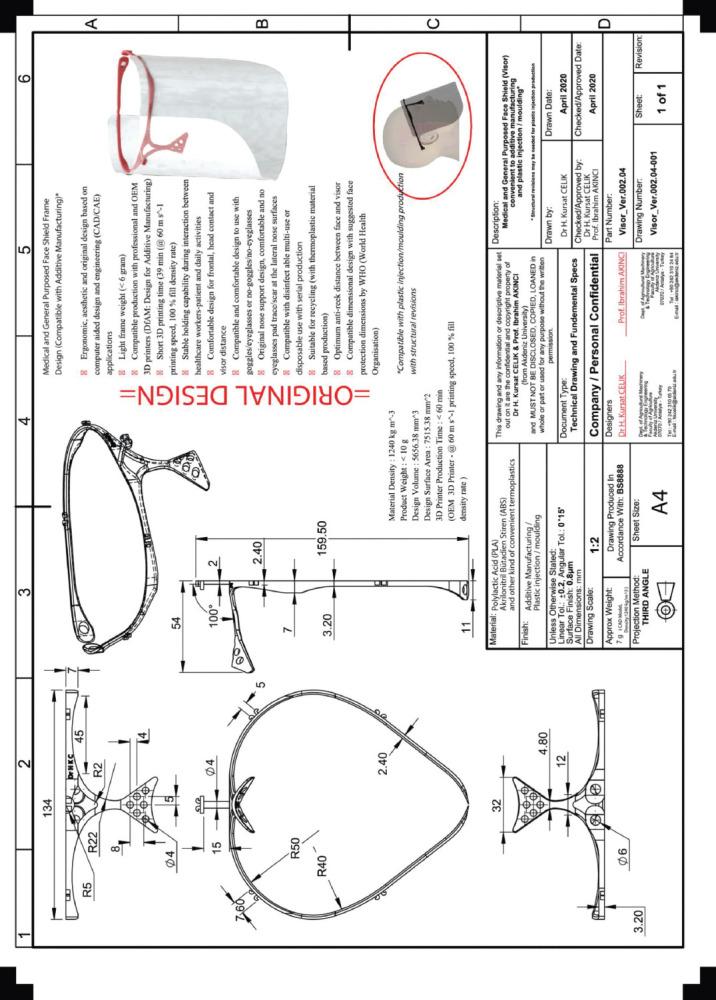
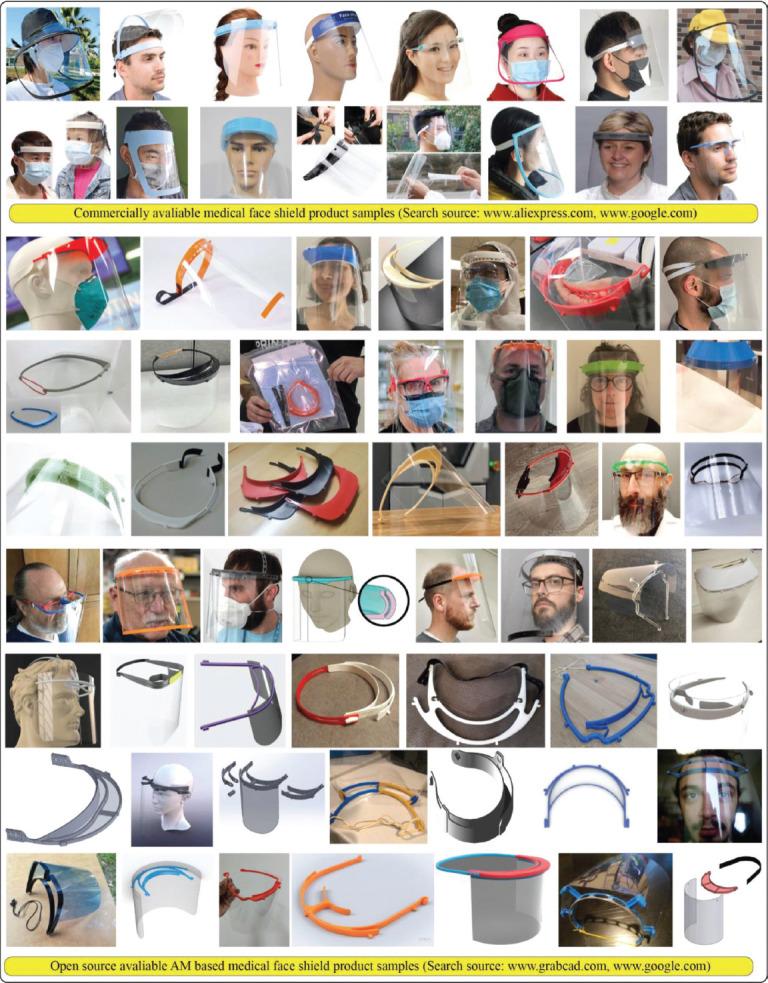
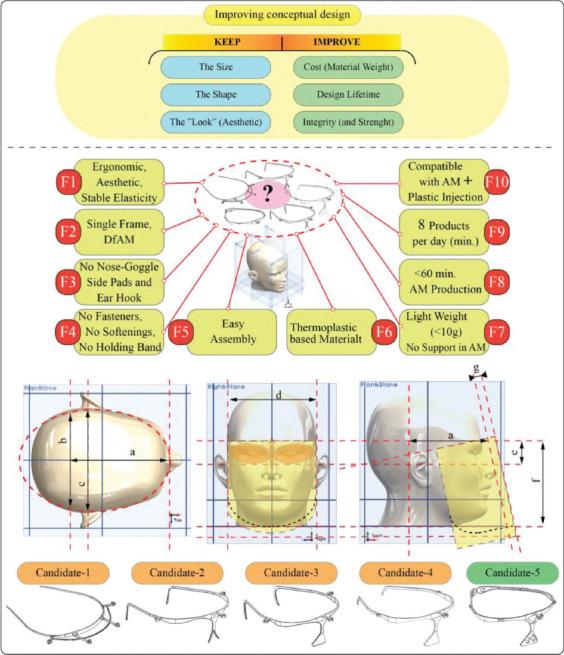
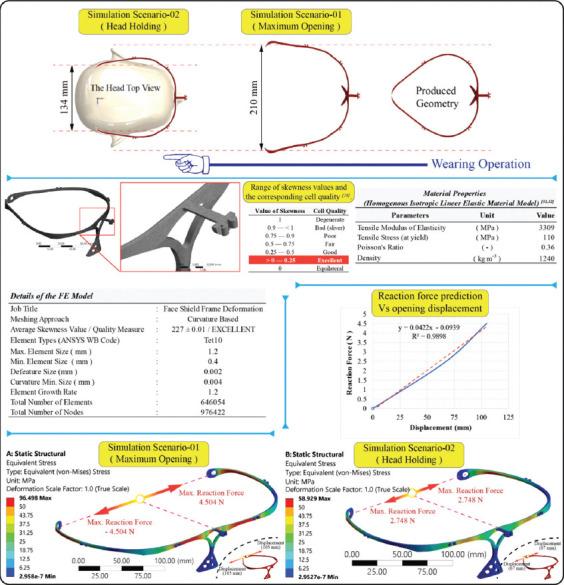
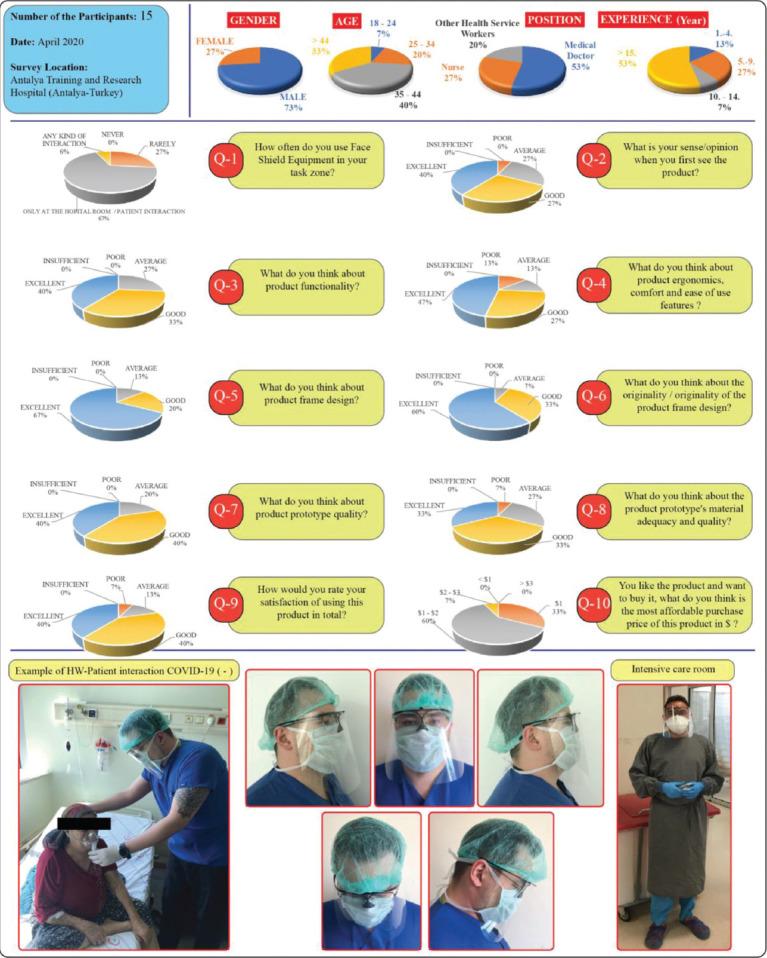
During the coronavirus disease-19 pandemic, the demand for specific medical equipment such as personal protective equipment has rapidly exceeded the available supply around the world. Specifically, simple medical equipment such as medical gloves, aprons, goggles, surgery masks, and medical face shields have become highly in demand in the health-care sector in the face of this rapidly developing pandemic. This difficult period strengthens the social solidarity to an extent parallel to the escalation of this pandemic. Education and government institutions, commercial and noncommercial organizations and individual homemakers have produced specific medical equipment by means of additive manufacturing (AM) technology, which is the fastest way to create a product, providing their support for urgent demands within the health-care services. Medical face shields have become a popular item to produce, and many design variations and prototypes have been forthcoming. Although AM technology can be used to produce several types of noncommercial equipment, this rapid manufacturing approach is limited by its longer production time as compared to conventional serial/mass production and the high demand. However, most of the individual designer/maker-based face shields are designed with little appreciation of clinical needs and nonergonomic. They also lack of professional product design and are not designed according to AM (Design for AM [DfAM]) principles. Consequently, the production time of up to 4 - 5 h for some products of these designs is needed. Therefore, a lighter, more ergonomic, single frame medical face shield without extra components to assemble would be useful, especially for individual designers/makers and noncommercial producers to increase productivity in a shorter timeframe. In this study, a medical face shield that is competitively lighter, relatively more ergonomic, easy to use, and can be assembled without extra components (such as elastic bands, softening materials, and clips) was designed. The face shield was produced by AM with a relatively shorter production time. Subsequently, finite element analysis-based structural design verification was performed, and a three-dimensional (3D) prototype was produced by an original equipment manufacturer 3D printer (Fused Deposition Modeling). This study demonstrated that an original face shield design with <10 g material usage per single frame was produced in under 45 min of fabrication time. This research also provides a useful product DfAM of simple medical equipment such as face shields through advanced engineering design, simulation, and AM applications as an essential approach to battling coronavirus-like viral pandemics.
在2019冠状病毒病大流行期间,全球范围内对个人防护装备等特定医疗设备的需求迅速超过了现有供应。具体而言,面对这一迅速蔓延的大流行,医疗手套、围裙、护目镜、手术口罩和医用面罩等简单医疗设备在医疗保健领域的需求激增。这一艰难时期在一定程度上强化了与这场大流行升级并行的社会团结。教育机构、政府机构、商业和非商业组织以及个体家庭主妇都借助增材制造(AM)技术生产特定医疗设备,这是创造产品最快的方式,为医疗服务中的紧急需求提供支持。医用面罩已成为热门的生产物品,许多设计变体和原型不断涌现。尽管增材制造技术可用于生产多种类型的非商业设备,但与传统的批量/大规模生产相比,这种快速制造方法受到生产时间较长和需求高的限制。然而,大多数基于个体设计师/制造商的面罩设计很少考虑临床需求且不符合人体工程学。它们还缺乏专业的产品设计,未按照增材制造(增材制造设计 [DfAM])原则进行设计。因此,这些设计的一些产品需要长达4至5小时的生产时间。所以,一种更轻便、更符合人体工程学、无需额外部件组装的单框架医用面罩将很有用,特别是对于个体设计师/制造商和非商业生产者,以便在更短的时间内提高生产率。在本研究中,设计了一种具有竞争力的更轻便、相对更符合人体工程学、易于使用且无需额外部件(如橡皮筋、软化材料和夹子)即可组装的医用面罩。该面罩通过增材制造生产,生产时间相对较短。随后,进行了基于有限元分析的结构设计验证,并由原始设备制造商3D打印机(熔融沉积建模)制作了三维(3D)原型。本研究表明,在不到45分钟的制造时间内生产出了单框架材料使用量小于10克的原始面罩设计。本研究还通过先进的工程设计、模拟和增材制造应用,为面罩等简单医疗设备提供了有用的产品增材制造设计,作为对抗类似冠状病毒的病毒性大流行的重要方法。


 Zotero 插件