
能量限制间歇性禁食饮食是否能缓解代谢综合征生物标志物?一项随机对照试验。
Does the Energy Restriction Intermittent Fasting Diet Alleviate Metabolic Syndrome Biomarkers? A Randomized Controlled Trial.
机构信息
Institute of Health Sciences, Nutrition and Dietetics, Istanbul Medipol University, 34815 Istanbul, Turkey.
Department of Nutrition and Dietetics Faculty of Health Sciences, Evliya Celebi Center, Kutahya Health Science University, 43100 Kutahya, Turkey.
出版信息
Nutrients. 2020 Oct 21;12(10):3213. doi: 10.3390/nu12103213.
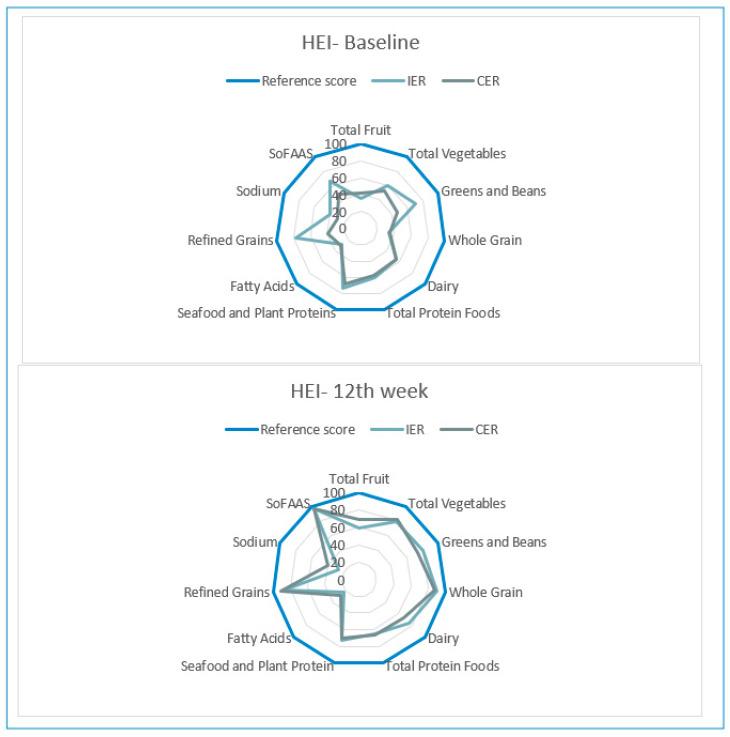
The aim of this study was to determine the efficacy of an energy restriction intermittent fasting diet in metabolic biomarkers and weight management among adults with metabolic syndrome. This randomized controlled study was performed with metabolic syndrome patients, aged 18-65 years, at an academic institution in Istanbul, Turkey ( = 70). All participants were randomized to the Intermittent Energy Restriction (IER) intervention group and Continuous Energy Restriction (CER) control group. Biochemical tests including lipid profile, fasting plasma glucose, insulin, glycosylated hemoglobin Type A1c (HbA1c), homeostatic model assessment of insulin resistance (HOMA-IR), blood pressure, and body composition were evaluated at baseline and at the 12th week in diet interviews. Dietary intake was measured with the 24-h dietary recall method and dietary quality was evaluated with the Healthy Eating Index-2010. Changes in body weight (≈7% weight loss) and composition were similar in both groups. Blood pressure, total cholesterol, triglyceride, low-density lipoprotein (LDL), fasting glucose, and insulin at the 12th week decreased in both groups ( < 0.05). No significant differences were observed in metabolic syndrome biomarkers between the IER and CER groups. The energy-restricted intermittent fasting diet did not cause any deficiencies in macronutrient and fiber intake in the subjects. Healthy Eating Index (HEI) index scores were achieved similarly in both groups, and subjects' dietary intakes were close to daily reference nutritional intake values. The technique used to achieve energy restriction, whether intermittent or continuous, appears to alleviate the metabolic syndrome biomarkers activated by weight loss.
本研究旨在确定能量限制间歇性禁食饮食在代谢生物标志物和代谢综合征成年人的体重管理中的疗效。这项随机对照研究在土耳其伊斯坦布尔的一所学术机构中进行,纳入了代谢综合征患者(年龄 18-65 岁,n=70)。所有参与者均随机分为间歇性能量限制(IER)干预组和持续能量限制(CER)对照组。生化测试包括血脂谱、空腹血糖、胰岛素、糖化血红蛋白 A1c(HbA1c)、稳态模型评估的胰岛素抵抗(HOMA-IR)、血压和身体成分,在基线和饮食访谈的第 12 周进行评估。采用 24 小时膳食回忆法测量膳食摄入量,并采用 2010 年健康饮食指数(HEI-2010)评估膳食质量。两组的体重变化(约 7%的体重减轻)和成分相似。两组的血压、总胆固醇、甘油三酯、低密度脂蛋白(LDL)、空腹血糖和胰岛素在第 12 周均下降(<0.05)。IER 组和 CER 组之间的代谢综合征生物标志物无显著差异。能量限制间歇性禁食饮食不会导致受试者的宏量营养素和纤维摄入不足。两组的健康饮食指数(HEI)得分相似,受试者的饮食摄入量接近每日参考营养摄入量值。实现能量限制的技术,无论是间歇性还是连续性,似乎都能缓解因体重减轻而激活的代谢综合征生物标志物。

 Zotero 插件