
在也门冲突期间实施综合社区病例管理。
Implementing integrated community case management during conflict in Yemen.
机构信息
UNICEF, New York, New York, USA.
Mailman School of Public Health, Columbia University, New York, New York, USA.
出版信息
J Glob Health. 2020 Dec;10(2):020601. doi: 10.7189/jogh.10.020601.
BACKGROUND
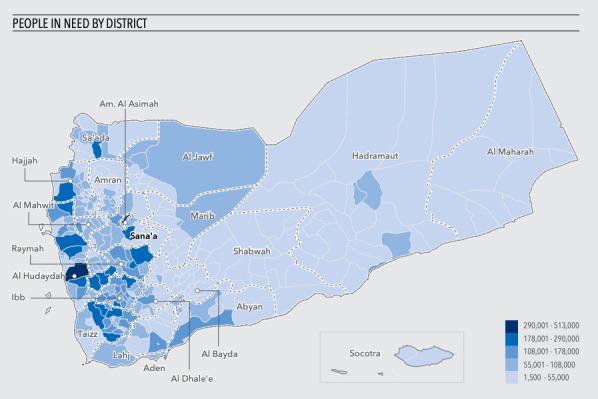
The conflict in Yemen has devastated the health system, with only 51% of health facilities classified as fully functional and 19.7 million people lacking access to health care. To address the urgent need for primary health care services in rural communities, Save the Children launched an iCCM program in Lahj and Taiz Governorates. A qualitative study was conducted to document the challenges to iCCM service delivery and to aid in developing strategies for overcoming service delivery bottlenecks in conflict-affected rural areas.
METHODS
Qualitative data were collected in Aden City, Lahj Governorate, and Taiz Governorate. Twenty-three IDIs and six FGDs were conducted with iCCM stakeholders at all levels.
RESULTS
Key findings included: 1) Policy, coordination, and funding were challenged by the fact that iCCM was not integrated into the national health system and was implemented as a short-term emergency program. 2) Villages that received services from a CHW who was based in a different community experienced reduced access to services, especially during times of heightened conflict and insecurity, when CHWs could not travel. 3) Supervision, supply chain, and monitoring were all challenges that were exacerbated by difficulties in travel due to the conflict. Potential solutions to these included the use of mobile technology for supervision and data collection and pre-positioning of buffer stocks in locations closer to CHWs. 4) Travel was seen as the primary threat to the safety of CHWs and supervisors. Measures taken to reduce the risk included limiting travel during periods of heightened insecurity, safety training for CHWs, and use of mobile technology for communication.
CONCLUSIONS
CHWs were able to provide iCCM services in a challenging and insecure context. The challenges in delivery of services were related to both a weak health system and the conflict. Several adaptations to service delivery to overcome the bottlenecks have been identified and should be considered for future community health programs. The closure of the program in Taiz after only 14 months of implementation is a stark illustration of the failure of the current model of short-term humanitarian funding to address long-term needs in protracted emergencies.
背景
也门冲突使卫生系统遭受重创,仅有 51%的卫生机构被归类为功能完备,1970 万人无法获得医疗服务。为满足农村社区对初级卫生保健服务的迫切需求,拯救儿童组织在拉赫季省和塔伊兹省启动了 iCCM 项目。本项定性研究旨在记录 iCCM 服务提供方面面临的挑战,并为在受冲突影响的农村地区克服服务提供瓶颈提供策略。
方法
在亚丁市、拉赫季省和塔伊兹省收集定性数据。在各级 iCCM 利益攸关方中开展了 23 次个人深入访谈和 6 次小组讨论。
结果
主要发现包括:1)政策、协调和资金方面受到挑战,因为 iCCM 未融入国家卫生系统,而是作为短期应急方案实施。2)从位于不同社区的 CHW 处获得服务的村庄服务获取减少,尤其是在冲突和不安全加剧时,CHW 无法出行。3)监督、供应链和监测均受到冲突导致的出行困难的影响。潜在的解决方案包括使用移动技术进行监督和数据收集,以及在更靠近 CHW 的位置预先部署缓冲库存。4)出行被视为 CHW 和监督者安全的主要威胁。为降低风险而采取的措施包括在不安全加剧期间限制出行、对 CHW 进行安全培训以及使用移动技术进行通信。
结论
CHW 在具有挑战性和不安全的环境中提供 iCCM 服务。服务提供方面的挑战既与薄弱的卫生系统有关,也与冲突有关。已经确定了一些针对服务交付的调整,以克服瓶颈,这些调整应考虑用于未来的社区卫生项目。该项目在仅实施 14 个月后就在塔伊兹关闭,这鲜明地说明了短期人道主义供资模式无法满足长期需求,无法应对旷日持久的紧急情况。
 Zotero 插件